Top illustration: a beagle on a living room rug with a ball, a plush toy and a knotted rope. Illustration: Livehappypet.
Dogs do not read price tags. A dog will happily chase a plain rubber ball for years and ignore an expensive gadget after a day. That is good news for your budget, because a small, well-chosen set of cheap dog toys can cover almost everything a dog needs from play. The catch is that the cheapest toys are also where most safety shortcuts hide: weak seams, loose parts and stuffing that ends up in a stomach. This guide shows you how to spend less without gambling on safety, which toys are worth buying cheap, which are worth paying more for, and how to make a modest toy box feel new every week.
Quick Answer: Are Cheap Dog Toys Worth Buying?
Cheap dog toys are worth buying when they are simple, solid and sized correctly: plain rubber balls, sturdy tugs and basic puzzle feeders. Skip bargain plush with glued parts or loose filling for unsupervised play, rotate a few toys instead of buying many, and replace anything that starts breaking apart.
What Makes a Cheap Dog Toy Good Value?
Answer: A cheap dog toy is good value when it survives your dog's play style, keeps the dog interested, and stays safe as it wears. Cost per week of use matters more than the sticker price, so a slightly dearer toy that lasts months often beats a bargain that breaks the first day.
Most owners judge toys by the price on the label. A better habit is to think about cost per week of real use. A toy that costs very little but gets shredded in an afternoon has cost you money and given your dog a safety risk. A plain toy that costs a little more and lasts all season has worked out cheaper, even before you count the vet bill you avoided.
Value also depends on the dog. A gentle senior that carries one soft toy around the house can be very well served by inexpensive plush. A young Labrador that dissects everything will burn through those same toys at a pace that makes them expensive.
That table is the core of a budget strategy: save money on toys you use together with your dog, and spend a little more on anything your dog will chew alone. If you are unsure how many toys a dog really needs, our guide on how many toys a dog should have helps you avoid buying more than you use.
What Safety Red Flags Should You Check on Budget Toys?
Answer: Check every budget toy for size, loose parts and filling before your dog gets it. Avoid toys small enough to swallow, glued-on eyes, bells, ribbons and strings, and stuffing such as nutshells or polystyrene beads. Pull on the seams in the shop; if they gape, put the toy back.
Cheap toys are not automatically unsafe, but budget manufacturing is where weak seams and poor filling show up most. The Humane World for Animals guide to safe dog toys gives a short list of checks that cost nothing to apply in the shop aisle.
- Size first. Toys that are too small can be swallowed or lodge in the throat. When in doubt, go one size up.
- No small attached parts. Remove or avoid ribbons, strings, plastic eyes and anything else that can be chewed off.
- Read the filling. Nutshells and polystyrene beads are problem fillings, and even standard stuffing is not truly digestible.
- Squeakers need supervision. Many dogs try to dig out the source of the squeak and may swallow it.
- Washability. Soft toys should survive the washing machine, which also reveals weak seams quickly.
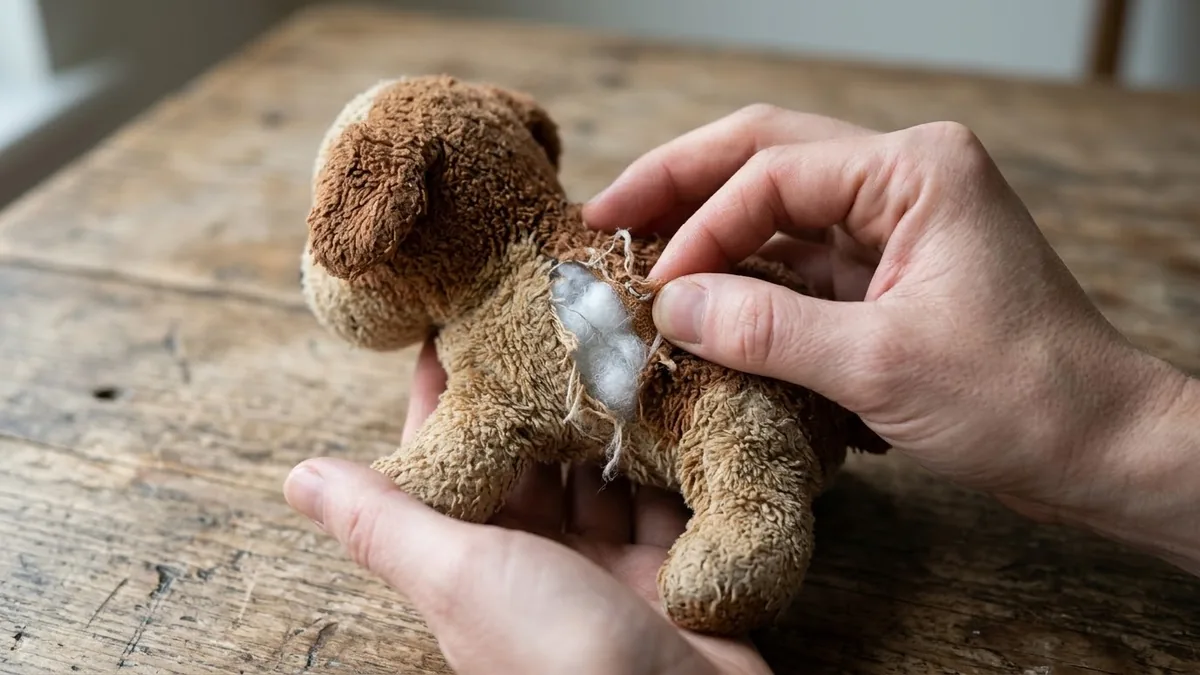
Illustration: Livehappypet.
The same guide suggests checking stuffed toys for a label saying they are safe for children under three years old, a simple proxy for basic construction standards. No label can promise that a toy is indestructible, though. What protects your dog is matching the toy to the way the dog plays, then watching how it wears.
If something does go wrong, know the warning signs. The Cornell Riney Canine Health Center lists vomiting, loss of appetite, abdominal pain, diarrhea, dehydration and lethargy among common signs of a blocked gut. Call your veterinarian promptly if you notice those after a toy has gone missing or been destroyed. Cheap toys stop being cheap very quickly when surgery is involved.
Which Cheap Dog Toys Give the Most Play for the Money?
Answer: Simple toys usually give the most play per dollar: a correctly sized rubber ball for fetch, a fleece or rope tug for interactive games, a basic treat-dispensing toy or snuffle game for mental work, and one soft comfort toy. Together they cover chasing, pulling, problem solving and settling down.
A useful rule from the Humane World for Animals toy guide is to give your dog at least one toy to carry, one to shake, one to roll and one for comfort. You can cover all four roles with inexpensive basics instead of a crowded basket of novelty toys.
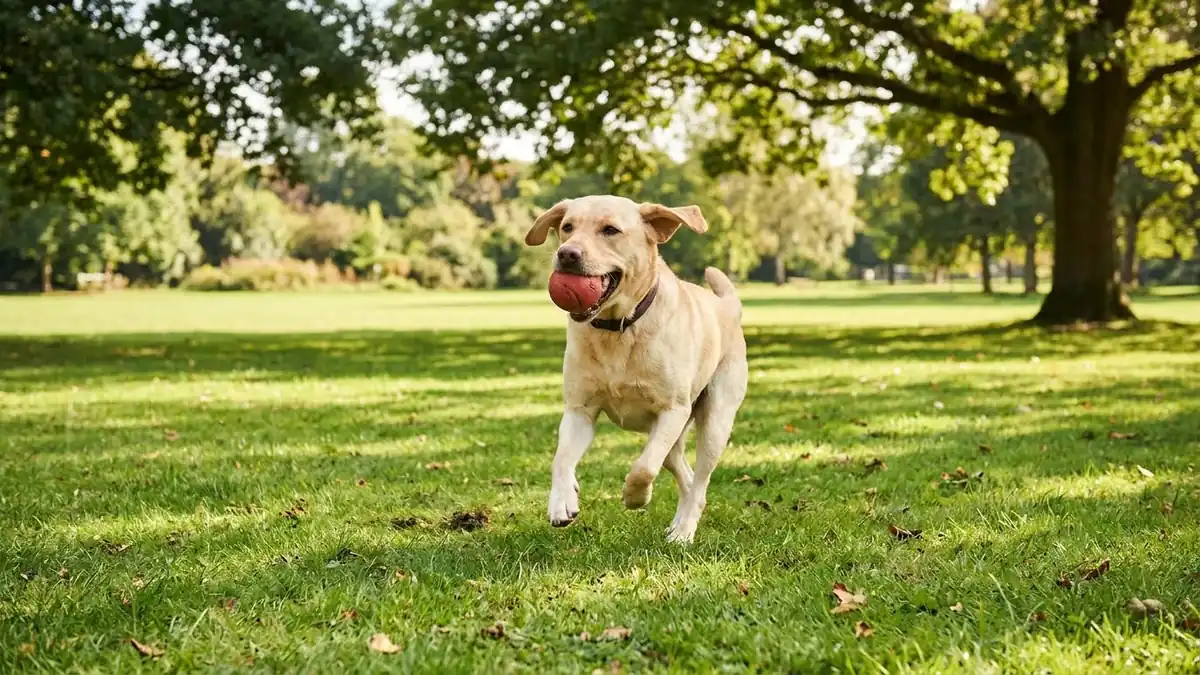
Illustration: Livehappypet.
Tennis balls deserve a quick note because they are so cheap. The same guide says they make good fetch toys but do not stand up well to chewing, and chewed-through balls should be thrown away because they can become a choking hazard. Our article asking whether tennis balls are safe for dogs covers the details.
For mental exercise without spending much, scatter part of your dog's dinner across a lawn or a towel and let the nose do the work. Our guides to dog puzzles and mentally stimulating dog toys have more ideas when you are ready to add a store-bought puzzle.
Can You Make Safe Dog Toys for Free at Home?
Answer: Yes, if you stick to simple, supervised ideas. Cardboard boxes, paper bags, a muffin tin with treats under balls, and an old towel knotted into a tug can all work. Avoid anything with string, small parts, sharp edges or materials your dog might swallow in quantity, and clear up the pieces afterwards.
Enrichment does not have to come from a shop. American Humane suggests repurposing household items such as cardboard boxes and paper bags for safe exploration, alongside puzzle toys and scent games.
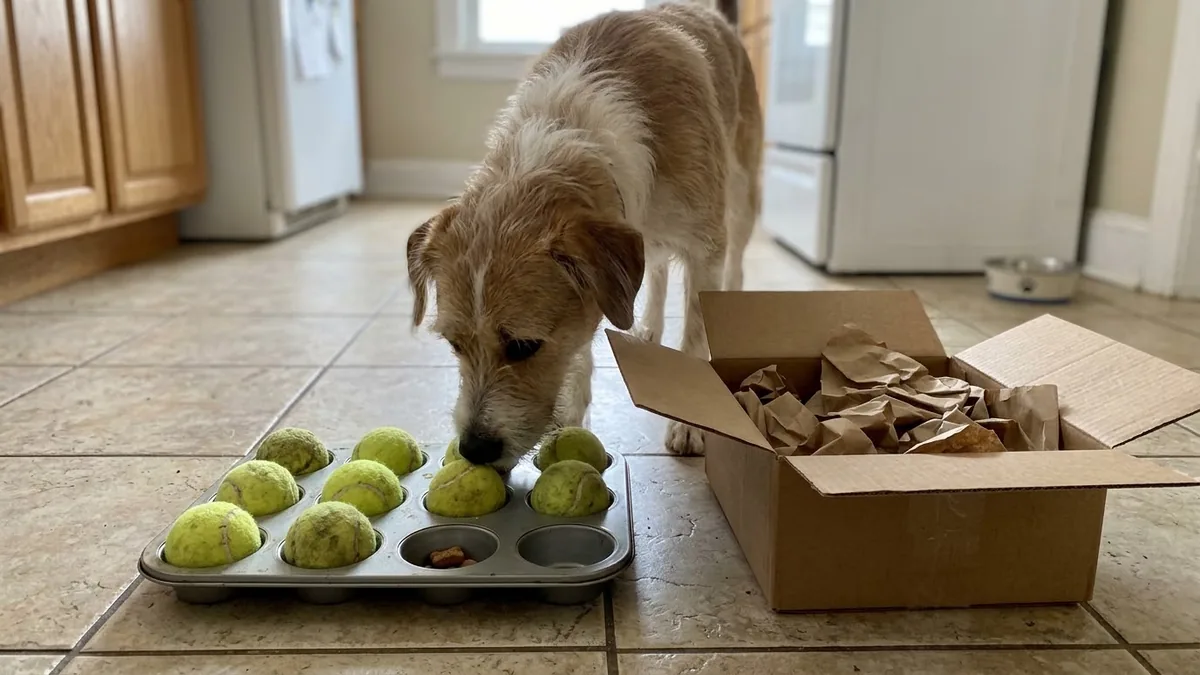
Illustration: Livehappypet.
- Muffin tin puzzle. Put a piece of kibble in each cup, cover the cups with balls, and let your dog work out how to reach the food.
- Cardboard box dig. Scrunch paper into a box with a few treats inside. Supervise and tidy the paper away afterwards.
- Towel tug. Knot an old towel tightly into a tug for games with you, then store it out of reach.
- Find it. Hide toys or treats around a room and let your dog search. Found toys are often more exciting than toys handed over.
Homemade toys share one rule: they are for supervised play. A box or towel left with a bored dog can be eaten rather than played with. If you enjoy making things, our full guide to DIY dog toys goes further, including which household items to avoid entirely.
How Can Toy Rotation Make Cheap Toys Last Longer?
Answer: Toy rotation means leaving only a few toys out at a time and swapping them every week or so. Because the toys feel new again when they come back, your dog stays interested without you buying more, and each toy gets less wear. Keep one comfort favorite out all the time if your dog has one.
Boredom, not damage, retires many toys. The Humane World for Animals guide recommends rotating toys weekly so only a few are available at once, while keeping a variety of types within reach.
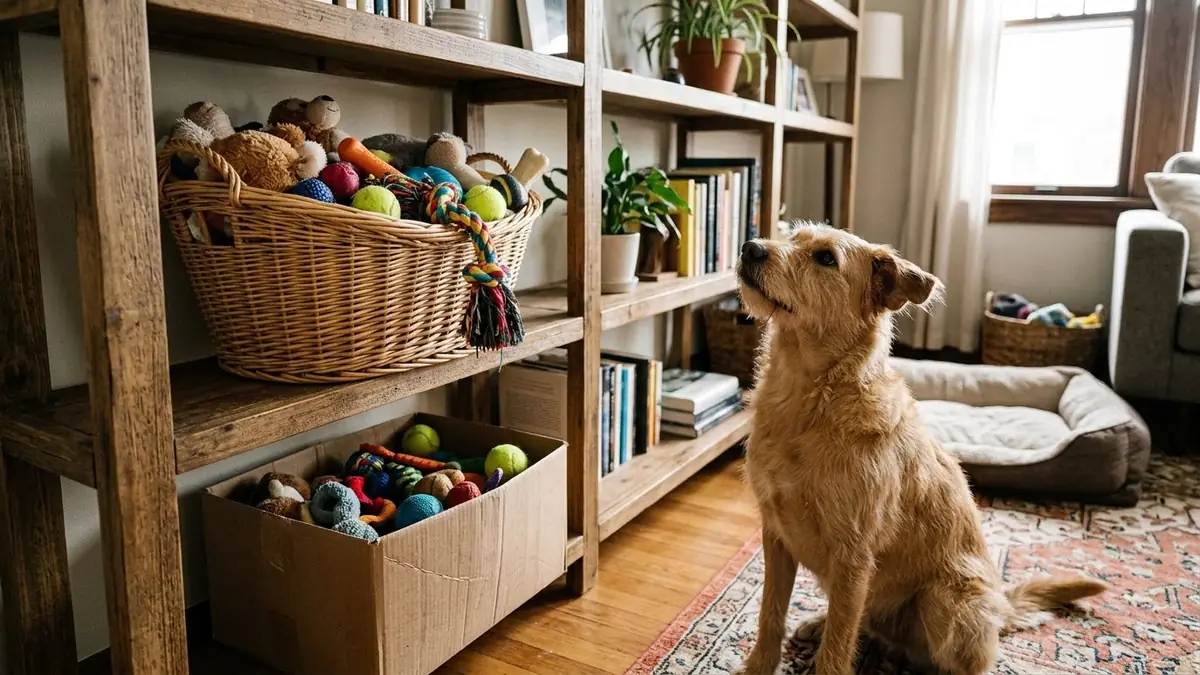
Illustration: Livehappypet.
Rotation also makes inspection a habit. Every time you swap toys, you handle them, and that is when you notice the split seam or the chewed-through ball. Anything damaged goes in the bin rather than back in the rotation box.
A simple system works best. Split your dog's toys into two or three groups that each include something to chase, something to pull and something to chew. Swap the whole group at the weekend. Most dogs greet the returning toys as if they had never seen them.
Rotation pairs well with play together. Interactive toys such as balls and tugs get more value because you are part of the game. For more on that, see our guide to the best interactive dog toys.
When Is a Cheap Dog Toy a False Economy?
Answer: A cheap toy is a false economy when it is meant for a power chewer, a teething puppy left alone, or a dog with a history of swallowing things. In those cases a sturdier toy designed for heavy chewing, used with supervision, is cheaper than a vet visit for a swallowed piece.
Some dogs simply need tougher toys. If your dog's reaction to any new toy is to find the weakest point and start working on it, budget plush and thin plastic will not last, and the pieces they leave behind are the real problem.
Puppies are another special case. They explore with their mouths, chew more during teething, and do not know what is food. A few well-made teething toys will serve a puppy better than a pile of bargain ones. Our guide on what toys are safe for puppies explains what to look for.
For strong chewers, put the money into one or two solid toys and keep cheaper toys for interactive games where you are present. Our roundup of indestructible dog toys for aggressive chewers shows what tougher toys look like.
Material questions also come up with low-cost imports, especially strong odors or flaking coatings. If a toy smells strongly of chemicals or the surface rubs off on your hands, leave it. Our guide to non-toxic dog toys covers materials in more depth.
How Do You Shop Smart for Cheap Dog Toys?
Answer: Shop smart by buying fewer, simpler toys sized for your dog, reading labels for materials and fillings, checking return policies, and keeping receipts. Buy multipacks only of toys you already know your dog likes, and look for sellers that show clear photos and material details.
A few habits stretch a toy budget further than any single deal:
- Buy one of a new toy type first. Only buy the multipack once your dog has shown it loves that toy.
- Read the material and filling information. A listing that does not say what a toy is made of is a reason to look elsewhere.
- Compare sizes against your dog, not against the photo. Many listings show toys next to small dogs.
- Check the return policy before you order, especially for toys that arrive damaged or smaller than described.
- Keep a simple note of which toys lasted and which did not, so your next order is smarter.
Shipping costs can quietly double the price of a cheap toy, so it pays to buy from a shop with free shipping or to group your order. At Livehappypet every order ships free in the US with no minimum, so you can try a single toy before committing to more. Browse our dog toys and accessories when you are ready.
If you would rather start from a curated list, our guide to the best dog toys highlights options for different play styles and sizes.
What Questions Do Owners Ask About Cheap Dog Toys?
Answer: Most questions about cheap dog toys come down to whether budget toys are safe, which ones last, how to keep a dog interested without buying more, and when it makes sense to pay extra. The answers below cover plush, tennis balls, homemade toys, rotation and strong chewers.
Are cheap dog toys safe?
Many are, as long as they are simple, sized correctly and used the way they were designed. The risk is concentrated in toys with weak seams, small attached parts and loose filling. Check those features before buying and supervise play with anything soft.
What is the cheapest toy a dog will actually use?
A correctly sized rubber ball or a simple tug is hard to beat. Both are inexpensive, involve you in the game, and suit most dogs. A free scatter-feeding game with part of the dog's normal food is another favorite that costs nothing.
Are dollar store dog toys okay?
Some are fine for supervised play, but inspect them closely. Look for tight seams, no glued eyes or bells, and a size your dog cannot swallow. Avoid relying on them as chew toys for strong chewers or as toys left alone with the dog.
How many toys does a dog need?
Fewer than most owners buy. A handful covering chasing, tugging, chewing, problem solving and comfort is enough for most dogs, especially if you rotate them weekly so they feel new again.
Can I give my dog old socks or stuffed animals as toys?
It is not a good idea. Socks are easy to swallow and can cause a blockage, and children's stuffed animals often have small parts and filling not meant for dogs. Choose toys designed for dogs or simple supervised homemade games.
How do I make cheap toys last longer?
Rotate them so each toy gets less wear, use tugs and balls only during play with you, wash soft toys gently, and put toys away when your dog starts chewing rather than playing. Throw away anything that is falling apart.
Should I spend more on toys for an aggressive chewer?
Yes, on the toys your dog chews alone. Strong chewers break budget rubber and plush into pieces that can be swallowed. One or two solid, well-made chew toys are cheaper than treating a swallowed fragment.
When should I throw a dog toy away?
Throw it away when seams split, stuffing or squeakers become reachable, rubber cracks or chunks are missing, rope frays into loose strands, or a ball has been chewed through. Damage only gets worse once a dog finds a weak point.
Sources: Humane World for Animals, How to pick the best and safest dog toys (size, fillings, squeakers, rotation, toy roles, tennis balls); American Humane, Choosing safe toys for pets (household items for enrichment); Cornell Riney Canine Health Center on GI obstruction in dogs (warning signs).