A caterpillar bed for pets is usually a soft, caterpillar-shaped tunnel that gives a cat or small dog a covered place to hide, play, and nap. The name is descriptive, not a standardized product category, so listings can refer to very different items. Search results also include children's furniture, novelty bedding, Caterpillar equipment parts, and garden tunnels. This guide focuses specifically on the enclosed pet tunnel bed that many cat owners have in mind.
In This Article
- What Is a Caterpillar Bed for Pets?
- Is a Caterpillar Bed Right for Your Pet?
- How to Measure for a Caterpillar Bed
- Materials and Construction
- Caterpillar Bed Tunnel Safety
- Kittens, Adults, and Senior Pets
- Cleaning and Maintenance
- Caterpillar Bed Buying Checklist
- Alternatives to Consider
- Frequently Asked Questions
What Is a Caterpillar Bed for Pets?
In pet retail, a caterpillar bed generally means an elongated, segmented fabric hideaway. It may look like a cheerful insect, with a face or antennae at one end, while the hollow body forms a sleeping tunnel. Some versions are plush tubes with one entrance. Others are collapsible play tunnels with several openings, a crinkly lining, or a separate cushion. A listing may call the same object a cat cave, sleeping tunnel, play tube, or enclosed pet tent.
That inconsistency matters. The search phrase alone does not tell you whether an item is a true padded bed, a lightweight toy tunnel, or human furniture. Read the dimensions, materials, photographs, and care label rather than relying on the title. This article does not rank products or claim that every caterpillar design works the same way.
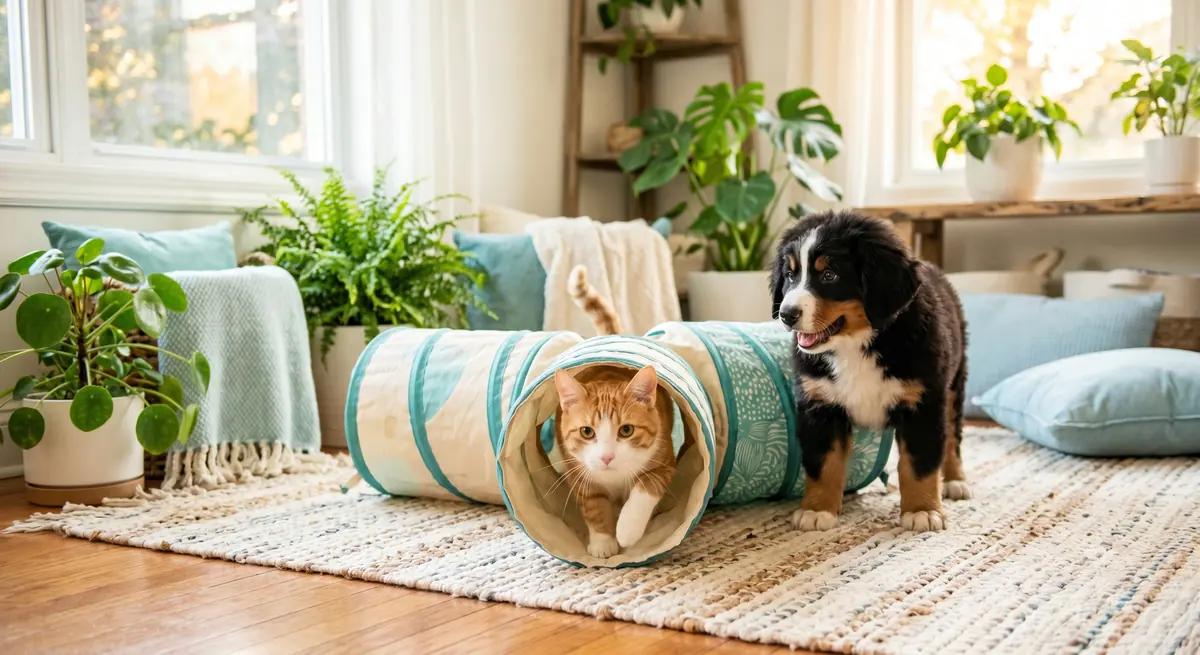
Why might a cat enjoy one? Cats need secure resting places and opportunities to hide, explore, and play. The RSPCA's indoor cat guidance recommends providing hiding places and stimulating activities, while Cats Protection discusses play and environmental resources for indoor cats. A tunnel can support those needs, but it is one option within a complete home environment, not a cure for stress or inactivity.
Is a Caterpillar Bed Right for Your Pet?
A caterpillar-style tunnel bed tends to suit a cat that seeks enclosed spaces, ambushes toys from behind furniture, or naps under blankets. It can also suit a rabbit, ferret, or very small dog only when the manufacturer explicitly identifies those species and the design is large, stable, and chew-safe for that individual. For cats, it is best treated as both furniture and an interactive space. Place it in a quiet room for sleep, or near an open play area for supervised stalking games.
It may be a poor match for a pet that avoids covered beds, becomes defensive in confined spaces, chews and swallows fabric, sprays bedding, or cannot turn comfortably inside. Large cats can become wedged in decorative tunnels sold mainly for kittens. A timid cat may also dislike a single-ended tube because another pet can block the only exit. Multi-cat homes are usually better served by a design with at least two clear ways out.
Watch behavior instead of trying to force acceptance. A relaxed cat may enter voluntarily, knead, loaf, sleep, or play through the openings. Repeated backing away, flattened ears, a low tense posture, or refusing to pass another cat indicates that the setup or location is not comfortable. International Cat Care offers broader evidence-led advice on feline behavior and home care.
How to Measure for a Caterpillar Bed
Product titles such as “large” are not useful without measurements. You need the usable tunnel diameter, interior length, entrance dimensions, and total floor footprint. Measure your pet while resting naturally from nose to base of tail, then measure their height at the shoulders while standing. Also note the widest point across the body. The interior should let the pet enter, turn, and lie in a normal posture without pressing against a rigid hoop.
Do not add a universal number of inches because tunnel structures differ. Thick lining, internal hoops, and narrowed decorative heads can reduce usable space even when the exterior looks generous. Compare your pet's measurements with the seller's interior figures. If only package dimensions are listed, ask the seller for opening diameter and usable internal length before ordering.
For a growing kitten, size for safe current use and expect to reassess as the cat grows. Bigger is not automatically better: an oversized, unsupported tunnel may collapse or slide, while a very deep single-entry cave can feel difficult to escape. Shape stability and exit access matter alongside roominess.
Materials and Construction
Common outer fabrics include polyester fleece, velour-like plush, felt, and woven synthetic cloth. These can feel soft and dry quickly, but quality depends on weave, seams, dyes, and care instructions. A padded version may contain polyester fiberfill or foam. A collapsible tunnel often relies on a spring-steel or plastic hoop under a fabric sleeve. Avoid vague listings that do not identify the main materials or explain whether the support can be removed for washing.
Inspect more than softness. Seams should be enclosed and closely stitched. There should be no exposed wire ends, accessible foam, loose pom-poms, glued eyes, long cords, or detachable antennae that a pet could chew. A non-slip base helps on hard floors. If a crinkle layer is included, listen for unusually loud or stiff material that may frighten a cautious cat, and check that it cannot be accessed through the lining.
“Non-toxic” is a broad marketing phrase unless the seller identifies what it means and supplies relevant testing or compliance information. Likewise, “hypoallergenic” does not guarantee that no pet will react. Favor transparent material descriptions, a reachable manufacturer, clear care instructions, and a return policy. The EPA Safer Choice program is a useful reference when choosing household cleaning products, but it does not certify a pet bed merely because a seller uses similar language.
Caterpillar Bed Tunnel Safety
A tunnel must remain open enough to breathe and exit even when a cat rolls against the wall. Check that hoops spring back without pinching and that any connector straps sit outside the passage. Place the bed flat, away from stairs, heaters, open flames, reclining furniture, and doors. Do not put a loose blanket inside if it can bunch up and obstruct a narrow tube.
Supervise the first sessions. Remove the bed if the pet bites at wire sleeves, tears fabric, eats filling, becomes caught by a claw, or guards the entrance from another animal. Trim or remove only accessories the manufacturer says are removable. Do not cut structural stitching or wire yourself, since that can create a sharper hazard.
Two or more exits are preferable for active play and shared homes. Side windows must be large enough that a pet cannot put their head through and become stuck at the neck or shoulders. The ASPCA's general cat care guidance advises keeping unsafe small items and string out of reach. Apply that principle to decorative whiskers, bells, elastic loops, and dangling toys on a tunnel.
A caterpillar bed is not a carrier, crate, child toy, or unsupervised restraint. Do not lift it with a pet inside unless the manufacturer specifically designed and tested it for transport. If a pet swallows fabric, wire, foam, or string, contact a veterinarian promptly rather than waiting for symptoms.
Kittens, Adults, and Senior Pets
Kittens are curious and may climb, chew, or race through a tunnel rather than sleep in it. Choose a stable model without detachable decorations, inspect it after energetic play, and supervise until you understand the kitten's habits. Recheck the fit often during growth. A bed that was roomy at adoption can become restrictive.
Healthy adult cats are the most likely to use the full play-and-rest function. Use a wand toy around the exterior while keeping strings under direct control, then store the wand separately. For indoor enrichment ideas beyond a tunnel, see our cat tunnel toy guide and interactive cat toy guide.
Senior cats may still value privacy but need easier access. Favor a low entrance, short route, grippy base, generous diameter, and soft removable pad. Avoid forcing a cat with arthritis or reduced vision to navigate a long crinkly tube. The American Veterinary Medical Association's senior pet guidance explains that older pets may develop mobility and sensory changes and benefit from more frequent veterinary checks.
For any life stage, a sudden change in sleeping place, reluctance to jump, stiffness, hiding more than usual, or unexplained irritability can have a medical cause. A new bed should not replace veterinary assessment. Cornell's guide to choosing and caring for a cat provides a useful overview of routine feline health care.
Cleaning and Maintenance
Follow the sewn-in label first. “Washable” may mean only the cushion can enter a machine, while a wired body requires spot cleaning. Before washing, vacuum loose hair and remove detachable pads or toys. Close hook-and-loop tabs so they do not snag fabric. If the manufacturer permits machine washing, use the specified cycle and water temperature, then dry exactly as directed. Heat can deform foam, shrink covers, or damage plastic supports.
For spot cleaning, use a small amount of fragrance-free product appropriate for the material, rinse or wipe away residue, and dry completely before reuse. Strong fragrance may discourage a cat from entering. Moisture left in padding can support odor and deterioration. Never mix cleaning chemicals, and keep pets away while a cleaner is being applied.
Inspect the tunnel whenever you clean it. Run your fingers along support channels, seams, and entrances. Retire it when wire protrudes, a hoop no longer holds its shape, filling is exposed, the base slips despite cleaning, or persistent odor remains after approved washing. Repeated repairs can create new loose threads, so replacement may be safer than improvising.
Caterpillar Bed Buying Checklist
Start with the pet and room, not the novelty shape. A cute face is irrelevant if the passage is too narrow or the product cannot be cleaned. Save the listing and care information in case the delivered item differs. Avoid assuming that marketplace photos show the same size or construction as every variation.
- Fit: Interior diameter, entrance, usable length, and floor footprint are all stated.
- Escape routes: Openings suit your pet and household dynamics.
- Construction: Supports are covered, seams are secure, and no small parts detach.
- Materials: Fabric, filling, and support material are identified.
- Care: The exact washable components and drying method are clear.
- Stability: The base grips your floor and the tunnel recovers its shape.
- Seller support: Questions, returns, and replacement parts have a clear process.
There is no honest universal “best caterpillar bed.” The right choice is the one that fits your pet's measured body, behavior, mobility, and chewing habits. Reviews can reveal recurring construction issues, but they do not replace measurements or direct inspection.
Alternatives to a Caterpillar Bed
If your cat mainly wants a covered nap, a simple cave bed or a cardboard box with two pet-sized exits may be easier to inspect and clean. If play is the priority, a standard two-ended cat tunnel can provide a clearer route without thick bedding. For joint support, a flat orthopedic-style pet bed with a removable cover may be easier for a senior to enter. Our broader cat bed guide explains common sleeping-bed formats.
A cat tree with a low cubby combines hiding with vertical territory, but it needs stable placement and may not suit limited mobility. An open bolster bed offers edge support without enclosing the head. A washable mat is useful for warm climates or pets that reject plush interiors. You can also create several low-cost resting choices in different rooms and let the cat show a preference before buying novelty furniture.
Think in terms of function: privacy, warmth, joint support, active play, or compact storage. One caterpillar-shaped product rarely excels at every purpose. A separate bed and play tunnel may be safer and easier to maintain than a combination design, especially for a heavy cat or enthusiastic chewer.
Frequently Asked Questions About Caterpillar Beds
What does “caterpillar bed” mean?
It is an ambiguous descriptive phrase, not a standardized pet product category. For pet owners, it commonly refers to a long, soft, segmented tunnel shaped like a caterpillar where a cat or small pet can hide, play, or sleep. The phrase can also describe children's beds, themed bedding, equipment parts, and other non-pet items.
Are caterpillar beds safe for cats?
They can be suitable when correctly sized, stable, ventilated, and free of exposed supports, loose strings, and detachable parts. Supervise initial use, provide clear exits, and inspect seams and wire channels regularly. Remove any tunnel that collapses around the cat, sheds filling, or becomes damaged.
How big should a caterpillar cat bed be?
Use your cat's body width, standing shoulder height, and resting length, then compare them with the product's interior diameter, entrance, and usable length. The cat must be able to enter, turn, and rest normally. Do not rely on labels such as small or large, and ask for interior measurements if they are missing.
Can a kitten use a caterpillar tunnel bed?
Yes, if the structure is stable and has no chewable decorations, loose cords, exposed wire, or openings that can trap the kitten's head. Supervise energetic play and reassess the fit as the kitten grows. Never close an entrance or use the bed as a carrier.
Is a caterpillar bed suitable for a senior cat?
It may be if it has a low entrance, non-slip base, roomy interior, soft removable pad, and a short, easy exit route. A senior with arthritis, impaired sight, or weakness may prefer an open bolster or flat supportive bed. Ask a veterinarian about new stiffness or a sudden change in sleeping behavior.
How do I wash a caterpillar pet bed?
Follow the sewn-in care label. Remove loose hair and detachable components, then wash only the parts and at the temperature the manufacturer permits. A wired tunnel may require spot cleaning even when its cushion is machine washable. Rinse away cleaner residue and dry every layer completely before reuse.
What if my cat will not use the bed?
Place it in a quiet, familiar area and let the cat explore without pressure. Try leaving it open with familiar bedding nearby or moving a favorite toy through it during supervised play. If the cat continues to avoid it, choose an open bed, cardboard hide, or standard tunnel instead rather than forcing entry.
Explore Cat Comfort and Enrichment
Compare beds, tunnels, and play accessories according to your cat's size and habits.
Browse Cat Accessories →