Owning a cat house for outside cats is step one. Keeping it genuinely warm through freezing nights, spring rain, and summer heat is the part that takes know-how. The good news: a few seasonal habits turn any decent shelter into a year-round refuge.
This guide is the maintenance and winterizing companion to our shelter buying guide. It covers cold-weather upgrades, electricity-free heating, community cat setups, and a simple season-by-season care calendar.
How Cold Is Too Cold for Outside Cats?
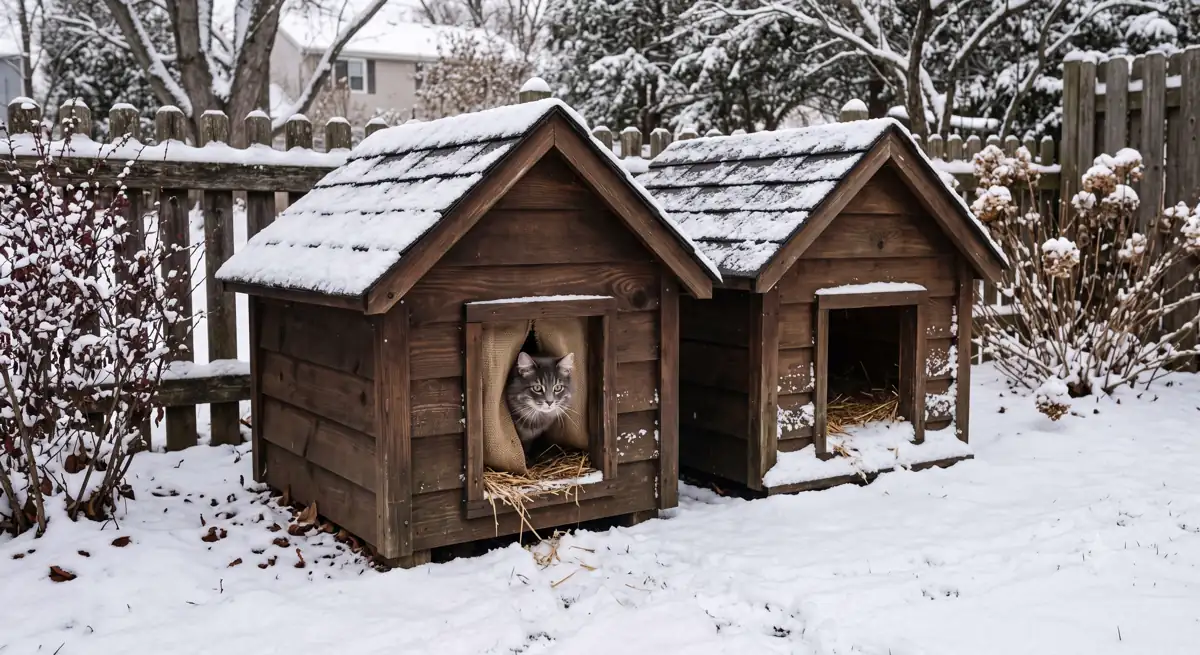
Healthy adult cats with thick coats handle cold weather better than people assume, but every cat has limits, and wet or windy conditions lower those limits fast. Kittens, seniors, and thin or short-haired cats are at meaningfully higher risk in freezing weather.
Watch behavior rather than the thermometer alone. A cat that stops ranging, tucks paws under its body constantly, or shivers visibly needs a warmer setup immediately. Frostbite typically shows first on ear tips, toes, and tail.
The practical rule used by community cat caretakers: below freezing, every outside cat should have access to a dry, wind-proof, straw-lined shelter. Everything in this guide builds toward that baseline.
Winterizing an Existing Cat House
Start from the ground. Raise the house 2 to 4 inches on bricks, pallet wood, or foam blocks so the floor never touches frozen ground. Then attack drafts: turn the doorway away from prevailing wind, or add an L-shaped wind baffle in front of it.
Inside, replace all fabric bedding with fresh dry straw. Straw insulates even when the cat comes in wet; blankets do the opposite. Line the interior walls with mylar sheeting (sold cheaply as emergency blankets) so the cat's own body heat reflects back.
Finally, shrink the space. If your house is large, add a foam-board divider so the sleeping chamber is snug. A smaller air pocket warms in minutes from body heat alone. Full construction details are in our cat house for outdoor cats buying guide.
Warmth Without Electricity
Most outside cat setups have no outlet nearby, and that is fine. Straw depth is the biggest lever: 4 to 6 inches lets a cat burrow completely. Mylar liners add reflective warmth for pennies. A microwavable heat disc placed under straw before a cold night gives several hours of gentle warmth with zero fire risk.
Snow is an ally, oddly enough. A few inches of snow on the roof acts as extra insulation, igloo-style. Just keep the doorway shoveled clear so the cat is never sealed in or out.
If you do have safe outdoor power, a low-watt outdoor-rated heating pad under the straw is the gold standard for seniors and harsh climates. Use a GFCI outlet and check cords monthly.
Setups for Community and Feral Cats
Feeding a colony means sheltering a colony, and the math changes with numbers. Provide multiple mid-size shelters rather than one large one; cats that tolerate each other at the feeding station may still refuse to sleep together, and a single shelter becomes a resource to guard.
Space shelters a few feet apart with doorways facing each other so approaching threats are visible from inside. Keep the feeding station separate from sleeping shelters to avoid drawing raccoons into bedding areas.
Unneutered cats rarely settle into shelters long-term. If you are caring for a colony, pairing shelter with a trap-neuter-return program is the proven approach; the Alley Cat Allies resource library explains how TNR works and where to find local help.
A Season-by-Season Care Calendar
Ten minutes per season, plus a monthly glance, keeps a shelter working for years. The cats will not thank you in words, but a shelter with a regular resident is its own report card.
Frequently Asked Questions
How do I keep an outside cat house warm in winter without electricity?
Combine four passive upgrades: raise the house off the ground, fill it with 4 to 6 inches of dry straw, line the walls with mylar sheeting, and shield the doorway from wind. Together these let a cat's own body heat maintain a warm sleeping pocket even in freezing weather.
Is straw or hay better for outside cat houses?
Straw, always. Straw consists of hollow dry stalks that shed moisture and trap insulating air. Hay is livestock feed that absorbs moisture, packs down, and can grow mold, making the shelter colder and less healthy. If the bedding feels soft and green rather than stiff and yellow, it is probably hay.
Can cats survive outside in freezing weather?
Healthy adult cats can cope with freezing temperatures if they stay dry and out of the wind, which is exactly what a proper shelter provides. Risk rises sharply for kittens, seniors, and short-haired cats, and for any cat in wet or windy conditions. Below freezing, dry straw-lined shelter access is the baseline every outside cat needs.
How many shelters does a cat colony need?
Plan on one mid-size shelter per two to three cats that get along, plus at least one spare. Multiple smaller shelters beat one large one because cats guard resources and many refuse to sleep in groups. Space them a few feet apart with doorways visible to each other.
How often should I replace the straw in a cat house?
Top it up monthly in winter and replace it fully at least twice a year, in autumn before frost and again in spring. Replace it immediately any time it looks damp, flattened, or dirty, since compressed wet straw loses nearly all of its insulating value.
Browse Cat Accessories
Free US shipping on every order. No minimum purchase required.
Browse Cat Toys →