If you are looking for the best cat condo for large cats, this comprehensive guide covers everything you need to know. Whether you are a first-time pet owner or an experienced one looking to upgrade, you will find practical advice, safety tips, and honest comparisons below.
What to Look for in a Cat Condo for Large Cats
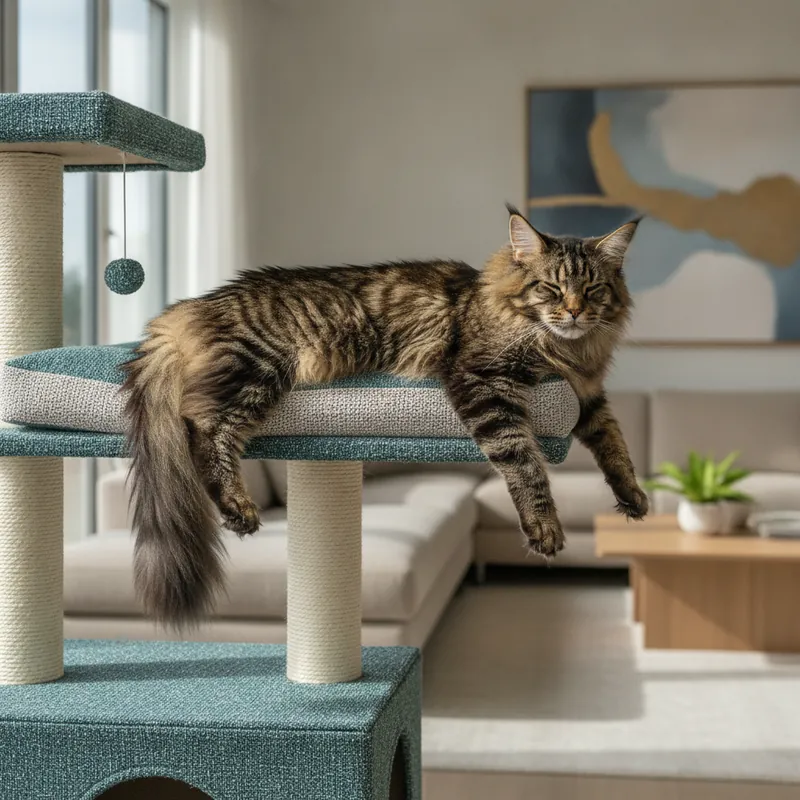
A cat condo for large cats should have a broad, rigid base, resting surfaces that support the whole torso, sturdy posts, and a route your cat can climb without squeezing through small openings. Do not choose by height or an XL label alone. Large, XXL, and heavy duty are marketing terms, not universal sizing standards, so the usable measurements matter more than the product name.
Start with four priorities: fit, stability, access, and durability. A well-sized condo lets a large cat lie down without balancing on an edge, turn around inside an enclosed cubby, stretch against a scratching surface, and move between levels with controlled steps. Decorative toys and novelty shapes matter only after those basics are covered.
Look for dimensions for each bed, platform, doorway, and condo interior. Overall height and base size do not reveal whether the top perch is wide enough or whether thick padded walls reduce the cubby to a narrow box. If the listing omits usable dimensions, ask the seller before buying rather than guessing from a staged product photo.
Measure Your Cat Before You Shop
Breed and body weight provide context, but direct measurements are more useful. A muscular 16-pound cat and a long, lean 16-pound cat may need different sleeping areas. Measure nose to the base of the tail, shoulder width, standing shoulder height, curled sleeping footprint, and the highest point reached during a comfortable full-body scratch.
Cat parents might also find our cardboard cat scratcher guide helpful.
Add clearance instead of looking for an exact body-sized fit. Your cat needs room to turn, reposition, and choose between curled and stretched sleeping positions. For an open platform, support for the torso matters most. For a doorway or tunnel, compare the narrowest opening with shoulder width and allow enough space for an easy turn.
If your cat dislikes a tape measure, use a known object as a reference. Photograph the cat resting on a measured blanket or beside floor tiles, then estimate the footprint without causing stress. For a growing kitten, buy for the expected adult body and ask your veterinarian about healthy growth rather than relying only on a breed label.
Cat Condo Specifications That Matter Most
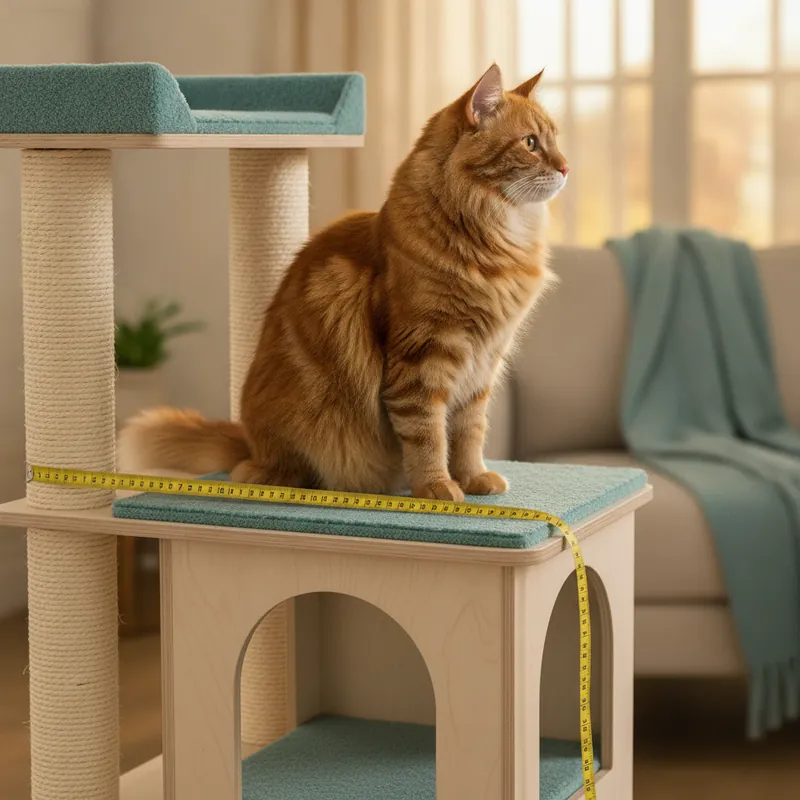
The comparison below is a practical starting point, not a formal safety standard. Your cat's body and movement should guide the decision. Focus on usable space, clear load information, and the route between levels rather than the most impressive overall number on the listing.
Weight ratings need context. Confirm whether the stated number applies to one platform, one bed, or the entire structure. Raised bolsters reduce the flat sleeping area, while thick walls reduce interior room. A manufacturer that publishes per-part dimensions and explains its load rating gives you much better evidence than a vague claim that the condo supports big cats.
Measure the uninterrupted scratching area too. Decorative caps and platform joints can reduce usable height. Humane World for Animals recommends a tall, sturdy post that does not wobble and identifies 32 inches as useful for many cats. A particularly long cat may need more, so compare that guidance with your own cat's relaxed stretching reach.
How to Evaluate Stability and Safety
A heavy duty cat condo should not rock during ordinary scratching, climbing, or landing. Build it on a level surface, hand-start every fastener, and tighten parts in the sequence given by the manufacturer. Press gently on each platform from several directions before your cat uses it, then confirm that the base rests completely on the floor.
For more feline-friendly picks, browse our water drinking fountain cats roundup.
A wide base helps, but balance and connection quality matter too. The taller the structure and the farther an upper bed projects from the center, the more leverage a landing cat creates. Carpet can also hide a slightly uneven base. Use any included restraint exactly as directed and choose hardware appropriate for your wall type.
Inspect for protruding screws, accessible staples, torn fabric loops, and long toy cords. Use only the restraint supplied or recommended by the cat condo manufacturer, install it with hardware appropriate for the wall type, and check it during routine maintenance. Never improvise a bracket that could weaken a panel or create a snagging hazard.
No product becomes automatically safe because the listing says heavy duty. Correct assembly, suitable placement, regular inspection, and staying within the manufacturer's stated limits all matter. If a platform flexes, a post rotates after tightening, or the base rocks on a level floor, stop use and contact the manufacturer.
Choose Materials That Can Handle Daily Use
Material quality affects stiffness, scratching value, cleaning, and longevity. Engineered wood can provide a solid platform when panels are thick and properly supported. Solid wood is durable but heavier. Lightweight hollow panels are easier to move, but their joints deserve closer inspection on a tall cat condo for large cats.
Tightly wrapped sisal rope and woven sisal are common scratching surfaces. The ASPCA explains that scratching is normal cat behavior connected with stretching, claw care, play, and marking. A stable vertical surface gives a large cat room to stretch without shifting the whole structure.
Check how every covering is attached. Loose carpet edges, exposed staples, and unraveling rope need prompt attention. Removable washable cushions help in long-haired homes, while smooth platforms are easier to wipe. If a cat needs more traction, use only a secured nonslip pad that cannot slide or bunch under a landing paw.
Odor matters as well. Let a new condo air out in a ventilated room according to the maker's directions. Contact the seller if you notice persistent strong odors, dampness, damaged panels, or visible mold. A lower price is not a bargain when construction defects make the furniture unpleasant or unsafe to use.
Match the Layout to Your Cat's Age and Mobility
The tallest model is not automatically the best cat condo for large cats. A healthy, confident adult may enjoy a high observation bed. An older cat, a cat with limited vision, or one with joint discomfort often does better with broad intermediate platforms, smaller vertical gaps, a low first step, and at least one appealing bed that does not require reaching the top.
If your cat needs variety, our cat trees and towers guide has great suggestions.
Watch how your cat already moves through the home. A cat that steps onto a couch but hesitates at a windowsill is showing you a comfortable height range. Also study the descent. Product photos emphasize the route up, yet a large cat needs room to turn and a broad landing on the way down.
Open approaches are often easier than narrow tunnels for a cat with reduced mobility. Nonslip surfaces can improve confidence, but they must stay flat and secure. Avoid ladders with tiny rungs, platforms reached only by a sharp vertical jump, and layouts where an upper cubby blocks the only broad landing.
Sudden reluctance to jump, stiffness, missed landings, or a change in normal activity can have medical causes. Furniture changes do not replace veterinary advice. Discuss new mobility changes with your veterinarian, and choose a lower, wider layout while the cause is being evaluated.
Put the Large Cat Condo Where It Will Be Used
Even a well-built condo can be ignored in the wrong location. Many cats value visibility, household connection, warmth, and control. Try a stable spot near a safe window or in a living area where people spend time, while keeping the structure clear of doors, fireplaces, unstable shelves, electrical cords, and blind cords.
The Ohio State University Indoor Pet Initiative identifies perches, resting areas, scratching surfaces, toys, and refuge as useful indoor-cat resources. One cat condo can support several of those needs, but only when its location makes it attractive and easy to approach.
Place a scratcher where the cat already wants to scratch rather than hiding it in an unused room. A sunny window can be appealing, but check heat and direct sun at different times of day. Make sure curtains, cords, plants, and nearby shelves do not create a hazard or an unstable shortcut onto the tower.
Introduce the condo without forcing your cat onto it. Place treats on an easy lower level, play nearby with a wand toy, or add a familiar washable blanket. Do not rub the cat's paws on the scratching post. Give the cat time to investigate and build a positive routine independently.
Plan a Cat Condo for a Multi-Cat Household
A multi-cat condo needs more than a high total weight rating. It needs several usable resting areas and a layout that does not let one cat block every route. Look for more than one way to leave an upper level, wide platforms, separate scratching zones, clear sightlines, and both low and high retreat options.
One large tower should not be the home's only elevated space or scratching resource. Cats that sleep together may share a broad top bed, while cats that merely tolerate one another may need separate perches in different rooms. Observe actual relationships instead of assuming peaceful coexistence means every resource can be shared.
VCA Animal Hospitals notes that scratching can have a territorial-marking role. If one cat guards the condo or blocks the descent, add alternatives rather than forcing sharing. For simultaneous use, ask the manufacturer whether the combined load and likely sitting positions are covered.
Traffic flow matters as much as total surface area. Two cats should not have to pass nose to nose on a narrow ledge. A low retreat gives a cautious cat another option when the high bed is occupied, while a second exit prevents a confident cat from trapping a housemate in an enclosed cubby.
Assemble, Inspect, and Maintain the Condo
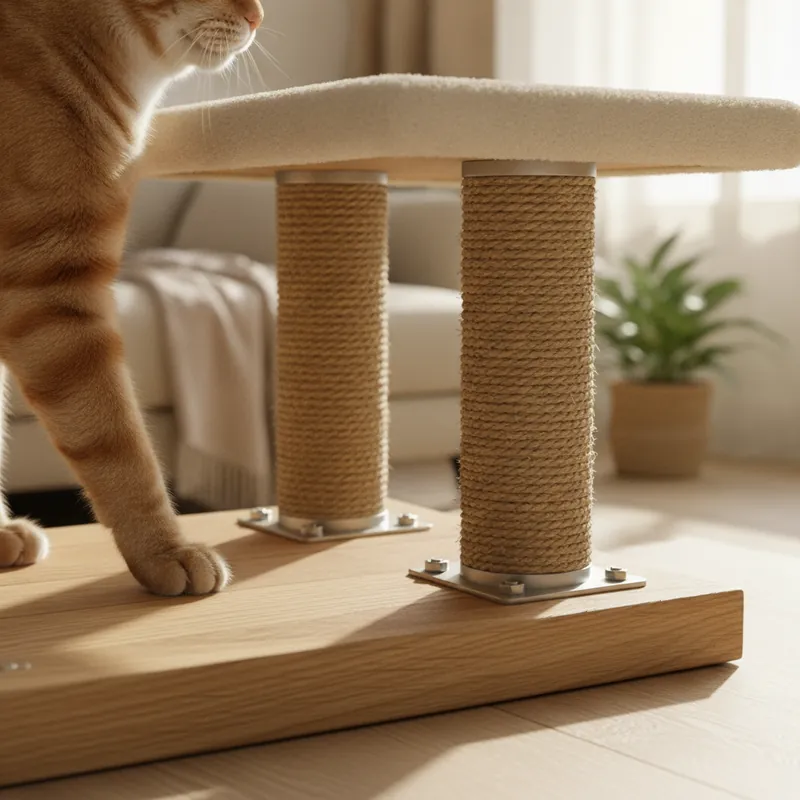
Inventory every panel, post, fastener, cushion, and restraint before assembly. Build on a flat surface, follow the numbered sequence, and stop if holes do not align. Drilling a new hole or substituting a bolt can change the load path, so contact the manufacturer instead of forcing a part into place.
Inspect weekly during the first month. New fabric may compress and connections may settle. After that, keep a regular routine that checks for rotating posts, tilted platforms, backed-out fasteners, cracked panels, frayed rope, exposed staples, torn hammocks, loose cords, and movement at the wall restraint.
Vacuum fur and debris, wash removable covers according to their labels, and let surfaces dry fully before use. Avoid soaking engineered wood or leaving damp fabric against joints. Cleaning is also a useful inspection opportunity because fur can hide a loose washer, lifted carpet edge, or small panel crack.
Replacement posts, beds, and cushions can extend the useful life of a cat condo for large cats. Ask about part availability before buying, especially when the unit is expensive or difficult to move. Structural damage, a platform that remains tilted, or a restraint that no longer holds is a reason to stop use, not a cosmetic issue.
Use This Final Cat Condo Buying Checklist
Compare finalists using evidence instead of superlatives. Check packed weight and delivery method, measure doorways and stairs, and leave enough floor area for assembly. Read recent reviews for repeated patterns about wobble, alignment, platform size, fabric wear, and customer support, but keep manufacturer specifications as the primary reference.
A user photo can reveal scale, but perspective is easily misleading. The strongest review includes a measured platform or identifies the cat's body size. A brand-neutral checklist keeps attention on the features that affect daily comfort rather than the tallest tower or the most dramatic product photograph.
The best cat condo for large cats is not necessarily the tallest or most expensive. It is the model that fits your cat's body, supports natural scratching and resting, stays stable in your room, offers a comfortable route up and down, and can be maintained for years of regular use.
For more independent, vet-reviewed guidance on this topic, the Cornell Feline Health Center is an excellent place to start.
Frequently Asked Questions
How big should a cat condo be for a large cat?
It should let your cat lie naturally on a platform and turn around inside a cubby without squeezing. Measure nose to the base of the tail, shoulder width, and curled sleeping footprint, then compare those numbers with usable interior dimensions rather than the product's overall size.
What weight limit should a large cat tree have?
Choose a stated limit above your cat's weight, but first confirm whether the rating covers one bed, one platform, or the complete structure. For multiple cats, ask whether simultaneous use is included. Do not infer a safe limit when the listing is unclear.
Are taller cat condos better for large cats?
Not automatically. Height provides a view but increases the importance of base rigidity, balanced platforms, strong joints, and a safe route down. A shorter, wider cat condo may be more suitable for an older or less agile large cat.
What scratching material works well on a large cat condo?
Many cats like sisal rope, woven sisal, cardboard, or wood. Choose a surface your cat already uses and confirm that it supports a full stretch without wobbling. Inspect rope and carpet regularly for loose fibers, exposed staples, and worn attachment points.
Should I anchor a large cat tree to the wall?
Use the restraint supplied or recommended by the manufacturer and follow its instructions exactly. A restraint can reduce movement, but improvised hardware may damage the unit or wall. Contact the manufacturer before adding hardware when the manual does not address anchoring.
Can two large cats share one cat condo?
They can if the manufacturer permits their combined load and the layout provides enough resting areas and routes. The home should still offer separate perches, scratchers, and retreats. Add alternatives if one cat guards the tower or blocks another cat's movement.
How often should I replace a cat condo?
There is no universal schedule. Stop using it if structural panels crack, joints remain loose, a platform tilts, or a restraint fails. Replace compatible scratching posts, hammocks, and cushions as they wear, and distinguish cosmetic wear from structural damage.
Browse Cat Toys
Free worldwide shipping on every order. No minimum purchase required.
Browse Cat Toys →