Shop for cat furniture and you will hit the same question within minutes: tree or tower? Retailers use the words almost interchangeably, but the two designs solve different problems, and picking the wrong one is the main reason expensive cat furniture ends up ignored in a corner.
Here is a practical comparison of cat trees and towers: how the designs differ, which cats prefer which, and how to spend your budget where it actually improves your cat's day.
Trees vs Towers: What Actually Differs
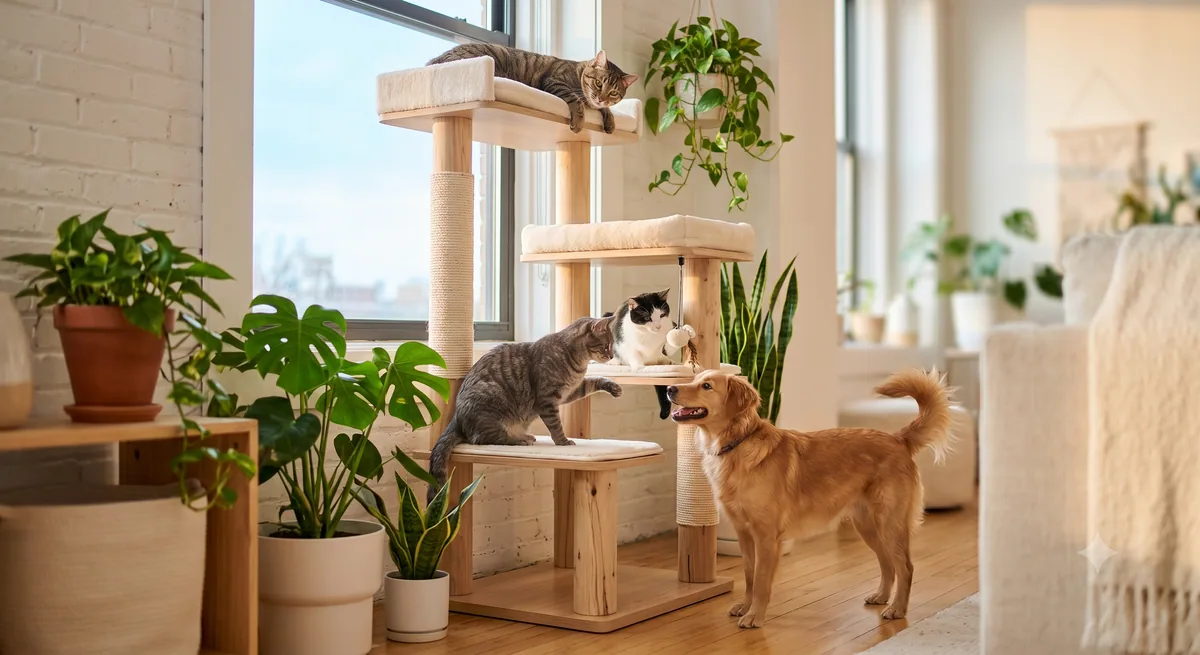
A cat tree branches. It spreads horizontally as well as vertically, mixing perches, hammocks, condos, tunnels, and dangling toys across a wide base. Think of it as a playground: lots of options, lots of floor space required.
A cat tower stacks. Platforms rise in a compact column around one or two central posts, trading variety for a small footprint and serious height. Think of it as a watchtower: fewer features, better views, easier to fit in an apartment.
Neither is universally better. The right choice depends on your cat's personality, age, and how much floor you can give up.
Matching the Design to Your Cat
Active climbers and confident cats usually get more from a tall tower. The appeal is altitude, and a tower delivers the highest perch per dollar. Shy cats and nappers tend to prefer trees, because enclosed condos and wide hammocks offer hiding spots a bare tower lacks.
Kittens do best on low trees with many closely spaced features they can explore safely. Large breeds like Maine Coons need oversized platforms and thick posts regardless of design; our guide to the best cat tree for large cats covers the reinforced options worth considering.
Senior cats generally favor trees with low, padded, easily reached perches. If your older cat loves height but struggles with jumps, look for designs with staircase-style level spacing under 12 inches.
The Multi-Cat Math
For multiple cats, follow the perch rule: one resting spot per cat, plus one spare. Two cats sharing a single-perch tower is a timeshare dispute waiting to happen.
Trees resolve conflict better than towers because they offer parallel real estate at similar heights. Two equal perches on different branches let cats coexist without one literally outranking the other. In tense households, two smaller pieces in different rooms beat one giant piece in one room.
If space allows both, the ideal setup is a tall tower by the best window plus a tree in the family room. The tower serves lookout duty, the tree handles naps and play. Dedicated climbers may also enjoy a floor-to-ceiling cat climbing tree as the centerpiece.
Materials That Survive Real Cats
Cheap cat furniture fails at the same three points: thin pressed-board bases that sag, cardboard tubes inside posts that crush, and stapled carpet that peels within months. Paying slightly more for solid engineered wood and screwed (not stapled) coverings typically doubles the furniture's lifespan.
Sisal rope should wrap any post your cat can reach, because scratching is guaranteed. Look for replaceable sisal sleeves; the post always wears out before the frame. Removable, machine-washable perch covers are the other feature owners end up grateful for.
Where Your Budget Actually Matters
Spend on structure, save on decoration. A sturdy base, thick posts, and quality sisal are worth real money. Bundled dangling toys, printed fabrics, and novelty shapes are not; cats reliably ignore them once the first one falls off.
Mid-range pieces from reputable pet brands usually hit the durability sweet spot. Ultra-budget furniture can work for kittens or light single-cat use, but expect to replace it sooner, which often erases the savings. For independent guidance on feline environmental enrichment, the ASPCA cat care center is worth a read before you buy.
Frequently Asked Questions
Are cat trees and cat towers the same thing?
Not quite. Cat trees branch outward with a mix of perches, condos, and hammocks across a wide footprint, while cat towers stack platforms vertically in a compact column. Retailers mix the terms freely, so judge each product by its footprint, height, and features rather than its name.
Which is better for a small apartment, a tree or a tower?
A tower, almost always. Towers deliver the most climbing height per square foot of floor space, and slim corner designs fit where no tree could. Pair the tower with a window perch or wall shelf if your cat wants more territory without more furniture.
How many perches do I need for two cats?
Use the resting spots formula: one per cat plus one extra, so at least three for two cats. The spots should be at similar heights on separate branches or separate pieces, which prevents one cat from permanently claiming the single best perch and guarding it.
How long does a cat tree last?
A well-built tree with solid wood construction and replaceable sisal typically serves 5 years or more of daily use. Budget pressed-board pieces often loosen and sag within 1 to 2 years, especially with heavy or multiple cats. Tightening bolts every few months meaningfully extends any tree's life.
Do cats prefer enclosed condos or open perches?
It depends on the individual cat's confidence. Bold cats sleep in the open on high perches where they can watch the room. Shy or noise-sensitive cats prefer enclosed condos that cover their backs. A piece offering both lets your cat choose by mood, which is why trees suit timid cats well.
Browse Cat Accessories
Free US shipping on every order. No minimum purchase required.
Browse Cat Toys →