Top photo: a Border Terrier puppy and a black cat sharing a large cushion bed on a wooden floor. Photo: Petteri Sulonen / Wikimedia Commons, CC BY 2.0 (cropped, resized and converted to WebP).
If you are looking for the best xl dog bed, this comprehensive guide covers everything you need to know. Whether you are a first-time pet owner or an experienced one looking to upgrade, you will find practical advice, safety tips, and honest comparisons below.
Quick Answer: What Should You Know About XL Dog Bed?
Choosing xl dog bed well comes down to four things: matching the product to your pet's size and daily routine, checking the materials against how hard it will be used, setting it up or fitting it correctly, and inspecting it on a schedule. This guide covers each of those, plus the mistakes owners most often make.
Why Every Dog Needs the Right XL Dog Bed?
Answer: Dogs sleep for most of the day and night, and they take whatever surface is closest when the right one is missing. A bed sized and padded for your dog turns that habit into real rest, and it keeps an older dog off cold tile and away from the draft under the door.
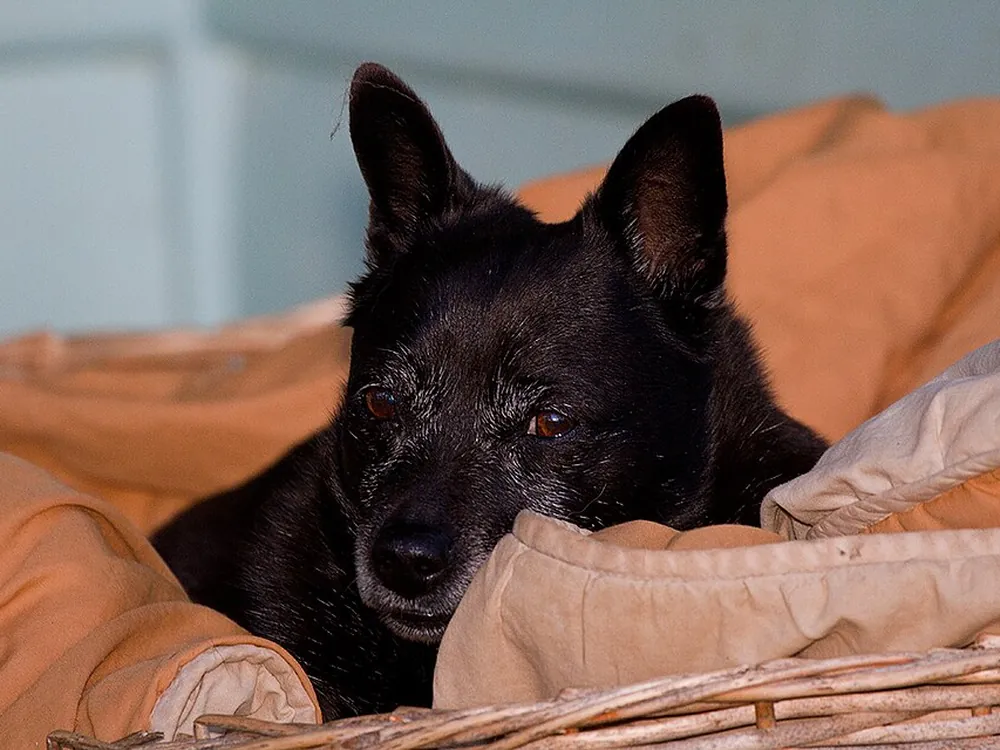
Photo: Patrick_K59 / Wikimedia Commons, CC BY 2.0
Dogs sleep for most of the day and night, and they take whatever surface is closest when the right one is missing. A bed sized and padded for your dog turns that habit into real rest, and it keeps an older dog off cold tile and away from the draft under the door.
Hard floors concentrate a dog's weight onto the elbows, the hips and the point of the shoulder, which is why short-coated and heavy breeds grow bald patches and calluses on exactly those spots. Padding spreads that load across a wider area. This is comfort, not treatment: a dog that is stiff getting up, reluctant to lie down, or sore when touched should be seen by your veterinarian rather than given a thicker cushion and left alone.
A bed also tells a dog where it belongs. Dogs settle faster in a spot with a wall or a piece of furniture at their back, out of the main traffic line, and within sight of the family rather than shut away in a back room. Put the bedding where your dog already chooses to lie, not where it tidies up the room, and you avoid the usual outcome of an expensive bed sitting empty while the dog sleeps on the rug beside it.
Having more than one bed in the house is usually cheaper than arguing with a dog about the sofa. A main bed in whichever room the family actually uses, a thin pad for the car or the crate, and something washable by the back door covers almost all of a dog's day without buying one premium bed for every room.
What Should Pet Owners Know About Different Types of XL Dog Bed and When to Use Each?
Answer: Six shapes cover almost everything on the market: the bolster bed with a raised rim, the flat pillow or cushion bed, the foam mattress, the nest or donut, the elevated cot, and the hooded cave. Each one answers a different sleeping habit, so start with how your dog lies down.
Six shapes cover almost everything on the market: the bolster bed with a raised rim, the flat pillow or cushion bed, the foam mattress, the nest or donut, the elevated cot, and the hooded cave. Each one answers a different sleeping habit, so start with how your dog lies down.
For more expert recommendations, check out our dog blanket guide.
A bolster bed has a padded wall on three or four sides and a flat sleeping panel in the middle. Dogs that rest a chin or a shoulder against something, which is most of them, use that rim constantly. The trade-off is usable area. A large-sounding outer measurement can hide a small inner panel, so read the inner dimensions and ignore the outer ones.
A pillow bed is one filled cushion with no wall at all, and a mattress bed is the same idea built from a solid slab of foam instead of loose fill. Both suit dogs that sprawl, both slide under a table or into a crate, and both get a section of their own further down because the fill and the foam are what decide whether they last.
The nest or donut is a round bed with a continuous raised edge and a soft dished center. Dogs that curl tightly, and dogs that like pressure against their spine, settle into one quickly. The same shape is a poor fit for a dog that stretches out, because the usable center is much smaller than the overall diameter suggests.
An elevated cot is a fabric deck stretched over a frame with air moving underneath. It runs cooler than any foam, it hoses down, and it keeps a dog off a wet patio or a sun-warmed floor. It gives no cushioning whatsoever, so an older or bony dog usually wants a thin pad laid over the deck when the weather allows.
A cave or hooded bed is a covered dome that a dog burrows into. Terriers, small breeds and dogs that startle easily often prefer one. It traps heat, which is a benefit in a cold hallway and a problem in a warm room, and the hood makes the inside hard to inspect, so turn it inside out whenever you wash it.
How to Size XL Dog Bed for a Dog That Sprawls or Curls?
Answer: Measure your dog stretched out on its side, nose to the base of the tail, then add roughly a hand's width at each end. That total is the sleeping surface you need, not the outer dimension printed on the box, and a deep bolster rim can swallow a surprising amount of it.
Measure your dog stretched out on its side, nose to the base of the tail, then add roughly a hand's width at each end. That total is the sleeping surface you need, not the outer dimension printed on the box, and a deep bolster rim can swallow a surprising amount of it.
Watch how your dog actually sleeps before you choose a shape. A sprawler lies flat on its side with the legs extended, sometimes on its back, and needs rectangular floor space with nothing in the way. A curler tucks nose to tail and wants a rim to push against. Most dogs do both depending on the room temperature, so the safe buy is a rectangle big enough for the sprawl with a low bolster along one or two sides.
Small dogs are not simply scaled-down large ones. They lose heat faster, they frequently prefer a deep nest or a covered cave over an open panel, and they are the group most likely to end up with far more bedding than they will ever use. For a growing puppy, buy for the adult size and fold a blanket into the middle for now, rather than buying twice.
Extra large is where the marketing gets loose. Going up a size often adds perimeter bolster rather than sleeping panel, and the foam slab inside is sometimes the same depth as the medium, which means a heavy dog bottoms out on the bed that was sold as the big one. Check the inner panel and the foam depth before you pay for the word.
A human sized bed is a real product rather than only a novelty. For a tall dog that sprawls, for two dogs that sleep touching, or for an owner who wants to lie down beside the dog, the extra span genuinely gets used. The things to check are the same as for any other bed: foam deep enough not to flatten under adult weight, a cover that fits a machine you actually own, and a filling that can be topped up rather than thrown out.
How Pillow Beds and Cushion Beds Actually Work?
Answer: A pillow bed is a single filled pad with no rim, no wall and no frame, which is why dogs that sprawl choose it over anything with sides. The whole surface is usable, it slides under a table or into a crate, and the fill decides how long it lasts.
A pillow bed is a single filled pad with no rim, no wall and no frame, which is why dogs that sprawl choose it over anything with sides. The whole surface is usable, it slides under a table or into a crate, and the fill decides how long it lasts.
You might also find our human dogbed article helpful when shopping.
Fill is where one pillow bed separates from another. Loose polyester fiber is the cheapest and it packs down into a thin mat within months, especially under a heavy dog that circles and digs before lying down. Shredded memory foam holds its loft far longer and lets a dog push it into a hollow that fits. Polystyrene beads are light and quiet, but they migrate toward the edges and leave the middle bare.
The useful cushion beds are built as two pieces: an inner pillow that holds the fill, and an outer cover that zips off. That separation is the whole reason some beds are washable and others are not, because the cover goes in the machine while the inner pillow stays intact. A one-piece bed with the fill sewn straight into the outer fabric has to be washed whole, and it comes out lumpy and slow to dry.
Because a pillow is only fabric and fill, it can be refilled instead of replaced. Open the inner seam or the fill zip, add a bag of shredded foam, and a flattened pillow returns to something close to new for a fraction of the price of another bed. Keep whatever fill is still clean and top it up rather than swapping the lot.
A cushion bed is the wrong answer in three situations. A dog that props its head up to sleep will keep sliding off the edge looking for a bolster. A dog with sore joints needs a firm slab rather than a soft heap that it sinks through. And a determined chewer turns one opened seam into a room full of loose fill, so for that dog the fabric matters more than the comfort. Spare pillow covers in a plain, tightly woven fabric cost little and are worth ordering with the bed, because cover ranges disappear long before the pillow inside them wears out.
What a Mattress Bed and Memory Foam Change for an Older Dog?
Answer: A mattress bed is a solid slab of foam inside a cover, with no rim and no loose fill, and it is the closest thing a dog gets to the mattress you sleep on. Depth decides everything, because a slab a heavy dog presses through does nothing.
A mattress bed is a solid slab of foam inside a cover, with no rim and no loose fill, and it is the closest thing a dog gets to the mattress you sleep on. Depth decides everything, because a slab a heavy dog presses through does nothing.
Three foams turn up inside a dog mattress and they behave very differently. Solid high-resilience foam is springy, cheap to make and perfectly adequate for a young dog. Memory foam molds around the body and moves weight off the elbows and hips, which is why it is sold for seniors and for large breeds. Convoluted egg-crate foam photographs like something clinical and is usually the thinnest layer in the catalog and the first to flatten.
Test the depth with your hand instead of reading the label. Press a flat palm into the middle of the mattress with your weight behind it, and if you can feel the floor, so can your dog. Layered construction is what solves this: a firm base layer under a softer top layer keeps the surface comfortable without letting a large dog sink all the way through.
Older and heavier dogs are who a mattress bed is really for, because they spend longer lying down and they get up more slowly. A supportive surface and a low step-on height make that easier, and a bed placed away from slippery flooring helps even more. None of this is treatment. Stiffness, limping, yelping on rising, or a dog that suddenly stops using its bed is a conversation with your veterinarian rather than a bedding purchase.
Foam and washing machines do not mix. A mattress bed should have a cover that comes off completely plus a waterproof liner between that cover and the foam, so a wet night soaks the liner instead of the slab. Foam that does get soaked takes days to dry right through, and a core that stays damp in the middle rarely smells right again.
Foam also wears out quietly. Press the mattress in the middle and then at a corner and compare how each springs back; when the middle stays flat while the corner recovers, the support has gone even though the cover still looks new. Replacing the core on its own is possible on better beds and costs far less than a whole new mattress, so check whether spare cores are sold before you buy.
How to Judge Durability and Washability in XL Dog Bed?
Answer: Two things decide whether a bed lasts: a cover that comes off without a fight, and fabric with nothing loose for a dog to start on. Look for a zip down three sides, a pull tucked under a flap, and a tight weave rather than a plush pile.
Two things decide whether a bed lasts: a cover that comes off without a fight, and fabric with nothing loose for a dog to start on. Look for a zip down three sides, a pull tucked under a flap, and a tight weave rather than a plush pile.
Looking for more options? Our human dog bed roundup covers additional top picks.
Nothing sold as chew proof is actually chew proof. Tight canvas, ripstop and ballistic nylon survive far longer than plush, and a taut cot deck gives a dog almost nothing to grip, but a bored dog with hours on its own will get through any of them eventually. Durability buys time. Exercise, something the dog is allowed to chew, and not leaving a destructive dog unsupervised with new bedding are what actually fix the behavior.
Seams and zips fail long before fabric does. Check that the piping is stitched deep into the seam rather than glued on, that the zip has a chunky molded or metal slider, and that there is an inner flap covering it. On a cheap bed the stitching gives the game away: put your thumbs either side of a seam in the store and see how much daylight appears when you pull.
Wash the cover on its own, cool, with no fabric softener, because softener coats the fibers and destroys any water-repellent finish. Air dry rather than tumble dry, since heat shrinks a cover until it will no longer stretch back over the foam. The inner pillow and the foam core should never go through a machine at all.
Put a washable throw on the sleeping surface and most of the hair, mud and skin grease ends up there instead of soaking into the bedding underneath. Wash the throw weekly and the cover monthly, and more often for a dog that swims, rolls in things or has skin trouble. A waterproof liner under the cover is worth having for puppies, for seniors and for any dog that regularly comes home wet.
What Should Pet Owners Know About Common Mistakes Dog Owners Make with XL Dog Bed?
Answer: The most common mistake is buying for the room instead of for the dog. A bed placed where it suits the furniture, in a hallway or in a back room away from the family, gets ignored, and the dog returns to the sofa. Put the bedding where your dog already lies.
The most common mistake is buying for the room instead of for the dog. A bed placed where it suits the furniture, in a hallway or in a back room away from the family, gets ignored, and the dog returns to the sofa. Put the bedding where your dog already lies.
The second is buying the size that matches a dog standing up rather than the size that dog makes lying down. Owners measure the animal and forget the sprawl, then end up with a bed the dog hangs off at both ends. If you are between sizes, go up, and add a rolled towel along one edge if the extra space feels too open at first.
The third is assuming a new bed instantly replaces an old habit. Dogs take time to move their sleeping spot, so lay the old blanket on the new bed, drop a few treats on it over several days, and leave it exactly where the old one sat for a week before you move it anywhere. A bed rejected on the first night has usually just failed the smell test.
The fourth is cleaning a bed to death. Hot washes, tumble drying and fabric softener destroy covers far faster than dogs do, and putting a foam core through a machine ruins it in a single cycle. The fifth is leaving a flattened bed in service because the outside still looks presentable: the cover reliably outlives the support by a long way, so judge the padding and not the fabric.
Finally, a novelty bed and a destructive dog is a bad pairing. A plush character bed is a lovely place for a gentle sleeper and a bag of loose stuffing for a dog that disembowels toys. Match the build to the dog you actually have rather than to the one in the product photograph.
What Should Pet Owners Know About Getting the Best Value When Shopping for XL Dog Bed?
Answer: Spend the money on the foam and the cover, and ignore the shape, the color and the branding. A plain rectangular bed with a deep core and a zip-off cover outlasts a decorative one at the same price, and the parts you cannot upgrade later are the ones that deserve the budget.
Spend the money on the foam and the cover, and ignore the shape, the color and the branding. A plain rectangular bed with a deep core and a zip-off cover outlasts a decorative one at the same price, and the parts you cannot upgrade later are the ones that deserve the budget.
It helps to know where the familiar names sit. Casper is a human mattress company that applied the same foam engineering to dog beds and sells them direct. Orvis is a long-established outdoor outfitter whose beds sit at the premium end and are usually judged on cover fabric and construction. Kuranda builds elevated beds with a chew-resistant frame and a taut deck, and is a familiar name in kennels and shelters.
KONG is known for rubber chew toys, and KONG-branded bedding is a separate line from the rubber, so judge one of those beds on its own fabric and foam rather than on the reputation of the toys. Squishmallow-style plush beds are scaled-up soft toys, which makes them a genuinely comfortable spot for a gentle sleeper and a poor idea for anything that opens seams.
Livehappypet does not stock any of those brands, so treat the names above as a map of the market rather than a recommendation. Whoever you buy from, work out which of the six shapes your dog needs first, then compare foam depth, cover fabric and whether replacement covers are sold at all. Our dog range is a sensible starting point once you know the shape you are looking for.
Two cheaper beds usually beat one expensive one. A main bed in the room the family uses plus a thin washable pad for the car or the crate covers far more of a dog's day than a single premium bed in a room the dog avoids. Buy the spare cover at the same time as the bed, because cover ranges are discontinued long before the bedding under them wears out.
Organizations like the VCA Animal Hospitals pet health library also offer trusted, science-backed advice that is well worth bookmarking.
What Questions Do Pet Owners Ask About XL Dog Bed?
Answer: Choosing xl dog bed well comes down to four things: matching the product to your pet's size and daily routine, checking the materials against how hard it will be used, setting it up or fitting it correctly, and inspecting it on a schedule. This guide covers each of those, plus the mistakes owners most often.
What size dog bed should I buy?
Measure your dog lying on its side, nose to the base of the tail, and add roughly a hand's width at each end. Buy for that sleeping surface rather than the outer dimensions on the box, because a deep bolster rim can take a third of the width. If your dog falls between two sizes, go up.
Is memory foam really better for an older dog?
It spreads weight off the elbows and hips instead of concentrating it, which owners usually notice as a dog settling for longer rather than shifting around. Depth matters more than the words on the label: a thin memory foam mattress bottoms out under a heavy dog and supports less than a deep slab of ordinary foam. Any dog struggling to rise should see a veterinarian.
How do I wash a dog bed that has no removable cover?
Soak it in a bath with a mild detergent, press rather than wring, rinse until the water runs clear, then stand it on edge outdoors for a day or longer. It will take much longer to dry than you expect, and a core that stays damp in the middle will smell. When you replace it, choose a bed with a cover that zips off and an inner pillow you can lift out.
Are elevated dog beds better than cushioned ones?
They are better at different jobs. A cot runs cooler, keeps a dog off wet ground, hoses clean and gives a chewer very little to grip. It offers no cushioning at all, so a senior or a bony dog usually needs a thin mattress pad laid over the deck. Plenty of households keep a cot outside and a padded bed indoors.
How often should a dog bed be replaced?
Judge the support, not the fabric. Press the middle and then a corner with your palm and compare how each springs back; when the middle stays flat, the padding has gone even though the cover looks fine. A loose-fill pillow can often be topped up with fresh shredded foam instead, and some mattress beds sell a replacement core on its own.
Why does my dog refuse to use the new bed?
Usually the spot, the smell or the shape. Put it exactly where the old one was, lay the old blanket on top so it smells familiar, and scatter a few treats on it for several days. If your dog sprawls and you bought a nest, or it likes a wall to lean on and you bought a flat pad, then the shape is the problem and coaxing will not fix it.
Can a dog bed really be chew proof?
No bed is chew proof, and the honest listings say chew resistant instead. Tight ballistic nylon or canvas over a taut frame buys a lot of time, and hidden zips and stitched-in piping remove the handholds a dog starts with. A dog that destroys bedding is usually under-exercised, bored or anxious, so fabric alone is rarely the whole answer.
Is a human sized dog bed worth buying?
It can be, if that span actually gets used by a tall sprawler, by two dogs that sleep touching, or by an owner who likes to lie down with the dog. Judge it like any other bed: foam deep enough not to flatten under adult weight, a cover that fits a domestic washing machine, and fill that can be topped up. A wide bed made of thin foam is just a big thin bed.