Top photo: a small white poodle sitting on a bed. Photo: Martinultima / Wikimedia Commons, CC BY-SA 3.0 (cropped, resized and converted to WebP).
Feeding a toy breed is not feeding a big dog in miniature. A very small dog has a tiny stomach, a crowded mouth, and an energy demand that is high for its size, so the questions that matter are meal size, kibble shape, meal timing and body condition rather than brand loyalty. This guide covers how to choose toy poodle food, how to read the label, how to work out portions by feel rather than by guesswork, and which questions belong with your veterinarian rather than with a shopping list.
Quick Answer: What Should You Know About Toy Poodle Food?
Choose a complete and balanced food formulated for your dog's life stage, in a kibble small enough for a crowded toy-breed mouth, and split the daily ration across several meals. Judge portions by body condition rather than by the bag, change foods slowly, and take weight, dental and digestive questions to your veterinarian.
Why Toy Breeds Need Different Toy Poodle Food From Larger Dogs?
Answer: A toy breed burns energy quickly for its size while carrying a stomach that holds very little, so the same daily ration has to arrive in smaller, more frequent portions than a big dog needs. That single fact drives most of the practical differences in how you feed a poodle of this size, from meal timing to the shape of the kibble.

Photo: Danikollas / Wikimedia Commons, CC BY 4.0
A toy breed burns energy quickly for its size while carrying a stomach that holds very little, so the same daily ration has to arrive in smaller, more frequent portions than a big dog needs. That single fact drives most of the practical differences in how you feed a poodle of this size, from meal timing to the shape of the kibble.
The mouth is the second difference. Toy and miniature poodles carry a full set of adult teeth in a jaw that was scaled down around them, so the teeth sit crowded and tartar collects in the gaps. Food that is too large to chew gets swallowed whole, and food that turns to paste sticks where a small dog cannot shift it.
The third is margin for error. A missed meal is a minor inconvenience for a big dog and a real problem for a very small puppy, whose reserves are tiny. Young toy-breed puppies can drop their blood sugar if meals are skipped or spaced too far apart, which is why breeders and veterinarians are firm about frequent feeding in the early months. If your puppy ever becomes wobbly, weak or unresponsive, treat it as an emergency and call your veterinarian.
How Kibble Size and Texture Affect Toy Poodle Food?
Answer: Kibble shape is the most practical thing you can control, and the one most owners never check. A small, thin piece that a toy-breed jaw can actually crack is chewed; a large, dense one is swallowed whole or pushed around the bowl. Tip a handful out and look at it next to your dog's mouth.
Kibble shape is the most practical thing you can control, and the one most owners never check. A small, thin piece that a toy-breed jaw can actually crack is chewed; a large, dense one is swallowed whole or pushed around the bowl. Tip a handful out and look at it next to your dog's mouth before you commit to a large bag.
For more expert recommendations, check out our dog treats guide.
Dry, wet and mixed feeding all work, and the choice is less about nutrition than about the individual dog. Dry food is convenient, keeps well and suits puzzle feeders. Wet food carries more moisture, which helps a fussy or older dog eat enough, and it is easier on a sore mouth. Mixing the two is fine as long as the total still adds up to one sensible daily ration.
Texture matters for a small mouth in a way it does not for a Labrador. Very hard, dense pieces can crack a worn tooth, and soft pastes smear along crowded gums. If your dog is dropping food, chewing on one side, or turning away from a bowl it used to empty, that is a dental sign rather than a fussiness sign and it needs a veterinary look.
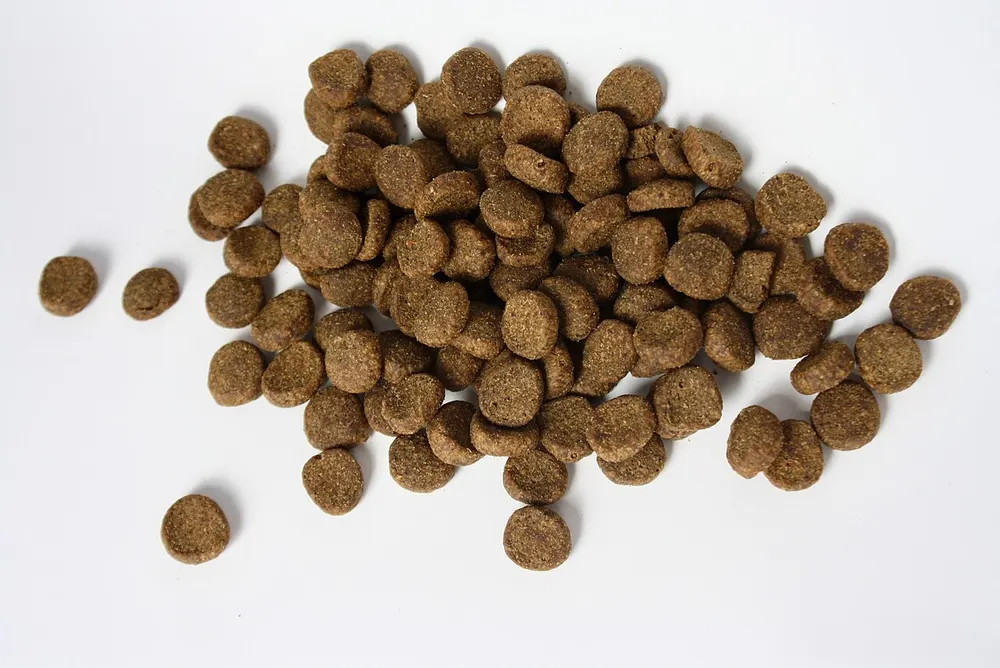
Photo: Megan Marrs / Wikimedia Commons, CC BY 2.0
How to Read the Label When Comparing Toy Poodle Food?
Answer: Find the statement that says the food is complete and balanced for a named life stage, and start there. In the United States that wording follows the AAFCO model, and it is the only line on the bag that tells you the recipe is meant to be fed on its own rather than as a topper or a treat.
Find the statement that says the food is complete and balanced for a named life stage, and start there. In the United States that wording follows the AAFCO model, and it is the only line on the bag that tells you the recipe is meant to be fed on its own rather than as a topper or a treat. A bag without it is not a diet, whatever the front of the packet implies.
Then check the life stage actually matches your dog. Growth, adult maintenance and all-life-stages foods are formulated differently, and an all-life-stages food is built to the richer growth standard, so feeding it to a settled adult toy breed makes weight gain easier than it needs to be. Small-breed and toy formulas usually differ in piece size and energy density rather than in anything exotic.
Treat the ingredient panel with less reverence than the marketing invites. Ingredients are listed by weight before cooking, so a fresh meat at the top can contribute less once the water is driven off than a meal lower down. Named protein sources and a maker who employs qualified nutritionists and runs feeding trials tell you more than a picture of vegetables on the front.
What Should Pet Owners Know About Building a Daily Routine Around Toy Poodle Food?
Answer: Split the day's ration into several meals rather than one. For an adult toy breed, morning and evening is the usual minimum, and three meals suits a dog that vomits bile on an empty stomach overnight. Puppies of this size need more meals than that, spaced through the day, and your veterinarian or breeder will set the schedule for the first months.
Split the day's ration into several meals rather than one. For an adult toy breed, morning and evening is the usual minimum, and three meals suits a dog that vomits bile on an empty stomach overnight. Puppies of this size need more meals than that, spaced through the day, and your veterinarian or breeder will set the schedule for the first months.
You might also enjoy our recommendations for tough dog toys.
Leaving food down all day is the habit worth breaking. Free feeding makes it impossible to notice the day your dog goes off its food, which is often the first sign of a problem, and it quietly encourages grazing weight gain in a dog where a small excess is a large percentage. Put the bowl down, give it a reasonable window, then lift it.
Use part of the ration as work rather than as a handout. A toy breed empties a bowl in moments and then has nothing to do, so moving some of the daily food into a slow feeder, a puzzle or a scatter on a snuffle mat turns a few seconds into several minutes of genuine occupation. It costs nothing because the food was already being fed.
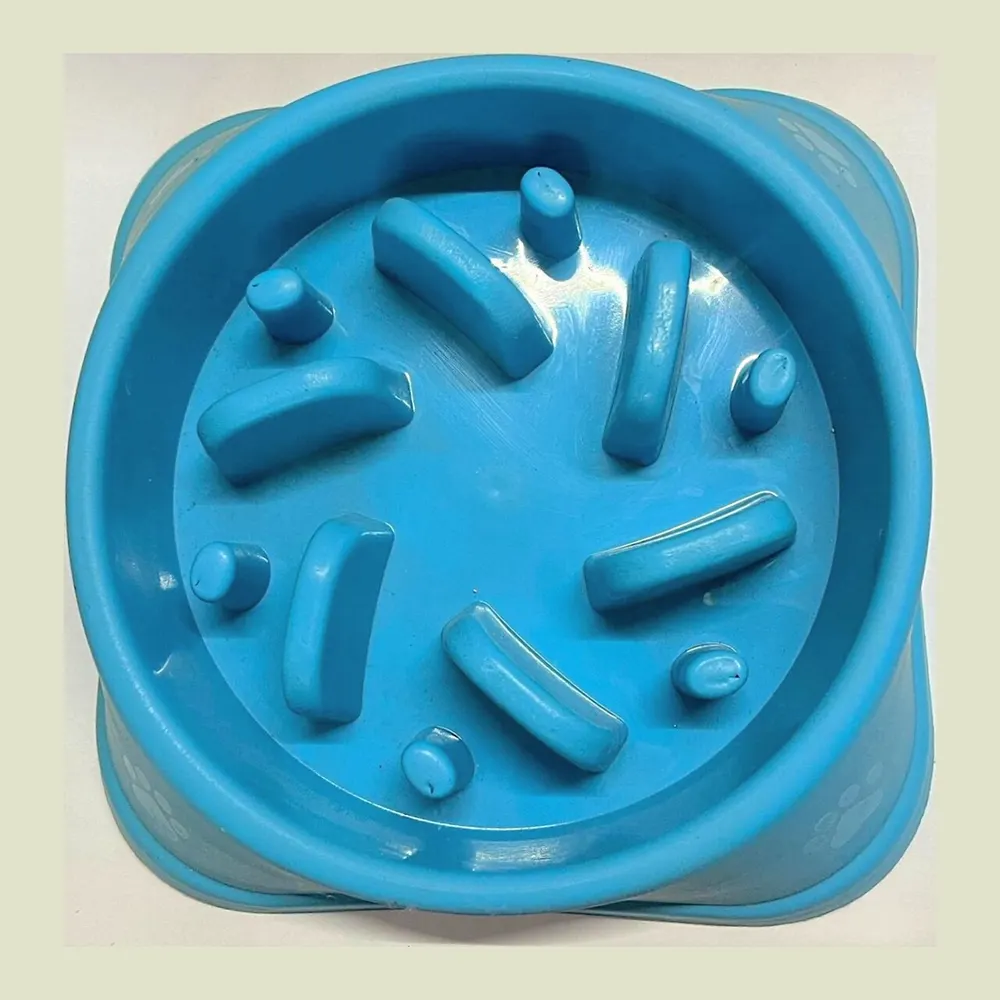
Photo: ELTORO.VET / Wikimedia Commons, CC0
How to Judge Portions of Toy Poodle Food by Body Condition?
Answer: The feeding chart on the bag is a starting point and nothing more. It is written for a range of dogs with a range of activity levels, and on a dog this small the difference between the right amount and too much is a quantity you could hold in a spoon. Measure with a proper scoop or a kitchen scale.
The feeding chart on the bag is a starting point and nothing more. It is written for a range of dogs with a range of activity levels, and on a dog this small the difference between the right amount and too much is a quantity you could hold in a spoon. Measure with a proper scoop or a kitchen scale rather than estimating, then adjust from what you see and feel.
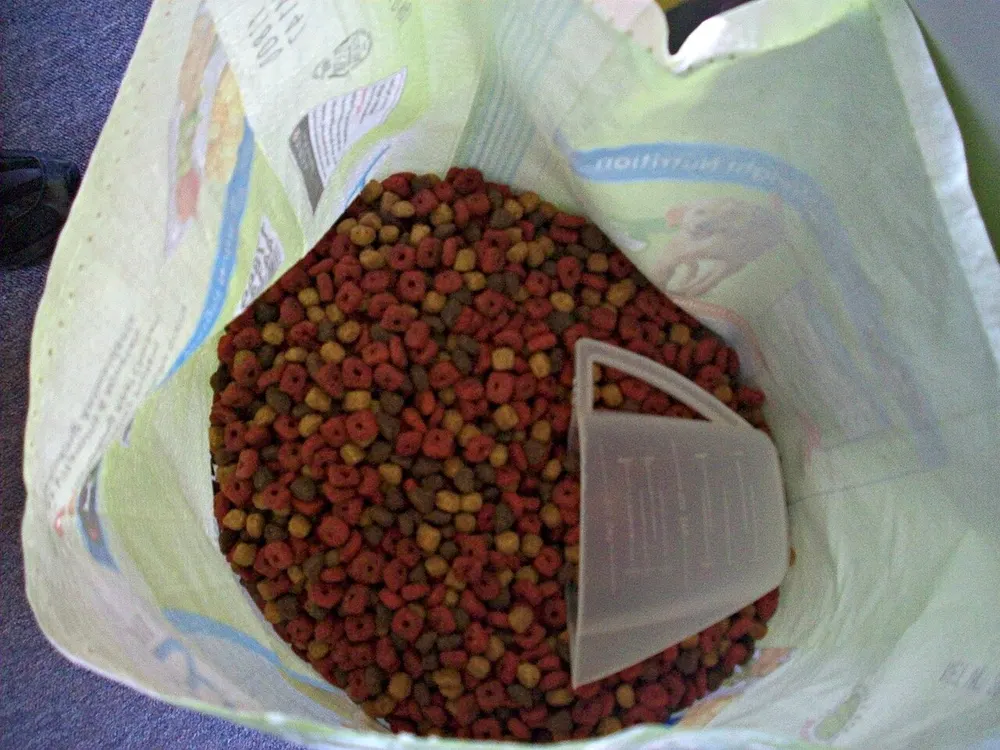
Photo: Alisha Vargas / Wikimedia Commons, CC BY 2.0
Learn the hands-on check instead. Run your fingertips along your dog's side: you should feel the ribs easily under a thin covering, without pressing. Look down from above for a visible waist behind the ribs, and from the side for a tuck up toward the hips. If you cannot find ribs without pushing, reduce the portion slightly and recheck in a few weeks.
Count treats as part of the day's food, not as extra. On a dog this size a few biscuits and a corner of toast genuinely matter, and they are the most common reason a carefully measured ration still produces a round dog. Use some of the measured kibble as training rewards, and ask your veterinarian to confirm a target condition rather than guessing at a target weight.
What Toy Poodle Food Can and Cannot Do for a Small Dog's Teeth?
Answer: Crowded teeth are the defining health issue of the toy breeds, and diet plays a smaller part in it than most packaging suggests. Ordinary kibble shatters on contact and does very little cleaning, so the belief that dry food keeps teeth clean does not survive a look inside most small dogs' mouths. Daily brushing and.
Crowded teeth are the defining health issue of the toy breeds, and diet plays a smaller part in it than most packaging suggests. Ordinary kibble shatters on contact and does very little cleaning, so the belief that dry food keeps teeth clean does not survive a look inside most small dogs' mouths. Daily brushing and professional dental care do the real work.
For related picks, take a look at our stuffed dog toys roundup.
Dental-specific diets and chews are a genuine supplement rather than a substitute. The ones that help have a texture that wipes the tooth rather than crumbling, and they only reach the teeth a dog actually uses on them. If your dog already has sore gums it will avoid them, which is a reason to see a veterinarian rather than to buy a harder chew.
Watch for the signs that food is no longer comfortable: breath that turns sour, chewing on one side, dropping pieces, pawing at the mouth, or a dog that approaches the bowl and then walks away. Those belong in a veterinary consultation. A diet change will not fix a painful tooth, and a dog in pain will not eat properly whatever you put in the bowl.
What Should Pet Owners Know About Common Mistakes Owners Make with Toy Poodle Food?
Answer: Switching brands abruptly is the first and the most avoidable. A small digestive system reacts hard to a sudden change, and the resulting upset is then blamed on the new food rather than on the speed of the change. Mix the new in with the old over a week or so, increasing the proportion gradually.
Switching brands abruptly is the first and the most avoidable. A small digestive system reacts hard to a sudden change, and the resulting upset is then blamed on the new food rather than on the speed of the change. Mix the new in with the old over a week or so, increasing the proportion gradually, and stop if the stools loosen.
Feeding from the table is the second. On a dog of this size, scraps displace a meaningful share of a balanced ration, and several common human foods, including grapes, raisins, onions, garlic, chocolate and anything sweetened with xylitol, are genuinely dangerous. Keep a jar of the dog's own kibble by the table if the family cannot resist giving something.
Choosing a diet from marketing is the third. Grain-free, raw and boutique recipes are an area of active veterinary debate rather than a settled upgrade, and a small dog has little margin if a home-made or unbalanced recipe is slightly wrong. If you are drawn to one of these, raise it with your veterinarian before you switch rather than afterwards.
What Should Pet Owners Know About Getting the Best Value When Shopping for Toy Poodle Food?
Answer: A small dog eats very little, which changes the economics completely. The premium food that would be expensive for a retriever is affordable here, and the saving from a cheaper bag is small enough to be beaten by one avoidable veterinary visit. Buy on formulation quality and piece size rather than on price per kilogram.
A small dog eats very little, which changes the economics completely. The premium food that would be expensive for a retriever is affordable here, and the saving from a cheaper bag is small enough to be beaten by one avoidable veterinary visit. Buy on formulation quality and piece size rather than on price per kilogram.
Buy small bags, not bulk. Fat in dry food goes stale once the bag is opened, and a toy breed will take months to work through a sack sized for a big dog. Roll the bag down and clip it, keep it in its original packaging inside any storage bin so the batch code stays with the food, and store it somewhere cool and dry.
Spend the rest of the budget on the things that genuinely change a small dog's day: a bowl at a comfortable height that does not slide, a slow feeder or puzzle that turns dinner into work, and a toothbrush. Our dog range covers the enrichment side, and a puzzle fed from the normal ration costs nothing extra to run.
For more independent, vet-reviewed guidance on this topic, the VCA Animal Hospitals pet health library is an excellent place to start.
What Questions Do Pet Owners Ask About Toy Poodle Food?
Answer: Choose a complete and balanced food formulated for your dog's life stage, in a kibble small enough for a crowded toy-breed mouth, and split the daily ration across several meals. Judge portions by body condition rather than by the bag, change foods slowly, and take weight, dental and digestive questions to your veterinarian.
How many times a day should a toy poodle be fed?
Adults usually do well on morning and evening meals, and three smaller meals suit a dog that brings up bile on an empty stomach overnight. Puppies of this size need more frequent meals than that through the first months, because their reserves are small. Ask your veterinarian or breeder to set the schedule for a young puppy rather than guessing.
What size kibble suits a toy or miniature poodle?
Small, thin pieces the dog can actually crack rather than swallow whole. Tip a handful out and compare it with your dog's mouth before buying a large bag. Small-breed formulas mostly differ from standard ones in piece size and energy density, which is exactly the difference that matters for a crowded toy-breed jaw.
How do I know if I am feeding the right amount?
Use your hands rather than the bag. You should be able to feel the ribs easily under a thin covering without pressing, see a waist from above and a tuck from the side. The chart on the packet is a starting point for a range of dogs. Adjust in small steps, recheck in a few weeks, and confirm a target condition with your veterinarian.
Do treats really matter on a dog this small?
Yes, more than on any large breed. A few biscuits are a meaningful share of a tiny daily ration, which is why carefully measured dogs still gain weight. Count treats within the day's food, use some of the measured kibble for training rewards, and keep the family supplied from the dog's own jar rather than from the table.
Is dry food better than wet for a small dog?
Neither is better in itself. Dry is convenient, stores well and works in puzzle feeders; wet carries more moisture, which helps a fussy or older dog eat enough and is easier on a sore mouth. Mixing is fine as long as the combined total is still one sensible ration. Choose by what your dog eats comfortably.
Does dry food clean a small dog's teeth?
Far less than the packaging implies. Ordinary kibble shatters on contact and does very little cleaning, which is why crowded toy-breed mouths still develop tartar on a dry diet. Dental-specific textures help a little. Daily brushing and professional dental care do the real work, and a dog avoiding hard food may already be in pain.
How do I switch my dog to a new food?
Slowly. Mix a small proportion of the new food into the old and increase it gradually across about a week, watching the stools as you go. If they loosen, hold at the current mix for a few days before continuing. A small digestive system reacts hard to a sudden change, and the upset usually belongs to the speed rather than the food.
Should I feed a grain-free or raw diet to a toy breed?
Treat both as a conversation with your veterinarian rather than a straightforward upgrade. Diet and heart health in dogs is an area of active debate, and home-prepared or unbalanced recipes leave very little margin on a dog this small. If you want to move in that direction, raise it before you switch rather than afterwards.
Browse Dog Supplies
Free US shipping on every order. No minimum purchase required.
Browse Dog Supplies →