If you are looking for the best shock collar, this comprehensive guide covers everything you need to know. Whether you are a first-time pet owner or an experienced one looking to upgrade, you will find practical advice, safety tips, and honest comparisons below.
What a Shock Collar Is and How It Works
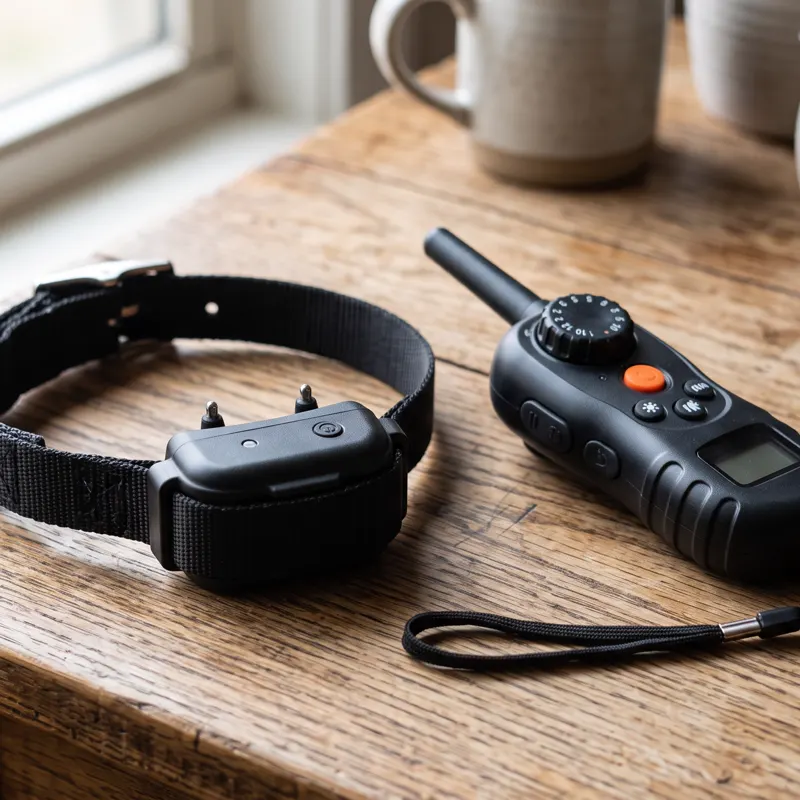
A shock collar, also sold as an e-collar, static collar, or remote training collar, is a collar-mounted receiver with two contact points that deliver an electric stimulus to the dog's neck. A handheld transmitter, an automatic bark sensor, or a boundary wire triggers the stimulus. Most modern units offer a range of intensity levels plus tone and vibration modes, and trainers who use them typically describe the sensation at low levels as a tap or tingle rather than a jolt.
The tool appears in three main product families. Remote trainers put the trigger in a human hand, usually for off-leash obedience or stopping behaviors at a distance. Anti-bark collars fire automatically when a sensor detects barking. Containment systems, often called invisible fences, correct the dog for crossing a buried or wireless boundary. All three share the same underlying mechanism: the collar makes something unpleasant happen so the dog works to avoid it.
That mechanism is the honest place to start this guide. Whatever the marketing language says about communication or stimulation, a collar of this type changes behavior because the dog finds the sensation aversive and learns to avoid it. That does not automatically make every use abusive, but it does mean the welfare questions in the rest of this article are not optional reading. Before this tool goes on a dog's neck, an owner should understand what it does, what can go wrong, and what else works.
What the Stimulation Actually Does to Behavior
In learning terms, a static collar works through positive punishment and negative reinforcement: an unpleasant sensation is added to suppress a behavior, or removed the moment the dog complies. Used with precise timing by a skilled trainer, this can suppress a target behavior quickly, which is exactly why the tool has persisted. The speed of the visible result is real, and pretending otherwise convinces nobody.
For more expert recommendations, check out our harness for cats guide.
The problem is what the dog learns alongside the intended lesson. Dogs connect the unpleasant sensation to whatever they notice at that moment, which is not always the behavior the human had in mind. A dog corrected for barking at the fence may associate the discomfort with the child walking past instead, and greet children with fear or aggression afterward. Trainers call this fallout, and it is the central welfare argument against aversive tools: suppression of one behavior can quietly purchase anxiety, avoidance, or a new aggression trigger.
Signs that a collar is causing harm rather than teaching include a dog that shuts down and offers little behavior at all, yelping or neck scratching at the contact points, refusing to work unless the collar is on, or becoming collar-wise and ignoring commands the moment it comes off. Skin irritation and pressure sores from tight or long-worn contact points are a separate physical risk. Any of these signs is a signal to stop and reassess, not to increase the level.
Why Shock Collars Are So Controversial
The controversy is not a simple split between trainers and activists; it runs through the professional training and veterinary world itself. Veterinary behavior organizations have broadly moved against aversive training methods. The American Veterinary Society of Animal Behavior publishes position statements recommending reward-based training and advising against methods that work through pain, fear, or intimidation, and many credentialing bodies for trainers now restrict or ban aversive tools among their members.
Legally, the picture varies by country and keeps shifting. A number of countries and some regions have banned or restricted electric training collars, while other jurisdictions, including most of the United States, still allow them with few limits. The direction of travel in animal welfare law has generally been toward tighter restriction, which is worth knowing if you are weighing an investment in this kind of equipment or planning to travel with it.
Defenders of the tool argue that low-level stimulation from a quality unit, applied by a skilled professional, is milder than critics claim and can resolve dangerous situations such as livestock chasing where a failed recall can be lethal. Critics respond that the same outcomes are achievable with management and reward-based methods, without the risk of fallout, and that in average hands the tool is mostly misused. Both sides agree on one thing that owners should hear clearly: an inexperienced owner correcting a dog with poor timing is the worst-case scenario for the dog.
What Reward-Based Training Offers Instead
Reward-based training builds behavior instead of suppressing it. The dog earns food, play, or access to things it wants for doing what you asked, so the wanted behavior becomes the dog's own best strategy. Applied to the classic e-collar use cases, that looks like paying a dog generously for choosing to return, teaching a rock-solid recall word in gradually harder environments, and making the handler more interesting than the squirrel rather than making the squirrel dangerous.
You might also find our waterproof dog collar article helpful when shopping.
The practical advantages go beyond ethics. Training built on rewards tends to produce a dog that offers behavior enthusiastically, works whether or not any equipment is on its neck, and trusts the handler more with each session. Mistakes in reward-based training cost you a wasted treat and a slower session; timing mistakes with an aversive tool can install a fear that takes months of careful work to undo. For a household with children handling the dog, that error tolerance is a serious safety feature.
Reward-based does not mean permissive. Good positive trainers manage the environment firmly: long lines until recall is proven, leashes near livestock, baby gates, and clear routines. The combination of management plus reinforcement is what actually competes with the off-switch appeal of a static collar. If you want the deeper reading, the veterinary behavior literature summarized in the AVSAB position statements is the right starting point, and any local trainer you hire should be comfortable discussing it.
When a Shock Collar Should Never Be Used
Some situations are bright lines, and nearly everyone serious in the training world, including most e-collar advocates, treats them as such. Never use a static collar on a puppy whose brain and confidence are still forming. Never use one on a fearful, anxious, or aggressive dog, because adding pain to fear reliably makes fear worse, and correcting a growl can teach a dog to skip the warning and go straight to a bite. Never use one to manage separation anxiety, which is a panic condition, not disobedience.
Never use the collar for behavior the dog does not yet understand. A correction cannot teach a dog what you wanted; it can only punish the dog for guessing wrong. A dog that has not been patiently taught a recall, a heel, or quiet-on-cue has nothing to fall back on when the stimulus arrives, and confusion plus discomfort is the fastest recipe for the shut-down, anxious dog described earlier. Tools that punish should never be the way a behavior is introduced.
Finally, never leave an automatic collar to supervise itself. Bark collars that fire on sensor input can trigger on another dog's bark, on play, or repeatedly on a dog that is barking from distress, punishing a panicking animal for panicking. Containment fences can correct a dog for trying to come home across the boundary after it bolted through in a moment of excitement. If a device can hurt your dog while you are not watching, the burden of proof it has to meet should be very high.
Humane Alternatives That Solve the Same Problems
Most shock collar purchases are motivated by a handful of real problems: unreliable recall, barking, pulling on leash, and keeping the dog on the property. Each of those has a humane toolkit with a strong track record. For recall, a long line gives you physical security while you pay the dog handsomely for check-ins and returns, until the habit is strong enough to survive squirrels. For barking, the durable fix is identifying why the dog barks, then changing that picture: more exercise and enrichment for boredom barkers, desensitization for alarm barkers, and professional help for anxiety barkers.
Looking for more options? Our martingale collar roundup covers additional top picks.
For pulling, front-clip harnesses and head halters change the physics of the walk without discomfort while you teach loose-leash walking. For containment, a physical fence, secure hardware on gates, and supervised yard time do what a boundary correction promises without teaching the dog that the yard's edge bites. A GPS tracker on the collar adds a recovery net for the escape artist while training and fencing close the gaps.
The honest tradeoff is time. Aversive tools promise speed; humane methods ask for weeks of consistency and sometimes the cost of a good trainer. Certified professionals who work reward-based can be found through the credentialing bodies most vets recommend, and a single consult often saves months of trial and error. Measured over the life of the dog, the humane route usually costs less than it appears, because it does not generate the fear-based side effects that later require expensive behavior work to repair.
If You Still Choose an E-Collar: Harm-Reduction Basics
Some readers will still choose this tool, whether on a trainer's advice or for a high-stakes situation, and they deserve accurate information rather than silence. The first rule is professional supervision: if a trainer recommends a static collar, they should be able to explain why reward-based options were tried and failed, demonstrate conditioning the dog to the collar properly, and show you their timing before you ever touch the transmitter. A trainer who reaches for the collar in the first session is showing you their whole toolbox.
The technical basics that separate careful use from harm: the dog must first fully understand the behavior being asked. The collar is introduced at the lowest perceptible level, never as a surprise punishment. Sessions are short, the collar is removed after work, and contact points are checked so they never sit tight on the same spot for hours. The transmitter never becomes an outlet for the handler's frustration, which is the single most common way these tools slide into abuse.
Watch the dog, not the plan. If the dog shows stress signals, shuts down, or starts avoiding the situations where the collar appears, the experiment has failed and continuing is not training anymore. Keep the reward side of the ledger heavy even during e-collar work, and revisit the humane alternatives above at every plateau. A tool that requires this many safeguards to use without damage is telling you something about the margin for error involved.
Making the Call: A Practical Decision Checklist
Strip the debate to a few questions an owner can actually answer. What specific behavior am I trying to change? Has that behavior been properly taught with rewards first, in gradually harder settings? Have I ruled out fear, anxiety, or a medical cause with my vet? Have I honestly tried the management tools, the long line, the front-clip harness, the fencing? Have I consulted a credentialed trainer who works reward-based? For most households, working through that list quietly dissolves the reason the collar seemed necessary.
It also helps to weigh the two failure modes side by side. If reward-based training fails, you have a dog that still pulls or comes back slowly, plus a management plan keeping everyone safe while you keep working. If aversive training fails, you can have a dog that is newly afraid of children, other dogs, the yard, or you, and undoing that costs far more than the original problem. Choosing the path with the survivable failure mode is not sentimentality; it is risk management.
This site sells pet gear, including collars, and the position here is still simple: buy training equipment that builds your dog up rather than equipment that promises a shortcut through discomfort. Spend the shock collar budget on a long line, a well-fitted harness, a treat pouch, and a few sessions with a good trainer, and you will end up with a better-trained dog and a better relationship. The comparison below summarizes the tradeoffs one last time.
Organizations like the VCA Animal Hospitals pet health library also offer trusted, science-backed advice that is well worth bookmarking.
Frequently Asked Questions
Do shock collars hurt dogs?
The stimulus is designed to be unpleasant enough to change behavior, and at higher levels dogs can yelp, panic, or develop skin irritation at the contact points, so it is not accurate to call it harmless. The deeper risk is behavioral: dogs can attach the discomfort to the wrong thing and develop fear or aggression toward whatever they were looking at when the correction arrived.
Are shock collars banned?
In some places, yes. Several countries and some regions have banned or restricted electric training collars, while many jurisdictions, including most of the United States, still permit them. Rules change and vary in scope, with some bans covering remote trainers but not containment fences, so check current law where you live before buying or traveling with one.
Do shock collars work for stopping barking?
Automatic bark collars can suppress barking in the short term, but they punish the symptom without touching the cause, can misfire on other sounds, and can escalate distress in a dog that barks from anxiety. Durable results come from addressing why the dog barks, adding exercise and enrichment, teaching a quiet cue, and getting professional help for anxiety-driven barking.
Is an e-collar the only reliable way to get off-leash recall?
No. Sport and pet dogs routinely achieve dependable recalls with long-line practice, high-value rewards, and gradual exposure to harder environments. The e-collar route trades that patient process for speed, at the cost of fallout risk. Whichever method you choose, no recall is ever completely fail-proof, which is why leashes near roads and livestock remain non-negotiable.
At what age could a shock collar be used on a puppy?
The honest answer is that a static collar has no place in puppyhood at all. A puppy is still learning what the world means, and pairing that stage with an aversive stimulus risks lifelong fear issues. Puppy training should be built entirely on rewards, socialization, and management; if a serious behavior problem appears, involve a credentialed trainer or veterinary behaviorist instead.
What should I buy instead of a shock collar?
For most problems: a well-fitted flat collar or front-clip harness, a long line for recall work, a treat pouch and high-value food, enrichment toys for boredom barking, and secure physical fencing for containment. Add a GPS tracker if your dog is an escape risk, and put the remaining budget toward a few sessions with a reward-based trainer, which typically returns more progress per dollar than any device.
What is the difference between a shock collar and a vibration collar?
A vibration collar buzzes like a phone instead of delivering a static stimulus, and many units include both modes. Vibration can work as a neutral attention cue, especially for deaf dogs, when it is paired with rewards. It can still be used aversively if it startles or worries the dog, so the same principles apply: introduce it gently, watch the dog's response, and never use it to intimidate.
Browse Accessories
Free US shipping on every order. No minimum purchase required.
Browse Accessories →