A word before the buying advice, because this one matters. Plush built around a cartoon character is usually made as a collectable for people rather than as a chew toy for dogs, and the two are constructed very differently. Below is how to tell them apart, which dogs can safely have a soft toy at all, what the real hazards are, and what to do when a dog has adopted something that was never meant for it.
Quick Answer: What Should You Know About Plush Snoopy?
Character plush is usually made for people, not pets, so it is not safety rated for chewing. A gentle carrier can have one under supervision. Chewers, puppies and dogs left alone need a plush built for dogs instead, with embroidered features, double stitching and no loose bean fill.
Why Collectors and Dog Owners Want Different Things From Plush Snoopy?
Answer: Snoopy is a comic strip beagle, and the plush versions sold under licence are made for people to collect, display and hug. A dog toy is made to be bitten, shaken and washed often. The two have different test standards, different construction and different lifespans, which is why the distinction matters.

Snoopy is a comic strip beagle, and the plush versions sold under licence are made for people to collect, display and hug. A dog toy is made to be bitten, shaken and washed often. The two have different test standards, different construction and different lifespans, which is why the distinction matters.
The character comes from Peanuts, the newspaper strip by Charles Schulz, and soft toy versions have been produced under licence by many different makers over the years. That matters because there is no single manufacturer and no single specification. A Snoopy sold as a keepsake for a child, a fairground prize version and a boutique collectable are three different objects that happen to look alike.
None of this is a criticism of the makers. A toy tested for a child answers questions about how a child hugs, carries and mouths it. A dog brings carnassial teeth, head shaking, tug of war against another dog and hours of unsupervised chewing. A seam that passes for a toddler can open under a determined terrier in an afternoon.
Livehappypet does not sell licensed character merchandise, so there is nothing to sell you here. What follows is how to judge any plush before a dog gets hold of it, because the same checks apply to a gift, a fairground prize and a stuffed animal that has been in the family for years.
How to Tell a Collectable From a Dog Rated Toy When Buying Plush Snoopy?
Answer: The tells are physical and take under a minute to check. Look at the eyes and nose, the seams, the fill and the fur. A dog rated plush has embroidered features, double stitched seams, one continuous stuffing and short fibre. A collectable usually fails at least two of those.
The tells are physical and take under a minute to check. Look at the eyes and nose, the seams, the fill and the fur. A dog rated plush has embroidered features, double stitched seams, one continuous stuffing and short fibre. A collectable usually fails at least two of those.
If you want even more options, check out our guide to dog tag.
Plastic safety eyes and moulded noses are fitted on a post with a washer behind the fabric, which is strong enough for a child's hug and no match for a back tooth. Embroidered features cannot be prised off, because there is nothing to prise. Glued felt is the worst of both, since it comes away in one piece and it is exactly the size a dog swallows. The same four checks work on any character toy, Snoopy included.
Pull gently along a seam line. A dog rated soft toy has a double row of stitching and often a fabric tape inside the seam. A collectable is single stitched, sometimes glued at the fiddly parts, and opens along a line rather than tearing. Weighted bottoms filled with plastic pellets are the detail people miss, because a split bean bag scatters a great many swallowable pieces at once.
Long pile fur is a swallowing problem rather than a choking one, since a dog that licks and chews takes in mouthfuls of loose fibre over time. Short dense pile sheds far less. Poseable figures with wired limbs are a firm no, because the wire ends up exposed the moment the fabric opens, and a stuffed toy with a hard wire inside it is a different hazard altogether. Poseable Snoopy figures are a common example of exactly that.
What Makes Stuffing, Squeakers and Bean Fill the Real Risk in Plush Snoopy?
Answer: The danger is almost never the fabric shell. It is what comes out of it: polyester filling swallowed in wads, a hard plastic squeaker disc, pellet fill from a weighted base, and plastic eyes. None of that digests, and a blockage is a surgical problem rather than a wait and see one.
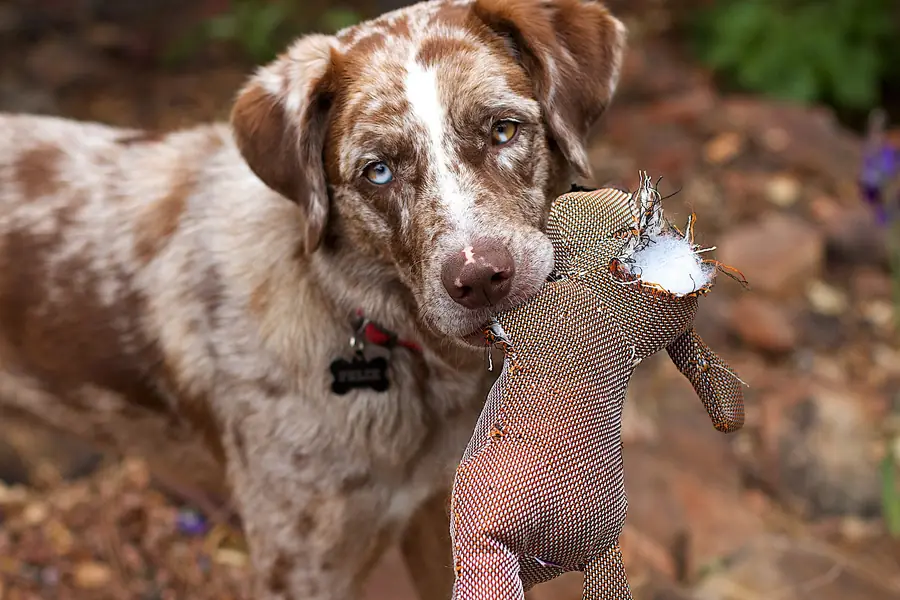
The danger is almost never the fabric shell. It is what comes out of it: polyester filling swallowed in wads, a hard plastic squeaker disc, pellet fill from a weighted base, and plastic eyes. None of that digests, and a blockage is a surgical problem rather than a wait and see one.
Squeakers deserve their own warning, because many dogs work specifically to remove them. The squeaker is a rigid disc or cylinder, and a dog that has opened a seam to reach it will often swallow it in the excitement. If your dog has a history of hunting the squeak, buy toys with no squeaker rather than hoping this one holds.
If a dog has swallowed stuffing, fabric, a squeaker or an eye, phone your veterinarian the same day and describe what has gone missing and roughly how much. Do not wait for symptoms, and do not try to make the dog sick unless you are told to. Take the remains of the toy with you, because what is left shows the vet what is not.
Prevention is a habit rather than a purchase. Check the toy over every time it comes out, retire it at the first open seam or missing feature, and count the parts. If a soft toy had two eyes and a nose this morning, it should still have two eyes and a nose tonight.
Which Dogs Can Have Plush Snoopy and Which Should Not?
Answer: Some dogs can have a soft toy and some cannot, and the dividing line is behaviour rather than size or breed. A dog that carries, nuzzles and sleeps with a toy is a candidate. A dog that holds it down with both paws and works at a seam is not.
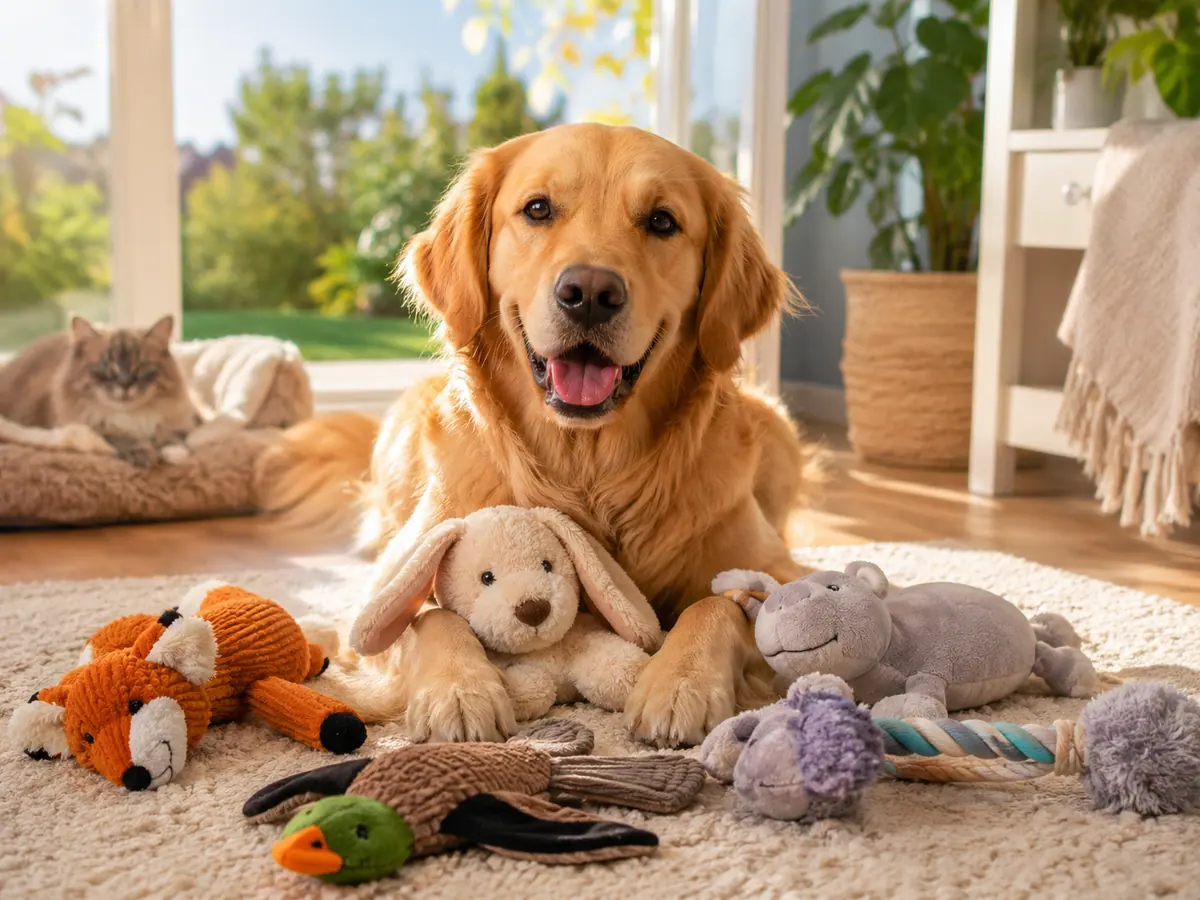
Some dogs can have a soft toy and some cannot, and the dividing line is behaviour rather than size or breed. A dog that carries, nuzzles and sleeps with a toy is a candidate. A dog that holds it down with both paws and works at a seam is not.
You might also enjoy our recommendations for bowl dog.
The clear exclusions are worth stating plainly. Dogs that eat fabric, socks or bedding should not have soft toys at all. Teething puppies chew hard on anything that yields and do better with toys designed for that stage. Two dogs who love tug of war will destroy a stuffed animal between them, because it gets pulled from both ends at once.
Watch a new toy with a new dog rather than assuming. Hand it over on the floor with you in the room, and look at what happens in the first minute. Carrying it to a bed is one answer. Lying down and chewing an ear off is another, and that dog has told you everything you needed to know.
Circumstances change the answer too. A gentle adult can become a shredder when it is bored, anxious, or left alone for longer than usual, which is why the rule about picking a stuffed toy up before you go out exists at all. Nothing about a calm track record survives a thunderstorm.
How Supervised Shredding Turns Plush Snoopy Into Real Enrichment?
Answer: For the right dog, taking a toy apart is genuine enrichment rather than a failure. Ripping, shaking and pulling out filling are the end of a natural sequence, and a dog allowed to finish that sequence on something safe is calmer afterwards. The condition is that you sit and watch.
For the right dog, taking a toy apart is genuine enrichment rather than a failure. Ripping, shaking and pulling out filling are the end of a natural sequence, and a dog allowed to finish that sequence on something safe is calmer afterwards. The condition is that you sit and watch.
Make the destruction safe by choosing what gets destroyed. A cheap stuffed toy with no squeaker, no plastic eyes and no bean fill is the right candidate, and so is a cardboard box packed with scrunched paper. Both let a dog shred something while there is nothing dangerous inside to swallow.
Stay in the room and collect the debris as it appears. The point is not to let a dog eat the filling, it is to let the dog take the toy apart. Once the shell is empty, trade it for something else and bin what is left rather than leaving a half destroyed toy on the floor.
Hide a handful of kibble in the filling if you want the session to last longer. A toy that has to be unpicked to reach food is a puzzle rather than a trophy. This is also where a character collectable is exactly the wrong object, because the fun here is the destruction and a boxed Snoopy collectable is the one thing you cannot replace.
What Stuffing Free and Flat Designs Offer Instead of Plush Snoopy?
Answer: Flat and unstuffed designs solve the main problem by removing it. With no filling inside, there is nothing to pull out and swallow, and the toy survives being opened at a seam without becoming a mess. For a dog that loves stuffed toys but destroys them, this is the obvious compromise.
Flat and unstuffed designs solve the main problem by removing it. With no filling inside, there is nothing to pull out and swallow, and the toy survives being opened at a seam without becoming a mess. For a dog that loves stuffed toys but destroys them, this is the obvious compromise.
For related picks, take a look at our gsd toys roundup.
The category covers flat skins with a crinkle layer instead of filling, fabric shells built around a replaceable water bottle, plush with a reinforced rope spine running through it, and fire hose or ballistic fabric shapes with a softer outer face. None of them feels quite like a traditional stuffed animal, which some dogs notice and most do not.
If your dog specifically loves the noise, look for toys where the squeaker sits inside a sealed internal pocket rather than loose in the filling, or choose a stuffing free design with the squeaker set into a reinforced section. Accept that no squeaker is permanent with a determined dog.
Our dog toy range is a sensible starting point when you want the comfort of a soft toy that was actually built as a dog toy rather than as a keepsake. Whatever you pick, size it so your dog cannot fit the whole thing into the back of its mouth.
How to Wash and When to Replace Plush Snoopy?
Answer: Wash a dog's soft toys on a gentle cycle inside a laundry bag, with no fabric softener, and air dry them rather than using a tumble dryer. Heat melts plastic squeakers, warps glued features and shrinks the shell around the filling, which is how a sound toy turns lumpy and then splits.
Wash a dog's soft toys on a gentle cycle inside a laundry bag, with no fabric softener, and air dry them rather than using a tumble dryer. Heat melts plastic squeakers, warps glued features and shrinks the shell around the filling, which is how a sound toy turns lumpy and then splits.
Collectable plush often cannot be washed that way at all. Boutique makers commonly specify a cool wash or surface cleaning by hand, and no tumble drying. That is fine for a toy that lives on a bed and impractical for one collecting drool and garden mud daily, which on its own makes a collectable a poor everyday dog toy.
Retire a stuffed toy at the first open seam rather than the second. Once filling is visible the countdown has started, and a repair with needle and thread is a short reprieve rather than a fix, because a dog goes back to the place it already found a weakness. A missing eye, a missing nose, or a squeaker you cannot locate all mean the same thing.
Keep a rotation and keep it small. Three or four toys used in turn stay interesting far longer than a basket left out permanently, and a smaller set is one you will actually inspect. Wash the whole rotation on the same day, so the habit attaches itself to something you already do each week.
What to Do When a Dog Has Claimed Plush Snoopy From a Shelf?
Answer: In many homes the real question is not a gift for the dog. It is a child's favourite plush that the dog keeps stealing, which is upsetting for the child and risky for the dog. Manage it deliberately rather than hoping, because a dog that has stolen one once will try again.
In many homes the real question is not a gift for the dog. It is a child's favourite plush that the dog keeps stealing, which is upsetting for the child and risky for the dog. Manage it deliberately rather than hoping, because a dog that has stolen one once will try again.
Put collectables out of reach, especially overnight and when the house is empty. A Snoopy on a high shelf is safe, and a Snoopy left on the sofa is simply a toy the dog will find. A closed door removes the problem entirely, and it is far easier than training a dog to ignore something that smells strongly of the person it loves most.
Give the dog its own soft toy that looks obviously different from the family's. Dogs do not read the licence label, they go by shape, smell and texture, so a plush beagle on the sofa and a plush beagle in the toy box is a rule nobody in the house can follow. Different shape, different colour, different smell.
When the dog does pick one up, trade rather than chase. Offer a treat or its own toy, take the collectable calmly and make no fuss about it. Chasing turns theft into the best game of the day and guarantees a repeat performance. Teaching a reliable drop and leave is worth more here than any amount of telling off.
If you want to dig deeper into the research, the ASPCA pet care library publishes practical, expert-reviewed resources for pet owners.
What Questions Do Pet Owners Ask About Plush Snoopy?
Answer: Character plush is usually made for people, not pets, so it is not safety rated for chewing. A gentle carrier can have one under supervision. Chewers, puppies and dogs left alone need a plush built for dogs instead, with embroidered features, double stitching and no loose bean fill.
Is a Snoopy plush safe for a dog to play with?
It is not designed for it. Character plush is made and tested as a toy for people, so the eyes, seams and filling assume a child rather than a set of carnassial teeth. A gentle dog can carry one under supervision, but chewers, puppies and dogs left alone should have a toy built for dogs.
How can I tell whether a soft toy is made for dogs?
Check four things in under a minute. Features should be embroidered rather than plastic or glued. Seams should be double stitched. The filling should be one continuous piece rather than loose beans or pellets. The pile should be short. A toy that fails two of those is a keepsake, not a dog toy.
My dog swallowed stuffing from a toy. What should I do?
Phone your veterinarian the same day, say what was swallowed and roughly how much, and take the damaged toy with you so the vet can see what is missing. Do not wait for symptoms and do not try to make your dog sick unless you have been told to. Filling does not digest.
Are squeakers actually dangerous?
The squeaker itself is a rigid plastic disc or cylinder, and plenty of dogs will open a seam specifically to get at it, then swallow it in the excitement. If your dog hunts the squeak, choose toys without one, or designs where the squeaker is sealed into a reinforced internal pocket.
Can a puppy have a plush toy?
A teething puppy chews hard on anything soft, so a stuffed animal is a poor first choice. Puppy teething toys are built for that stage. If you do give a soft toy, make it a dog rated one, stay in the room, and take it away the moment the puppy starts working on a seam.
Is it bad to let a dog destroy a soft toy?
Not if you choose what gets destroyed and stay with the dog. Shredding is the end of a natural sequence and genuinely satisfying. Pick a cheap stuffed toy with no squeaker, no plastic eyes and no bean fill, collect the debris as it comes out, and bin the shell when it is empty.
How should I wash my dog's soft toys?
Gentle cycle, inside a laundry bag, no fabric softener, and air dry rather than tumble dry, since heat melts squeakers and warps glued parts. Wash the whole rotation on the same day each week. Check every seam while they are drying and retire anything that has started to open.
My dog keeps stealing my child's plush. How do I stop it?
Put the collectables somewhere the dog cannot reach, particularly at night and when nobody is home, and give the dog its own soft toy that looks and smells completely different from a Snoopy. When a theft happens, trade for a treat instead of chasing, because chasing is what turns it into a game worth repeating.