A leash of dog owners can control comfortably is usually a fixed 4 to 6 foot model matched to the dog, handler, and setting. In public, equipment is only half the job. Responsible handling means checking local rules, keeping the leash short enough to prevent unwanted contact, yielding space, and paying attention to traffic, wildlife, children, and other dogs. Local laws and property policies vary, so signs and official guidance at the place you are visiting take priority over general advice.
This guide takes a public-place approach rather than declaring one product best for every dog. It explains how to select and use a leash on sidewalks, shared trails, parks, patios, stores that welcome pets, and other common US settings. You will also learn where service animal requirements differ from ordinary pet policies.
Check the Leash Rule Before You Go
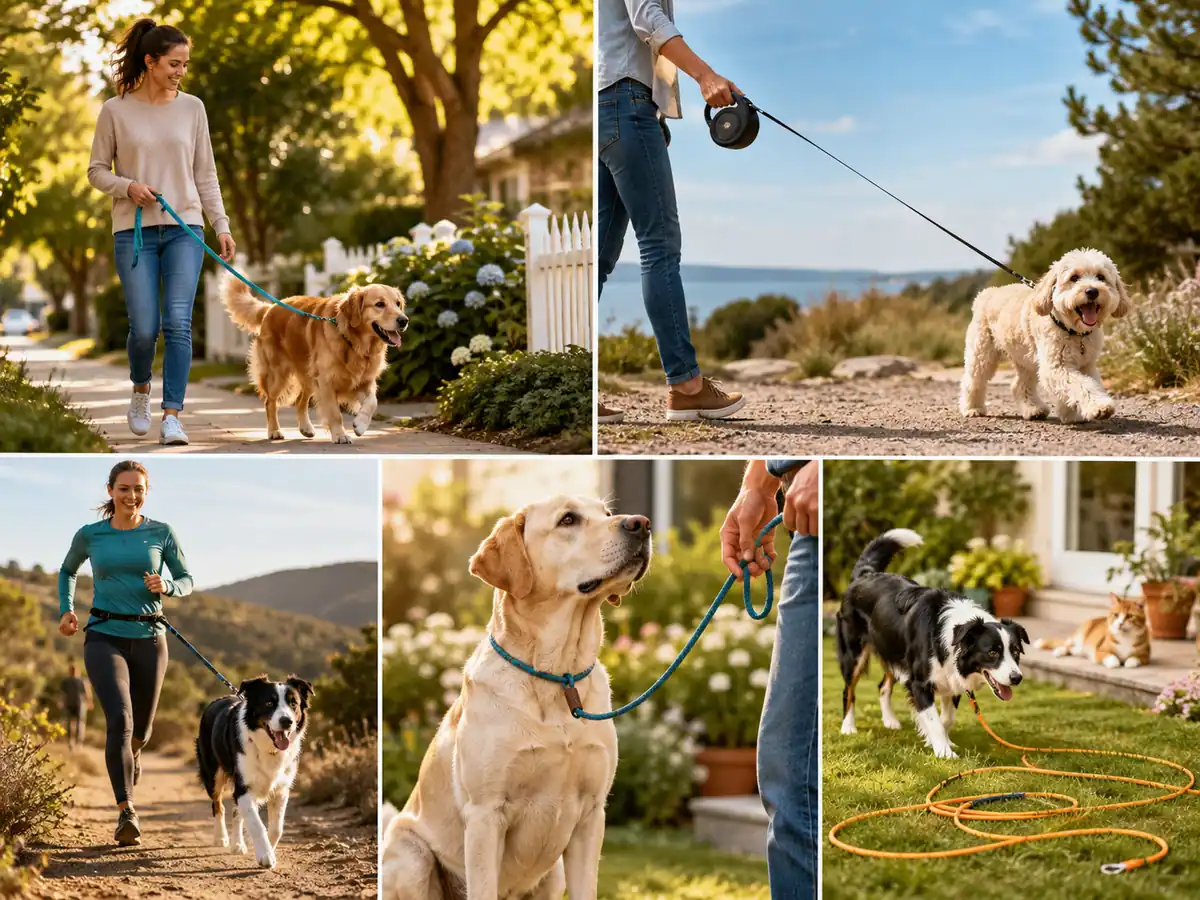
Start with jurisdiction and property. A city may require dogs to be restrained on sidewalks, while a county park, national park site, apartment courtyard, transit operator, or private business may publish its own conditions. Rules can specify where pets may enter, maximum leash length, waste disposal, seasonal closures, or wildlife protections. An off-leash designation in one section of a park does not automatically extend to parking lots, approach paths, or neighboring fields.
The National Park Service advises visitors to find out whether pets are permitted before a trip and to follow each park’s rules. Its planning guidance for visiting parks with pets also highlights heat, wildlife, water, and trail conditions. Check the individual park page and posted notices, not only a general map or an old social post.
Rule check: Look up the official property page, read signs at the entrance, and carry a fixed leash that meets any stated length limit. When guidance conflicts, follow the more restrictive on-site direction or ask staff.
Leash compliance does not make every destination suitable. A busy festival may technically permit pets but still overwhelm a sound-sensitive dog. A hot paved patio can be uncomfortable even when dogs are welcome. Choose an outing your dog can navigate calmly, and be willing to leave if conditions change.
Choose a Leash Setup for the Setting
A useful setup connects securely, feels predictable in your hand, and gives you enough control for the environment. Inspect the clip, stitching, webbing, rings, and handle before leaving. Replace equipment with frayed fibers, cracked hardware, a sticky gate, or loose seams. Confirm that collar or harness fit has not changed after grooming, growth, or weight change.
Fixed nylon, polyester, leather, and coated-webbing leashes each have tradeoffs. Flat webbing is light and familiar. Leather can be comfortable but needs care. Coated materials wipe clean and resist water, though some feel slippery. Rope can be easy to grip but bulky. Hardware should suit the dog without being so heavy that it strikes or drags on a small dog.
A standard handle gives a deliberate point of control. Do not loop the leash around fingers, wrist, waist, or mobility equipment unless the system was designed for that use and you understand the release method. A sudden lunge can tighten a wrapped line. Carrying a spare leash in the car or walking bag is sensible insurance if a clip fails or a loose dog needs temporary restraint.
| Equipment choice | Useful setting | Main advantage | Watch for |
|---|---|---|---|
| 4 to 6 ft fixed leash | Sidewalks, stores, routine trails | Predictable working radius | Excess slack near feet |
| Traffic handle or short lead | Brief close control in crowds | Keeps dog near handler | Too restrictive for an entire relaxed walk |
| Long line | Open training spaces where allowed | Distance practice without being off leash | Tangling, rope burns, people crossing line |
| Retractable leash | Low-traffic open areas if permitted | Adjustable exploration radius | Delayed stopping, thin cord, length rules |
| Hands-free leash | Running or walking on clear routes | Keeps hands available | Handler can be pulled off balance |
| Slip lead | Temporary transfer by skilled handler | Fast, simple connection | No fit stop on some models; continuous neck pressure |
Match Leash Type and Length to the Job
Four to six feet is a practical everyday range because it allows sniffing while keeping the dog within a controllable radius. In a narrow shop aisle, elevator, transit platform, or curbside wait, gather slack so the dog stays close without holding the line continuously tight. Once space opens, release enough slack for comfortable movement.
A long line can support recall practice and decompression walks, but it is not an ordinary sidewalk leash. Use it only where rules and space allow. Wear gloves if appropriate, keep the line visible, and avoid letting it sweep across paths. Never attach a long line to equipment that could concentrate a high-speed stop on a vulnerable area. A trainer can help select a setup for this work.
Retractable leashes require especially active handling. The lock is not a substitute for awareness. An extended cord can cross a bike path, wrap legs, or allow a dog around a blind corner before the handler sees a hazard. Our retractable dog leash guide discusses those tradeoffs in more detail. If you use one, practice the brake and retraction controls at home and shorten it well before any conflict point.
Use Good Sidewalk and Trail Etiquette
Public etiquette starts with keeping your dog out of another person’s space unless invited. Not everyone wants a greeting. Some people have allergies, fears, balance concerns, cultural preferences, or working animals that should not be distracted. Move to one side, shorten the working length, and pass with enough room. A calm “we’re not greeting today” is complete information.
On a shared trail, follow posted right-of-way guidance. Step aside where safe for horses, runners, bikes, or a larger group. Speak before approaching a horse and follow the rider’s instructions. Do not allow your dog to chase wildlife, enter protected habitat, drink from questionable water, or investigate waste. Pack out filled bags where no receptacle exists.
Keep doorways, ramps, curb cuts, and narrow aisles clear. In an elevator, ask before entering with another dog and wait for the next car when space is tight. At a pet-friendly patio, position the dog beneath or beside your chair, not across a server’s route. Never tether a dog and leave them unattended outside a business.
Consent matters: Friendly intent does not equal permission. Ask before a person or dog interaction, keep the leash from tightening, and move away promptly when either party declines or shows discomfort.
Handle Dog-to-Dog Encounters Thoughtfully
Leashes constrain movement, so greetings can feel different from free interaction. Watch the whole dog. A loose body, curved approach, and ability to disengage are more useful than a wagging tail alone. Stiff posture, fixed staring, freezing, hiding, repeated escape attempts, or escalating vocalization are reasons to increase distance rather than force a lesson.
If both handlers choose a greeting, keep it brief and avoid winding lines together. Approach in an arc instead of head-on, then call the dogs apart while everyone is still composed. Dogs do not need to meet every dog they pass. Rehearsing neutral walk-bys often produces more useful public manners than frequent greetings.
When an uncontrolled dog approaches, do not rely on leash jerks or put your hands between dogs. Move behind a barrier when possible, keep your own dog close without wrapping the line around your hand, and firmly ask the other person to recall their dog. Emergency circumstances differ, so prioritize human safety and seek professional care after any bite or injury.
| Signal or situation | Handler response | Why it helps |
|---|---|---|
| Other handler says no | Create space and continue walking | Respects consent and prevents pressure |
| Narrow blind corner | Shorten leash and slow down | Buys time to assess what is ahead |
| Dog freezes or stares | Turn away in an arc and add distance | Reduces confrontation without dragging forward |
| Loose dog approaches | Use a barrier and request recall | Limits direct access when practical |
| Leashes begin tangling | Stop movement and calmly separate handlers | Avoids tightening around dogs or people |
| Repeated pulling toward dogs | Increase distance and reward check-ins | Practices calmer behavior below threshold |
Understand Service Animal Access and Control
Service animals are working animals trained to perform tasks for a person with a disability. Under the US Department of Justice’s ADA service animal requirements, a service animal generally must be harnessed, leashed, or tethered in covered public places. An exception applies if that equipment interferes with the animal’s work or the person’s disability prevents its use. The handler must then maintain control through voice, signals, or another effective method.
Do not pet, call, feed, photograph at close range, or allow your dog to approach a service animal without the handler’s permission. A vest is not an invitation, and the absence of a vest does not settle legal status. Businesses should rely on applicable ADA guidance rather than improvised proof demands. State laws can add provisions, so organizations should obtain qualified guidance for their circumstances.
Emotional support, therapy, and ordinary companion animals are not interchangeable with service animals under the ADA. They may be welcome under a property policy, but general public-access rights differ. This article provides practical information, not legal advice. For a dispute or accommodation question, consult the responsible agency or a qualified professional.
Manage Traffic, Wildlife, Weather, and Crowds
At a curb, shorten the leash before reaching the edge and pause far enough back that the dog cannot step into traffic. Cross only when you can focus on the dog and surroundings. Reflective material and a light can improve visibility, but they do not replace attention. Avoid headphones that block situational sound, and keep phones away during complex crossings.
Wildlife can trigger sudden acceleration in dogs that otherwise walk quietly. In habitat areas, obey closures and keep enough control to prevent chasing. Give snakes, nesting birds, deer, and other animals a wide berth. In bear country or other specialized environments, follow current site-specific advice rather than generic pet guidance.
Temperature changes the risk profile. Carry water, choose shaded routes, and consider surface heat. Storms, fireworks, construction, and crowds can also overwhelm a dog. A shorter trip at a quieter hour may be kinder than insisting on the planned route. Identification on a secure collar and an up-to-date microchip registration can support recovery if separation occurs.
Practice Practical Leash Skills Before Busy Outings
Start in a low-distraction space. Reward the dog for orienting to you, walking with slack in the line, pausing at doors, and turning with you. Use short, clear sessions. The goal is not a rigid heel throughout every walk. It is reliable communication that lets the pair pass hazards, make room, and recover attention.
Teach a cheerful U-turn, a close-position cue, and a brief wait. Practice handling the clip and swapping between collar and harness indoors. Rehearse dropping and retrieving a safe spare leash while the dog is secured. If pulling, fear, reactivity, or escape behavior persists, work with a qualified reward-based trainer or veterinary behavior professional. Pain and health conditions can affect behavior, so veterinary input may also be appropriate.
Before leaving home: Check fit and hardware, confirm the destination rules, pack water and waste bags, bring identification, and choose a route with an exit option. Good public manners begin with preparation.
For equipment context, see our dog leash and collar overview and hands-free leash guide. Whatever style you choose, responsible handling is measured by control, awareness, and consideration, not by how much distance the line can provide.
Evidence trail: Public etiquette works best when equipment and humane training support each other. See the AVSAB humane dog training statement, a Frontiers comparison of electronic-collar and reward-focused training, and the AKC leash selection guide. Together they support predictable handling, reward-based practice, and equipment matched to the setting.
Frequently Asked Questions
How long should a dog leash be for everyday walks?
A fixed leash about 4 to 6 feet long gives most handlers useful control while leaving a dog room to walk and sniff. Crowded sidewalks may call for a shorter working length. A longer line belongs in open areas where it is permitted and can be managed without tangling other visitors.
Are retractable leashes allowed in public places?
Rules vary. Some locations limit leash length, which can make an extended retractable leash noncompliant. Even where one is legal, lock it short near people, traffic, wildlife, blind corners, and other dogs. Check the property rules before visiting.
Does a service dog have to be on a leash?
Under the ADA, a service animal generally must be harnessed, leashed, or tethered in covered public places unless that equipment interferes with the animal’s work or the handler’s disability prevents its use. In that exception, the handler must maintain control through voice, signals, or another effective method.
Can I let my dog greet another dog while both are leashed?
Ask the other handler first and accept no immediately. If both people agree, keep leashes loose, allow a brief curved approach, and move on before tension builds. Do not permit greeting in a doorway, narrow aisle, or other place where either dog lacks an exit.
Should I attach the leash to a collar or a harness?
Either can work when properly fitted, but the best choice depends on the dog, setting, and handling needs. A well-fitted harness can distribute force across the torso, while a collar keeps identification accessible. Ask a veterinarian or qualified trainer about dogs with respiratory, orthopedic, escape, or pulling concerns.
What should I do when an off-leash dog approaches?
Create distance without running, place your dog behind you if practical, and ask the owner to call their dog. Use a parked car or other barrier when available. Avoid wrapping your leash around your hand. If an encounter causes an injury, seek appropriate veterinary or medical care and document the incident.
Do leash rules apply to emotional support animals?
Emotional support animals do not receive the same general public-access rights as service animals under the ADA. Pet policies and local leash rules usually govern access in ordinary public places. Housing and air-travel rules involve separate laws, so confirm the rule that applies to the specific setting.
Prepare for Better Walks
Explore practical dog accessories for daily routines and shared adventures.
Browse Dog Accessories →