A dog subscription box delivers a curated mix of toys, treats and chews every month, and for many dogs the unboxing is the best part of the week. Whether a box is good value depends on three things: whether the toys suit your dog's size and chewing style, whether the treats are safe to feed, and whether the plan is easy to change. This checklist walks through each one.
Quick Answer: Is a Dog Subscription Box Worth It?
A dog subscription box is worth it if the service lets you set your dog's size and chewing strength, sends toys too big to swallow without loose parts, labels its treats clearly, and lets you skip or cancel easily. For power chewers or dogs with allergies, choosing toys and treats yourself is often safer and cheaper.
Updated October 4, 2026- Set the profile carefully. Size and chew strength decide whether a toy is fun or a hazard.
- Treats are extras. Box treats are rarely complete food, so feed them sparingly.
- Supervise every new toy. The first session tells you whether it stays in rotation.
- Know the exit. Check skip, pause and cancel rules before the first charge.
What Usually Comes in a Dog Subscription Box?
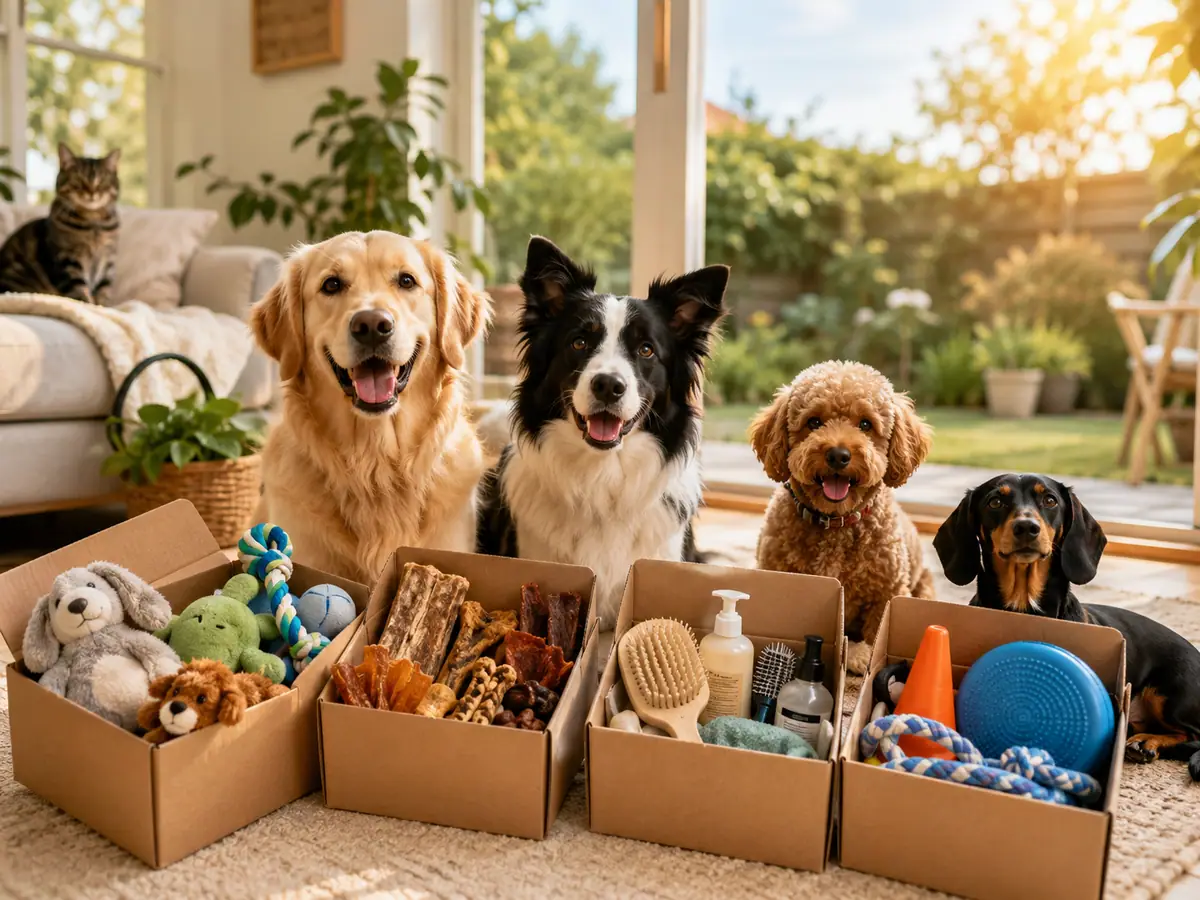
Answer: Most boxes combine a few toys, a couple of bags of treats and one or two chews, often around a monthly theme. Some focus only on toys for strong chewers, some only on treats, and a few add accessories or grooming items. The mix you want depends on what your dog actually uses, not on how full the box looks.
Boxes tend to fall into three groups. General themed boxes mix plush, rubber and rope toys with treats. Tough chewer boxes swap plush for thicker rubber and nylon. Treat or chew boxes skip toys entirely. Many services also offer allergy options that leave out common proteins, which is worth checking if your dog has a known food sensitivity.
Before you pick a plan, look at the toys your dog already has. If plush toys are shredded in minutes, a general box will mostly send things that end up in the bin. If your dog ignores chews but loves puzzle feeders, a treat-heavy box will pile up in the cupboard.
Will the Toys Suit Your Dog's Size and Chewing Style?
Answer: Only if the box is matched to your dog. Every toy should be too large to fit fully in your dog's mouth, free of ribbons, eyes or other loose parts, and soft enough to dent with a fingernail. Strong chewers need tougher toys than the default box, so pick a power chewer option or buy those toys separately.
VCA Animal Hospitals gives a short checklist that works well when you open a box. Go big, so a toy can never fit entirely in your dog's mouth. Choose no frills, meaning no ribbons, eyes or removable parts that could be swallowed or inhaled. Use the fingernail rule: toys should indent under a fingernail, because very hard items can chip or fracture teeth. And know your dog, since some dogs tear even rubber toys apart quickly and swallowed pieces can need surgery.That means the size and chewer settings in your box profile are the most important choices you make. If a toy arrives that fails any of these checks for your dog, set it aside rather than hoping for the best. Most services will adjust future boxes if you tell them what did not work.

Are the Treats in a Subscription Box Safe to Feed?
Answer: They can be, but treat them as rewards, not meals. Treats are not required to be complete and balanced, and some chews carry little labeling. Check each bag for the word treat or snack, the ingredient list and a calorie statement, avoid anything your dog reacts to, and reduce the main meal if treats add up.
AAFCO explains that treat products are mainly for rewarding pets and do not have to meet the nutritional adequacy requirements of a complete food, which is why the words snack or treat must appear on the front of the package. Given too freely, treats can unbalance an otherwise complete diet and add calories your dog does not need.Chews such as hooves, ears, bones, ligaments and pizzles are not required to carry full pet food labeling unless they make a nutritional claim, so many have no calorie statement or guaranteed analysis, and AAFCO notes some can be quite high in calories. Bones and other hard chews also fail the fingernail rule above. If your box includes them, decide case by case, and look the brand up on the FDA recall list.
Is a Subscription Box Better Than Buying Toys Yourself?
Answer: A box wins on novelty and convenience, because new toys arrive without any shopping. Buying yourself wins on fit and cost, because you only pay for toys your dog will use. Many owners subscribe for a few months to learn what their dog likes, then switch to buying favorites directly or skip months when the toy basket is full.
The honest test is what happens to the contents. If most toys and treats are used and enjoyed, the box is doing its job. If the same types keep getting ignored, or tough chewers destroy everything on day one, you are paying for packaging and surprise rather than play.
A good middle ground is to keep the box but rotate its contents. Put a few toys out and store the rest, then swap them every so often. A small rotation keeps old toys interesting, which reduces the urge to buy more and makes each delivery last longer.
How Should You Introduce New Toys From a Box?
Answer: Hand over one new toy at a time and watch the first play session. Remove packaging, tags and anything loose, and take the toy away if your dog starts tearing pieces off or swallowing stuffing. Keep toys that pass in rotation, inspect them regularly, and throw away any that are cracked, torn or chewed through.
Opening everything at once is exciting, but it makes it hard to see how your dog handles each item. Introduce toys one by one, ideally during a calm moment, and stay close for the first few minutes. Tug and fetch toys are best used together with you, while puzzle feeders can be left out once your dog knows how they work.
Wear is the main ongoing risk. Humane World for Animals notes that tennis balls are good for fetch but do not stand up to chewing, and advises discarding any that have been chewed through. The same logic applies to every toy: once stuffing shows, rope frays heavily or rubber cracks, it is time for it to go.
What Plan Terms Should You Check Before You Subscribe?
Answer: Check how often the box renews and at what price after any first-box discount, how far ahead you must skip or change a shipment, whether you can pause, and how to cancel online. Also check whether you can swap toys that do not suit your dog and whether allergy or chewer settings apply to every box.
Subscription pages lead with the first box, so read past the offer. Find the regular price, the renewal interval and the cut-off for changes before each shipment. A clear account page with skip, pause and cancel buttons is a good sign. Save a screenshot of the terms you agreed to.
If you are buying a box as a gift, check whether it is a fixed number of boxes or an ongoing plan that keeps billing your card. Gift plans that end on their own avoid surprise charges for you and the recipient.
What Do Owners Ask About Dog Subscription Boxes?
Answer: The common questions are whether boxes suit aggressive chewers, whether box treats are healthy, how to handle allergies, what to do with toys your dog ignores, and whether a box makes a good gift. Each answer below comes back to the same checks: size, chewing strength, treat labels and how easily the plan can change.
Are dog subscription boxes good for aggressive chewers?
Only if you choose a tough chewer option. Standard boxes often include plush and soft toys that strong chewers destroy quickly, and swallowed pieces are a real risk. Pick toys too big to swallow and tough enough for your dog, or buy them separately.
Are the treats in subscription boxes healthy?
They are rewards rather than meals. AAFCO notes treats do not need to be complete and balanced and can unbalance a diet if overfed. Read each label, feed treats sparingly and trim your dog's main meal if treats add up.
Can I get a dog subscription box for a dog with food allergies?
Many services offer allergy settings that leave out common proteins, but always read every treat label yourself. If your dog is on a veterinary diet, ask your veterinarian before adding any treats, or choose a toys-only box.
What should I do with box toys my dog ignores?
Store them and try again later in a rotation, since a toy that was boring last month can feel new now. If your dog never uses a type of toy, tell the service so future boxes leave it out.
Is a dog subscription box a good gift?
It can be, especially a fixed-length gift plan that ends on its own. Ask the owner about the dog's size, chewing strength and any allergies first, so the box sends toys and treats the dog can safely use.
How do I cancel a dog subscription box?
Use the cancel option in your online account before the next shipment cut-off, and keep the confirmation email. If you cannot find an online option, contact customer service in writing and keep a copy of your request.
Written by Ahmad Thariq Syauqi. General information for pet owners, not veterinary advice. Sources are linked in the text.