A dog food subscription sends the same food to your door on a schedule, so you never open an empty bag at dinner time. The convenience is real, but the box is only as good as the food inside it and the terms you agree to. This guide covers the label checks that matter, the main subscription types, how to switch foods without a stomach upset, and what to read before you sign up.
Quick Answer: Is a Dog Food Subscription a Good Idea?
A dog food subscription is a good idea when the food itself is right for your dog: labeled complete and balanced for its life stage, fed at the amounts on the bag, and introduced gradually. Choose a plan you can easily pause, skip or cancel, and check recall notices for the brand before committing.
Updated October 4, 2026- Food first, delivery second. Read the nutritional adequacy statement before comparing prices.
- Life stage matters. Puppy, adult and all life stages foods are not interchangeable.
- Switch slowly. Mix the new food in over about one to two weeks.
- Read the terms. Know how to skip, pause and cancel before your first box ships.
How Does a Dog Food Subscription Work?
Answer: You choose a food and a delivery interval, and the company charges you and ships it automatically until you change or stop the plan. Some services sell an existing brand on autoship, while others cook fresh meals portioned for your dog. Either way, the schedule should match how fast your dog actually eats.
There are two broad models. Retail autoship takes a food you could buy in a store and delivers it on repeat, usually with an option to change the interval. Direct-to-consumer services build a plan from a short questionnaire about your dog, then ship their own recipes, often fresh or gently cooked meals that need the fridge or freezer.
The useful part of either model is predictability: the food arrives before you run out, and portion-controlled plans make it easier to feed the same amount every day. The weak point is that a subscription keeps running whether or not the food still suits your dog, so it needs the same attention you would give any food you buy.

What Should You Check on the Label Before You Subscribe?
Answer: Find the nutritional adequacy statement. It should say the food is complete and balanced for your dog's life stage, either by meeting an AAFCO nutrient profile or by passing an AAFCO feeding trial. Then confirm the species, the feeding directions for your dog's weight and the name of the company responsible for the food.
AAFCO calls the nutritional adequacy statement perhaps the most important part of a pet food label, because it is how you match a food to your pet's needs. "Complete" means the food contains all required nutrients, and "balanced" means they are present in the correct ratios. The recognized life stages are gestation or lactation, growth, maintenance and all life stages.The FDA explains that a food can earn the complete and balanced claim in one of two ways: it meets an AAFCO dog food nutrient profile, or it passes a feeding trial run under AAFCO procedures. VCA Animal Hospitals describes the feeding test wording as preferable, and cautions that all life stages foods are built to also cover puppies and nursing mothers, which need more calories than a typical adult.
If a subscription page does not show the full label, including the adequacy statement, guaranteed analysis and ingredient list, ask for it before you pay. A company that will not share it is telling you something.
Fresh, Kibble or Topper: Which Subscription Type Fits Your Dog?
Answer: Kibble on autoship is the simplest and stores easily. Fresh or cooked plans suit owners who want pre-portioned meals and have fridge and freezer space. Toppers and mix-ins are usually extras rather than a full diet, so check whether they are labeled complete and balanced before you let them replace part of a meal.
Dry food on autoship keeps for weeks in a cool, dry cupboard and is easy to measure. Fresh or cooked meals arrive in portioned packs, which helps with weight control, but they take up cold storage and spoil quickly once opened. Toppers, broths and freeze-dried mix-ins make meals more appealing, yet many are sold as treats or supplements.That last point matters. The FDA notes that treats, snacks and supplements are typically not intended to be a pet's sole diet, so they are often not complete and balanced. If a topper subscription grows into a large share of the bowl, your dog's main food is being diluted. Count toppers as part of the daily amount, not on top of it.

How Should You Store Food From a Subscription Delivery?
Answer: Store dry food in its original bag with the top folded down, somewhere cool and dry and out of your dog's reach. Refrigerate or throw out opened canned and pouched food promptly, and keep the fridge cold. Wash hands, bowls and scoops after every meal, and use a dedicated scoop instead of the bowl itself.
The FDA's tips are practical for anyone receiving food in bulk. Keep dry food below 80 degrees Fahrenheit in a cool, dry place, because excess heat and moisture can break down nutrients. Keep the original bag and fold the top tightly closed. Promptly refrigerate or discard unused wet food, cover refrigerated food tightly and keep the refrigerator at 40 degrees Fahrenheit or below. Source: FDA, Tips for Safe Handling of Pet Food and Treats.
Plan your interval around storage space, not just appetite. A larger box that arrives less often only saves money if it fits in the freezer or pantry and will be eaten before it goes stale. Store deliveries somewhere secure, too: a dog that finds a full box can eat far more than one meal at once.
How Do You Switch Your Dog to Subscription Food Safely?
Answer: Change foods gradually by mixing a small amount of the new food into the old and increasing it day by day over one to two weeks. Watch your dog's stool, appetite and energy. If you see loose stools, vomiting or a dropped appetite, slow the change down, and call your veterinarian if it does not settle quickly.
VCA Animal Hospitals describes a gradual transition over seven to fourteen days when moving a puppy or kitten to adult food. That is guidance for that life-stage change, not a universal schedule for every subscription or medical diet. Ask your vet how to change your dog's food, slow down if loose stools, vomiting or reduced appetite occur, and seek veterinary advice if symptoms persist or are severe. Source: VCA Animal Hospitals.
This is why the first box matters. Make sure it contains enough food to cover the transition, and keep some of your old food on hand until the switch is complete. Dogs with a sensitive stomach or a medical diet should only change food with their veterinarian's agreement.
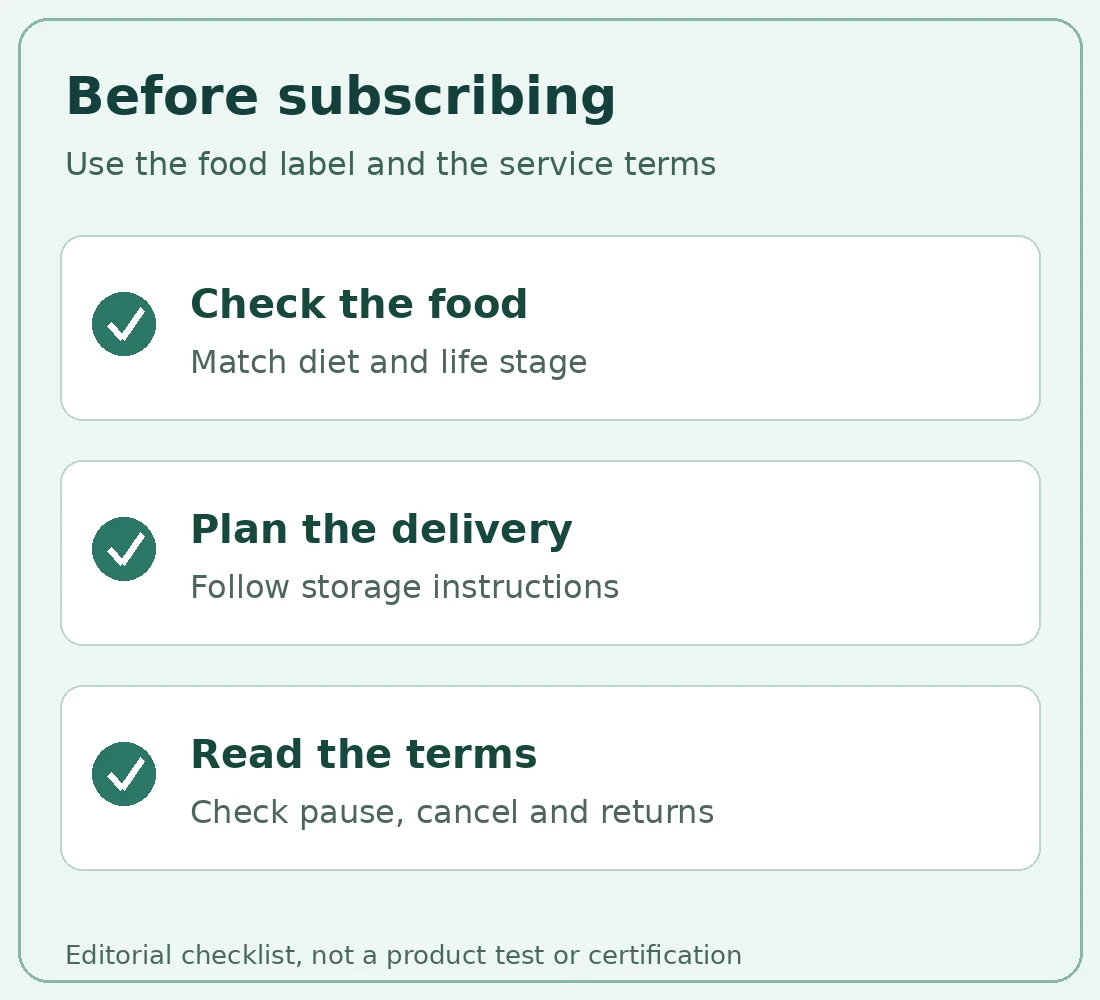
What Should You Read Before You Sign Up, Pause or Cancel?
Answer: Read how the plan renews, how far ahead you must change or skip a delivery, how to pause or cancel, and what happens to a box that ships after you cancel. Check the delivery window and packaging for fresh food, and look up the brand on the FDA recall list before committing to repeat orders.
Subscriptions are designed to keep running, so the exit matters as much as the welcome discount. Look for a clear online way to skip or pause, a stated cut-off before each shipment, and an obvious cancel option in your account. Screenshot the terms and the price you signed up for, because introductory pricing often changes after the first order.
Before you commit, search the brand on the FDA Recalls and Withdrawals page, and keep the packaging from each delivery until the food is finished so you can match lot numbers. The same page explains how to report a pet food complaint if a delivery looks or smells wrong.
Is a Dog Food Subscription Worth the Money?
Answer: It is worth it when it saves real trips or prevents running out, and when the food is one you would happily buy anyway. Compare the cost per day, not per box: divide the price by the number of days the delivery lasts at the label's feeding amount for your dog. Delivery fees and discounts belong in that sum.
A cheaper box that lasts fewer days is not cheaper. Work out how many days each delivery covers using the feeding directions for your dog's weight, then compare that daily figure across plans and against buying the same food in a store. AAFCO reminds owners that feeding directions are guidelines that may need adjusting for an individual dog, so recheck the maths if your dog needs more or less.
The less visible value is consistency. Feeding the same complete food every day, measured the same way, is good for your dog's weight and digestion. If a subscription makes that easier for your household, it can earn its place. If you keep skipping boxes or changing recipes, buying as needed is probably simpler.
What Do Owners Ask About Dog Food Subscriptions?
Answer: Owners usually ask whether subscription food is healthier than store food, how to switch safely, whether fresh plans are worth the price, how long deliveries last and how to cancel. The short answers below point back to the label, the feeding directions and the plan terms, which settle most of these questions for an individual dog.
Is subscription dog food healthier than store-bought food?
Not automatically. Delivery does not change nutrition. What matters is whether the food is labeled complete and balanced for your dog's life stage and suits your dog. A store food with the right adequacy statement can be just as good as a subscription recipe.
Do fresh dog food subscriptions meet nutritional standards?
Some do and some do not, so check each recipe. Look for a nutritional adequacy statement saying it is complete and balanced for your dog's life stage, either by meeting an AAFCO nutrient profile or by passing an AAFCO feeding trial.
How long should I take to switch my dog to a new subscription food?
VCA Animal Hospitals recommends a gradual change over about one to two weeks, increasing the new food a little each day. Slow down if your dog has loose stools or eats less, and call your veterinarian if it does not settle.
Can I use a topper subscription instead of a full food?
Usually not. Many toppers and mix-ins are sold as treats or supplements and are not complete and balanced, so they should not replace your dog's main food. Count them within the daily amount rather than adding them on top.
How do I know how often to schedule deliveries?
Divide the amount in each delivery by your dog's daily portion from the feeding directions, then set the interval a few days shorter than that so you never run out. Recheck it if your dog's weight or activity changes.
What should I do if my subscription food is recalled?
Stop feeding it, keep the packaging and lot number, and follow the instructions in the recall notice. The FDA Recalls and Withdrawals page lists pet food recalls and explains how to report a problem with a product.
Written by the Livehappypet Editorial Team. General information for pet owners, not veterinary advice. Sources are linked in the text.
Shop Dog Feeding Supplies
Free US shipping on every order. No minimum purchase required.
Browse Dog Supplies →