If you are looking for the best catnip caterpillar, this comprehensive guide covers everything you need to know. Whether you are a first-time pet owner or an experienced one looking to upgrade, you will find practical advice, safety tips, and honest comparisons below.
Quick Answer: What Should You Know About Catnip Caterpillar?
Choosing catnip caterpillar well comes down to four things: matching the product to your pet's size and daily routine, checking the materials against how hard it will be used, setting it up or fitting it correctly, and inspecting it on a schedule. This guide covers each of those, plus the mistakes owners most often make.
How Catnip Actually Works, and Why Catnip Caterpillar Behave the Way They Do?
Answer: Catnip works through smell, not taste. The plant produces a compound called nepetalactone, and when a cat inhales it the molecule binds to receptors in the nasal tissue and triggers a short burst of behaviour: rolling, rubbing, drooling, chin and cheek marking, sometimes a few minutes of zooming about. The cat is not eating anything.
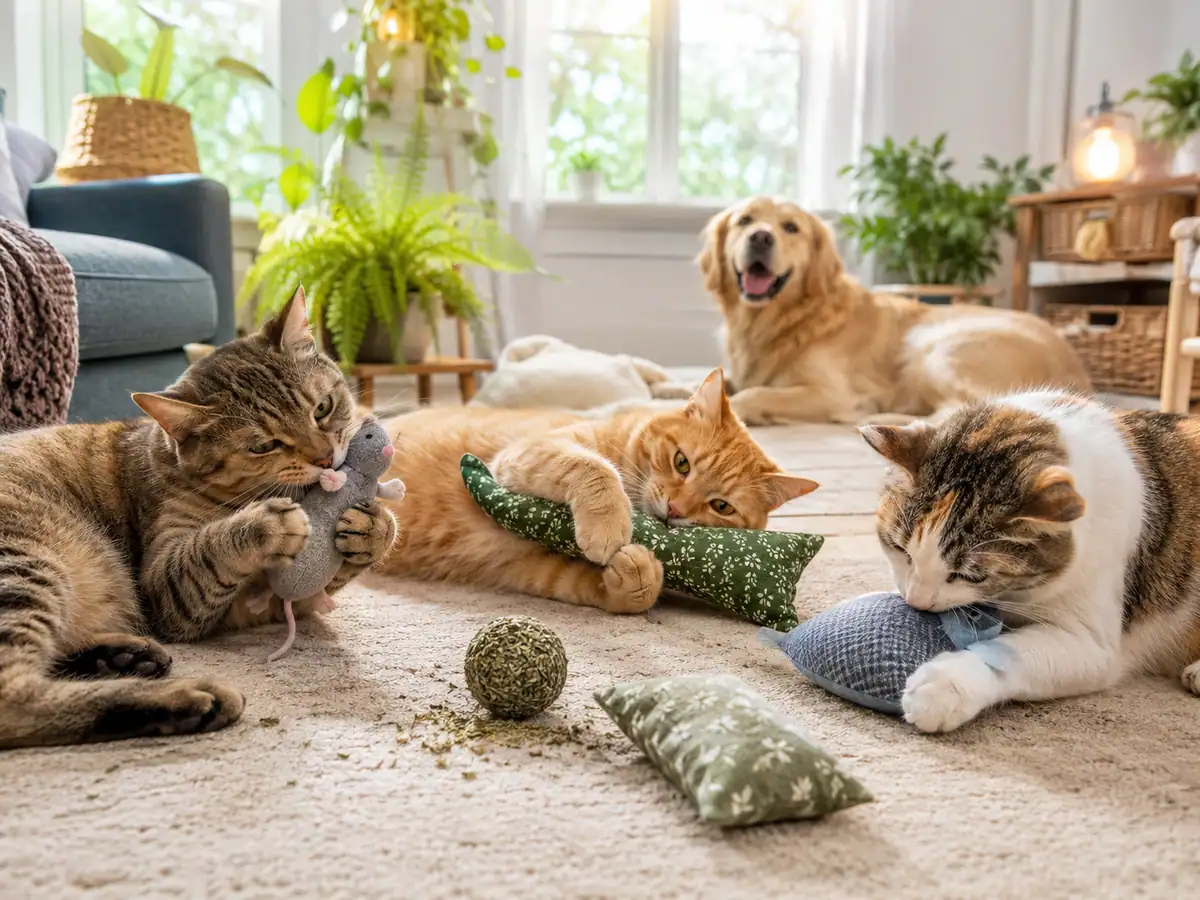
Catnip works through smell, not taste. The plant produces a compound called nepetalactone, and when a cat inhales it the molecule binds to receptors in the nasal tissue and triggers a short burst of behaviour: rolling, rubbing, drooling, chin and cheek marking, sometimes a few minutes of zooming about. The cat is not eating anything, it is reacting to a scent.
The response is brief by design. Most cats get a few minutes of it, then the receptors stop responding and a refractory period follows during which more catnip does nothing at all. Offering it again inside that window simply wastes it. Wait a couple of hours and the same cat will respond to the same toy as though it were new.
Eating catnip produces a different and much milder effect, which is why a cat who has chewed a toy often settles down rather than bouncing off the walls. Neither reaction is intoxication in any harmful sense. Catnip is not addictive, cats self-limit, and the usual worst case is a cat that has had enough and walks away.
Which Cats Respond to Catnip Caterpillar and Which Do Not?
Answer: A substantial minority of cats inherit no response at all. The sensitivity is genetic, and a cat that ignores a fresh, strong toy is not broken or bored, it simply does not have the receptors. Nothing you do will change that, so once you have tested properly with fresh plant material, accept the answer and.
A substantial minority of cats inherit no response at all. The sensitivity is genetic, and a cat that ignores a fresh, strong toy is not broken or bored, it simply does not have the receptors. Nothing you do will change that, so once you have tested properly with fresh plant material, accept the answer and move on to an alternative.
Cat parents might also find our cat bowls guide helpful.
Kittens generally do not respond either, and that is about age rather than genetics. The reaction tends to appear as a cat matures, so a kitten walking past the same toy its housemate is rolling on is behaving normally. Try again when it is older rather than concluding it will never be interested.
Very old cats sometimes stop responding as the sense of smell fades, and a cat with a blocked nose from a respiratory infection will ignore catnip for as long as the congestion lasts. If your cat used to react strongly and has abruptly stopped, look at whether anything else has changed about its appetite, breathing or grooming, and mention it to your veterinarian if it has.
What Should Pet Owners Know About Different Types of Catnip Caterpillar and When to Use Each?
Answer: Sewn-in toys are the standard: a fabric mouse, fish or kicker pillow filled with dried leaf. They are tidy, they survive a wash, and the scent fades over a few weeks as the oils evaporate. Kicker shapes are the most useful of these because a cat can grip them with its front paws and rabbit-kick.
Sewn-in toys are the standard: a fabric mouse, fish or kicker pillow filled with dried leaf. They are tidy, they survive a wash, and the scent fades over a few weeks as the oils evaporate. Kicker shapes are the most useful of these because a cat can grip them with its front paws and rabbit-kick with the back, which is the full predatory sequence rather than a sniff.
Refillable toys solve the fading problem. A zip or a velcro pocket lets you tip out the exhausted leaf and put fresh in, which costs a fraction of replacing the toy and means one well-made kicker lasts years. If you only buy one type of catnip toy, make it a refillable one and keep a tub of loose leaf beside it.
Loose catnip and compressed buds are the strongest and the messiest. A pinch rubbed into a scratching post or sprinkled on a mat gives a stronger hit than any sewn toy, and compressed buds give a cat something to lick and gnaw directly. Both are the right choice when you are trying to make a specific object attractive rather than entertain a cat in general.
Sprays are the weakest option and the most commonly bought. They usually contain a dilute extract rather than the whole plant, so the response is often faint or absent even in cats who react strongly to leaf. They do have one honest use, which is freshening a toy that has gone flat when you have no loose leaf to refill it with.
How to Keep Catnip Caterpillar Potent for Longer?
Answer: Nepetalactone is volatile, which is the whole reason a toy goes dull. Heat, light and air drive it off, so a toy left on a sunny windowsill loses its strength far faster than the same toy kept in a cupboard. Most of the disappointment owners feel about these toys is really about storage rather than.
Nepetalactone is volatile, which is the whole reason a toy goes dull. Heat, light and air drive it off, so a toy left on a sunny windowsill loses its strength far faster than the same toy kept in a cupboard. Most of the disappointment owners feel about these toys is really about storage rather than quality.
For more feline-friendly picks, browse our heated cat roundup.
Keep loose leaf in an airtight container in the freezer and take out only what you need. Store spare sewn toys in a sealed bag or jar rather than in the open toy basket, and only have one or two out at a time. A toy that has gone quiet will often come back after a week sealed in a bag with a spoonful of fresh leaf.
Buy in small quantities and check what you are buying. Good dried catnip is mostly leaf and flower, green rather than brown, and smells sharp when you crush it between your fingers. A bag that is largely stem and dust will do very little no matter how much you use, and no amount of storage discipline will rescue it.
What to Use Instead of Catnip Caterpillar for a Cat That Does Not Respond?
Answer: Silvervine is the first thing to try. It is a different plant with different active compounds, and a good proportion of cats who ignore catnip respond to it, including many who respond to nothing else. It comes as a powder from the fruit galls or as sticks the cat chews and strips, and the powder.
Silvervine is the first thing to try. It is a different plant with different active compounds, and a good proportion of cats who ignore catnip respond to it, including many who respond to nothing else. It comes as a powder from the fruit galls or as sticks the cat chews and strips, and the powder is usually the stronger of the two.
Valerian root is the second option, and it is strong enough that a cat may react from across a room. It smells unpleasant to most people, which is the main reason it is less popular than it deserves to be. Tatarian honeysuckle wood is the third, offered as small sawn blocks the cat rubs and licks, and it suits cats who prefer to chew rather than roll.
Running the three alternatives alongside catnip covers nearly every cat, because the sets of responders overlap only partly. Test each one properly with fresh material and give it a fair trial on a day when the cat is already relaxed, rather than deciding from one sniff when the cat was busy with something else.
What Should Pet Owners Know About Safety Checklist for Catnip Caterpillar?
Answer: The plant itself is the least of your worries. Catnip is not toxic to cats and they regulate their own intake, so the usual result of a cat finding the whole tub is a slightly queasy cat and some mess. Eating a large quantity can cause an upset stomach, so keep the tub closed in.
The plant itself is the least of your worries. Catnip is not toxic to cats and they regulate their own intake, so the usual result of a cat finding the whole tub is a slightly queasy cat and some mess. Eating a large quantity can cause an upset stomach, so keep the tub closed in a cupboard rather than on the counter.
If your cat needs variety, our cat treats guide has great suggestions.
The toy around it is where the real risks sit. Check for glued-on plastic eyes, loose bells, glitter, and seams that have already started to open under a kicking back foot. Anything that has split and is shedding filling should go in the bin rather than back in the basket, since a cat that has started pulling stuffing out will finish the job.
Watch the behaviour too. A small number of cats get genuinely over-aroused and will swat or bite the nearest hand, especially in a multi-cat household where two cats want the same toy. If yours is one of them, put the toy down and step away rather than taking it back, and give each cat its own in separate rooms.
What Should Pet Owners Know About Practical Ways to Use Catnip Caterpillar Around the House?
Answer: The most valuable use is redirection. Rubbing loose leaf into a scratching post is the fastest way to persuade a cat to use the post rather than the sofa arm, and it works far better than moving the cat's paws to it. Refresh it every few days while the habit forms, then let the habit.
The most valuable use is redirection. Rubbing loose leaf into a scratching post is the fastest way to persuade a cat to use the post rather than the sofa arm, and it works far better than moving the cat's paws to it. Refresh it every few days while the habit forms, then let the habit carry on by itself.
The second is making frightening things ordinary. A sprinkle in a carrier left open in the living room for a week turns it from an object that only appears before a car journey into a bed, which makes the next veterinary trip considerably less of a fight. The same trick works for a new bed, a new cat tree, or a room a cat has decided to avoid.
The third is pacing enrichment through the day. One short catnip session is more valuable than a basket of toys left out permanently, so put the toy away afterwards and bring it back later. Keep the response fresh by spacing sessions out, and pair the exciting ones with a wand session so the cat finishes by catching something. Our cat toy range covers the interactive side of that routine.
What Should Pet Owners Know About Common Mistakes Pet Owners Make with Catnip Caterpillar?
Answer: Leaving it out permanently is the first mistake. A toy on the floor all week is a toy that has lost its scent and its novelty at the same time, and the cat has learned to walk past it. Treat it as a scheduled event rather than furniture and it keeps working for months.
Leaving it out permanently is the first mistake. A toy on the floor all week is a toy that has lost its scent and its novelty at the same time, and the cat has learned to walk past it. Treat it as a scheduled event rather than furniture and it keeps working for months.
Offering it again immediately after a session is the second. The receptors have stopped responding and nothing will happen, which owners then read as the toy being no good. Wait a couple of hours before trying again and the same toy will work perfectly.
Judging the plant by a spray is the third. Sprays are the weakest form sold, so a cat that ignores one may still roll ecstatically on fresh leaf. Test with good loose leaf before deciding your cat is a non-responder, and if the leaf also does nothing, move to silvervine rather than buying another spray.
For more independent, vet-reviewed guidance on this topic, the Cornell Feline Health Center is an excellent place to start.
What Questions Do Pet Owners Ask About Catnip Caterpillar?
Answer: Choosing catnip caterpillar well comes down to four things: matching the product to your pet's size and daily routine, checking the materials against how hard it will be used, setting it up or fitting it correctly, and inspecting it on a schedule. This guide covers each of those, plus the mistakes owners most often make.
Why does my cat not react to catnip?
Most likely genetics. A substantial minority of cats inherit no response at all, and nothing changes that. Age matters too, since kittens generally do not react until they mature. Before concluding anything, test with fresh, strongly scented loose leaf rather than a spray, and if that does nothing, try silvervine, which reaches many cats catnip misses.
How often can I give my cat catnip?
Spacing it out is what keeps it working. After a session the receptors stop responding for a couple of hours, so offering more in that window achieves nothing. A session every few days keeps the reaction strong; daily access tends to dull it and the toy becomes scenery.
Is catnip safe, and can a cat have too much?
It is not toxic and cats self-limit, so the common worst case is a cat that walks away. Eating a large quantity can upset a stomach, so keep the tub closed in a cupboard. Watch for over-arousal instead: a few cats swat or bite when excited, and the answer there is to step back rather than take the toy away by hand.
Do catnip sprays work as well as the dried herb?
Usually not. Sprays tend to be a dilute extract rather than whole plant, so cats who roll on fresh leaf often ignore a sprayed toy entirely. Their honest use is freshening a flat toy when you have no loose leaf. If you are testing whether your cat responds at all, test with leaf.
How do I stop catnip toys going stale?
Store them sealed and out of the light. The active compound evaporates with heat, air and sunshine, so a toy left on a windowsill fades within weeks. Keep loose leaf airtight in the freezer, keep spare toys in a sealed bag, and refresh a dull toy by sealing it overnight with a spoonful of fresh leaf.
What is silvervine and is it better than catnip?
Silvervine is a different plant with different active compounds, sold as powder from the fruit galls or as chewable sticks. It is not better in general, but it reaches a good share of the cats that catnip does not, so the two together cover far more cats than either alone. The powder is usually stronger than the sticks.
Can kittens have catnip?
It is safe, but most kittens simply do not respond because the reaction develops with maturity. There is no harm in offering it, and no reason to worry when nothing happens. Try again as the kitten grows, and in the meantime spend the effort on wand play, which every kitten responds to.
Can I use catnip to get my cat to use a scratching post?
Yes, and it is probably the single most useful thing it does. Rub loose leaf into the post, refresh it every few days while the habit forms, and put the post where the cat already scratches rather than where it suits you. The same approach makes a carrier, a new bed or an ignored cat tree worth investigating.