If you are looking for the best cat tree for big cats, this comprehensive guide covers everything you need to know. Whether you are a first-time pet owner or an experienced one looking to upgrade, you will find practical advice, safety tips, and honest comparisons below.
What Makes a Cat Tree Safe for Big Cats
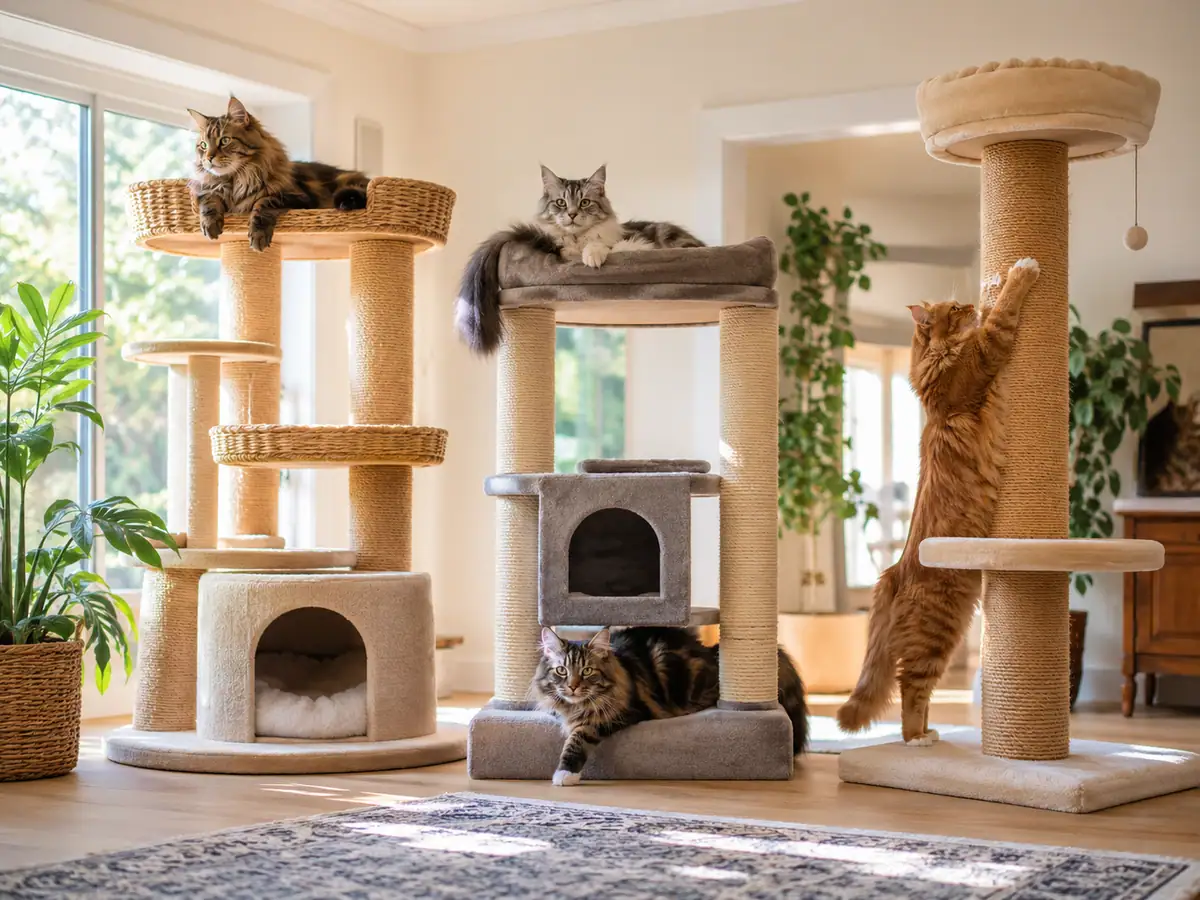
A cat tree for big cats needs more than a tall silhouette. It needs a wide base, rigid posts, platforms large enough for the whole body, and a climbing route that lets a heavy or long cat move up and down without twisting through cramped gaps. A big cat should be able to land, turn, scratch, and rest without balancing on narrow shelves.
The safest choice is usually the cat tree that looks slightly oversized in product photos. Big cats create more leverage when they jump, especially when the top bed sits away from the center of the base. That means base width, post thickness, panel stiffness, fastener quality, and level spacing matter as much as the advertised weight limit.
Start by comparing usable dimensions, not just total height. A 72 inch tower can still fail a large cat if the beds are small, the condo opening is narrow, or the first landing is too tiny. A shorter, wider cat tree for big cats often gives better daily comfort than a dramatic tower that wobbles every time your cat climbs.
Measure Your Cat Before Choosing a Big Cat Tree
Measure your cat from nose to the base of the tail, across the shoulders, and across the widest part of the curled sleeping position. These three numbers help you judge whether a top perch, hammock, cubby, or open platform is genuinely usable. For big cats, the listed overall product size is less useful than the flat area your cat can actually occupy.
Cat parents might also find our electronic cat toys guide helpful.
Add clearance rather than shopping for a perfect body-sized match. A big cat needs room to reposition, groom, tuck paws, and roll slightly while resting. For an open platform, look for enough space that the chest and hips do not hang over the edge. For a cubby or tunnel, compare the narrowest opening with shoulder width and allow a comfortable turn.
Do not rely only on breed labels like Maine Coon, Ragdoll, Siberian, or Norwegian Forest Cat. Individual body shape varies widely. A muscular 15 pound cat and a long 15 pound cat may need different layouts. If your cat is still growing, choose a cat tree for big cats based on likely adult measurements and leave extra margin.
Check Stability Before Height
Height is useful because cats like vertical territory, but height without stability is a problem. A cat tree for big cats should resist rocking when you press gently on the top platform from several directions. The base should sit flat on the floor, posts should not rotate after tightening, and upper platforms should not flex under normal pressure.
A broad, heavy base reduces tipping risk, especially when the tower has offset beds or side platforms. Corner placement can help, but it should not be the only thing keeping the tower steady. If the manufacturer provides a wall strap or anchor, use it exactly as directed with hardware that matches your wall type.
Assembly quality matters too. Build on a flat surface, hand-start all fasteners before tightening, and follow the sequence in the manual. If holes do not align, stop and contact the seller rather than drilling new holes. Improvised changes can weaken the load path and make a cat tree less safe for big cats.
Platform, Bed, and Scratching Post Details That Matter
For big cats, platform shape matters as much as platform size. A rectangular shelf with clear flat space may work better than a round perch with raised bolsters that shrink the usable area. Beds should support the torso, not just the paws. Hammocks need a clear rating, secure stitching, and enough fabric depth that a large cat does not spill over the sides.
For more feline-friendly picks, browse our cat feather toys roundup.
Scratching posts should be tall and stable enough for a full stretch. Many cats prefer sisal rope or woven sisal because it gives claws a satisfying grip. The post should not wobble, shed loose fibers immediately, or spin in place after assembly. A big cat will put real force into scratching, so small decorative posts are rarely enough.
Look closely at transitions between levels. A big cat should not have to leap from a tiny landing into a narrow cubby or reverse down a vertical stack with no broad step. Broad intermediate platforms, staggered shelves, and multiple descent options make the cat tree easier to use for adults, seniors, and cautious cats.
Choose Materials That Handle Big-Cat Use
A durable cat tree for big cats should use panels that feel rigid, coverings that are attached securely, and scratching surfaces that can survive repeated use. Engineered wood can work well when it is thick and well supported. Solid wood can be excellent but heavier. Very light hollow panels may be easy to move, but they deserve closer inspection on a tall tower.
Check fabric and rope attachment points. Loose carpet edges, exposed staples, dangling threads, and unraveling sisal should be fixed or treated as reasons to avoid the product. Removable cushions make cleaning easier, while smooth exposed surfaces are simpler to wipe in multi-cat homes.
Odor and finish quality matter. Let a new cat tree air out according to the manufacturer's directions, and contact the seller if you notice persistent chemical smell, damp panels, cracked boards, or visible mold. A cheaper tower is not a bargain if the materials make your cat avoid it or if the structure wears out quickly.
Place the Cat Tree Where Big Cats Will Actually Use It
A stable location can make a good cat tree more useful. Many cats prefer a spot where they can watch people, look out a window, or retreat without being isolated. Place the tower away from swinging doors, hot fireplaces, unstable shelves, blind cords, and fragile decor that could fall during play.
If your cat needs variety, our cat pet feeder automatic guide has great suggestions.
Window placement is popular, but check direct sun, heat, and access at different times of day. If the tower sits on carpet, confirm that it still rests level. On slick flooring, make sure the base cannot slide when a big cat jumps down. A nonslip rug under the base can help if it stays flat and does not bunch.
Introduce the cat tree gradually. Put treats on lower platforms, play nearby with a wand toy, and add a familiar washable blanket. Do not force your cat onto the top perch. Confidence builds when the cat can explore, retreat, and return on their own terms.
Special Considerations for Multi-Cat and Senior Homes
In a multi-cat home, one cat tree should not be the only valuable vertical space. Big cats may share a broad top bed if they are bonded, but cats that merely tolerate each other need separate perches, exits, and resting choices. A layout with one narrow route can let a confident cat block a timid one from leaving.
Senior cats and cats with mobility changes often need lower first steps, wider intermediate landings, and at least one comfortable bed below the highest level. Watch how your cat already moves through the home. If they hesitate before jumping to a windowsill, choose a lower, wider cat tree for big cats rather than a tall vertical tower.
Sudden reluctance to jump, stiffness, missed landings, or changes in normal climbing behavior can signal a health issue. Furniture changes help comfort, but they do not replace veterinary advice. Choose a gentler layout while any mobility change is being evaluated.
Final Buying Checklist for a Cat Tree for Big Cats
Before buying, compare finalists with a checklist rather than trusting labels like extra large or heavy duty. Confirm usable platform measurements, scoped weight ratings, post materials, replacement-part availability, warranty support, packed weight, and return policy. Recent owner photos can help with scale, but manufacturer specifications should stay the primary evidence.
Read reviews for repeated patterns, not isolated opinions. Several comments about wobble, small beds, stripped screws, poor instructions, or fast fabric wear are more useful than one dramatic complaint. Also check whether reviewers mention the actual cat's size. A big-cat review with measurements is much stronger than a generic five-star note.
The best cat tree for big cats is the one your cat can use confidently every day: stable enough for jumping, roomy enough for resting, strong enough for scratching, easy enough to descend, and simple enough to maintain. If a tower fails one of those basics, keep shopping.
For more independent, vet-reviewed guidance on this topic, the Cornell Feline Health Center is an excellent place to start.
Frequently Asked Questions
What size cat tree is best for big cats?
Choose by usable measurements, not only height. A big cat tree should have platforms wide enough for the torso, openings wider than the cat's shoulders, and a base that is proportional to the tower. Add several inches of clearance beyond your cat's resting footprint.
Do big cats need a heavy duty cat tree?
Most big cats benefit from a heavy duty design, but the label is not enough. Check base width, post thickness, scoped weight ratings, platform support, and hardware quality. A shorter, wider tower can be safer than a tall tower with a narrow base.
Should I anchor a cat tree for big cats to the wall?
Use the manufacturer's supplied or recommended restraint when available, especially for tall towers. Follow the instructions and use hardware appropriate for your wall. Do not improvise brackets unless the manufacturer approves the method.
Are hammocks safe for large cats?
A hammock can be safe when it has a clear load rating, secure stitching, strong frame support, and enough fabric depth for the cat's body. Inspect attachment points often. If the hammock sags heavily, tilts, or pulls at the seams, stop using it.
Where should I put a big cat tree?
Place it on a level surface in a room your cat already uses, often near a safe window or living area. Keep it away from doors, cords, fireplaces, unstable shelves, and fragile items. Recheck stability after moving it.
How do I know if a cat tree is too small?
It is too small if your cat's hips or chest hang off the platform, if they must squeeze through openings, if they avoid the top bed, or if they cannot turn around naturally. Watch real use during the first week and return or exchange the tower if the fit is poor.
Browse Cat Toys
Free worldwide shipping on every order. No minimum purchase required.
Browse Cat Toys →