Top photo: a black and white long-haired cat sitting on a white bedspread. Photo: Legasov97 / Wikimedia Commons, CC BY-SA 4.0 (cropped, resized and converted to WebP).
Two quite different people search for cat couch. One wants a sofa-style bed, a little couch of the cat's own with raised sides to rest a chin on. The other has a real couch with claw pulls down one arm and wants that to stop. This guide answers both, the bed first and then the furniture, because the fixes are genuinely different and mixing them up is why so much money gets spent on things cats ignore.
Quick Answer: What Should You Know About Cat Couch?
This phrase covers two things: a sofa-style cat bed with raised bolster sides, and the real couch you are trying to keep intact. Both are answered below. For the bed, judge bolster height, interior size and washability. For the furniture, give the cat a better scratching surface standing right beside the arm.
What People Mean by Cat Couch, and Why Both Readings Matter?
Answer: Two different shoppers type this. One wants a sofa-shaped bed for the cat, a small couch with raised sides and an open front. The other owns a real couch with claw pulls down one arm and wants that to stop. Both are reasonable, and the answers are completely different.
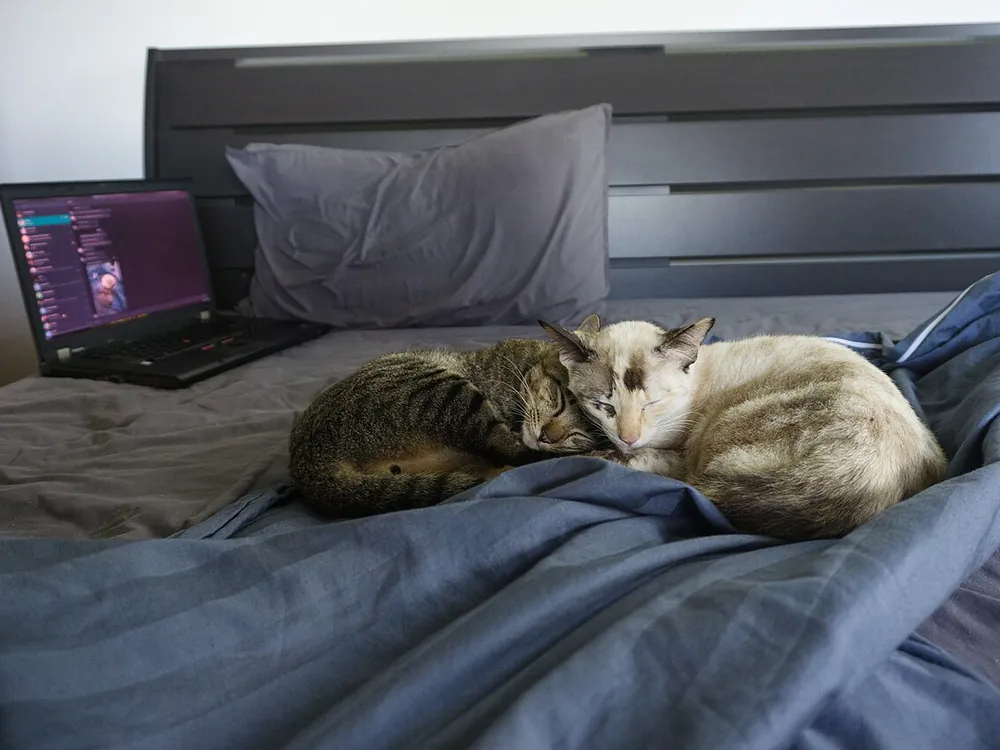
Photo: Alexey Komarov / Wikimedia Commons, CC BY-SA 4.0
Two different shoppers type this. One wants a sofa-shaped bed for the cat, a small couch with raised sides and an open front. The other owns a real couch with claw pulls down one arm and wants that to stop. Both are reasonable, and the answers are completely different.
If you are after the bed, the short version is that cats choose a resting place by edge, warmth and position rather than by what it cost. A bolstered bed works because the raised back gives a cat something to rest a chin and a shoulder against while it still has a clear view of the room.
If you are after the furniture, the short version is that a cat scratches your couch because the couch is the best scratching surface in the house: tall, heavy, textured, and standing in the room where everybody gathers. Nothing you apply to it will outperform giving the cat something better in the same spot.
Plenty of households need both halves. The two are connected, because a cat with a comfortable place of its own in the social room has less reason to colonise the sofa cushions, and a sturdy scratching post standing beside the arm takes the pressure off the upholstery while the new habit forms.
What Should Pet Owners Know About Different Types of Cat Couch and When to Use Each?
Answer: Sofa-style beds divide into a few honest shapes. A bolster bed has raised sides on three edges and an open front. A chaise or lounger raises one end only. A cuddler or donut is round with a continuous rim, and a cave bed roofs the whole thing over.
Sofa-style beds divide into a few honest shapes. A bolster bed has raised sides on three edges and an open front. A chaise or lounger raises one end only. A cuddler or donut is round with a continuous rim, and a cave bed roofs the whole thing over.
Cat parents might also find our cat bowls guide helpful.
The shape should follow the way your cat sleeps. A cat that curls tight all year is well served by a donut or a cave, where the rim supports it on every side. A cat that stretches out flat, sleeps on its back or hangs a leg over the edge needs the open front of a bolster couch or a plain flat mat, because a continuous rim simply gets in the way.
Two more options are worth knowing. A raised cot on a frame keeps a cat off a cold floor and out of draughts, suits long-haired cats in summer, and is the easiest of all to wipe down. A flat quilted mat looks like nothing and gets used constantly, because it can move to a windowsill, into a carrier, or onto the arm of the couch you are trying to protect.
Some sellers list a miniature piece of furniture, a genuine wooden-framed couch upholstered for a cat. They photograph beautifully and they are mostly bought for the owner. A cat judges them on the same points as anything else, so check that the seat is deep enough to lie on, that the cushion lifts out for washing, and that the frame does not rock when a cat lands on one end.
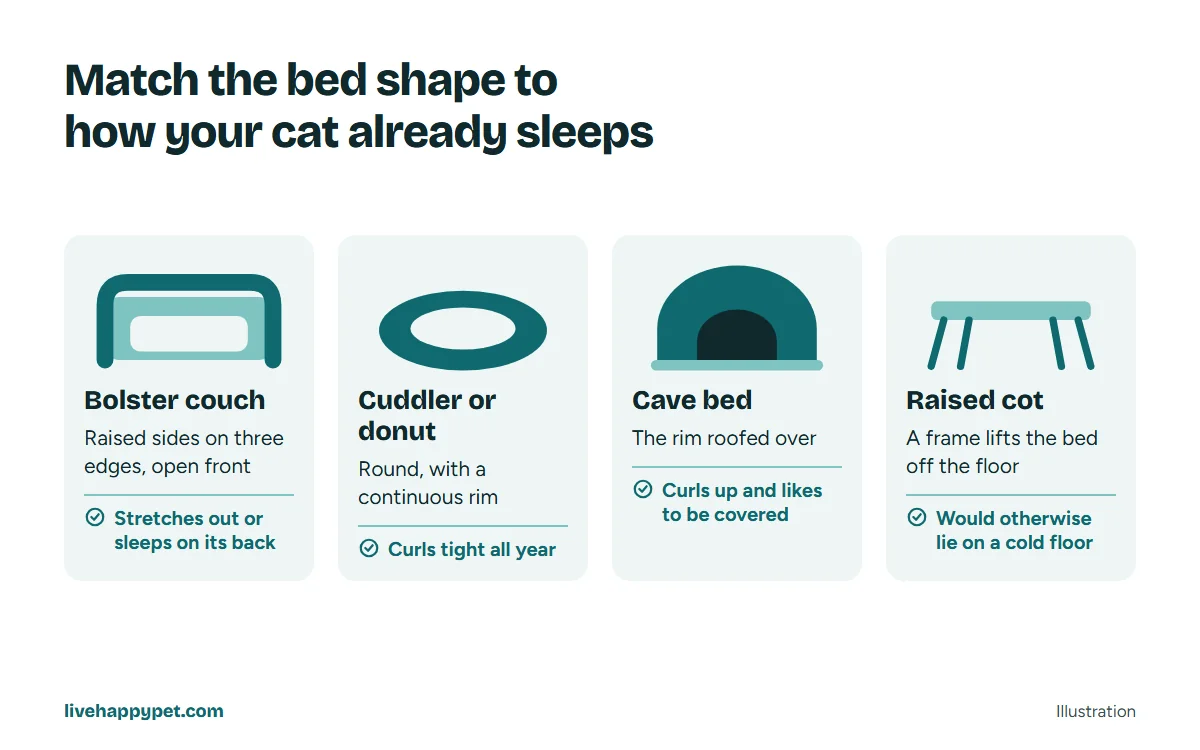
Illustration: Livehappypet
What Should Pet Owners Know About Bolster Height and Sizing for Cat Couch?
Answer: Size the bed to the sleeping cat, not the standing one. Measure the cat curled up, then look for a bed a little larger than that circle with a bolster high enough to rest a chin on. Oversized beds feel exposed, and most cats abandon one for a cardboard box.
Size the bed to the sleeping cat, not the standing one. Measure the cat curled up, then look for a bed a little larger than that circle with a bolster high enough to rest a chin on. Oversized beds feel exposed, and most cats abandon one for a cardboard box.
Bolster height is the detail nobody checks and the one cats respond to. A rim that comes up to roughly the shoulder height of a sitting cat gives both a chin rest and a sense of enclosure, while a rim barely thicker than the mattress gives neither. Stuffed bolsters flatten over a season, so squeeze one on arrival and see whether it springs back.
Check the interior rather than the outside. Makers measure the whole article including the bolster, so a couch bed that sounds generous can have a sleeping area the size of a dinner plate. Ask for the internal measurement, and when all you have is a photograph, compare the opening against something of known size in the same picture.
Two cats will share a bed built for one, right up until the week they fall out, so two medium beds beat one large one. For an older or arthritic cat the front edge matters more than anything else: a high rim on all four sides becomes a wall to climb rather than a comfort, and a bed a stiff cat has to climb into is a bed it stops using quietly.
What Should Pet Owners Know About Materials and Washing for Cat Couch?
Answer: Washability decides how long you tolerate the thing. A cat bed collects fur, dander, shed claw sheaths and the occasional hairball, and one that cannot go in a machine turns into a smell you stop noticing. Look for a removable cover, or a bed rated for a full wash, before you look at the fabric.
Washability decides how long you tolerate the thing. A cat bed collects fur, dander, shed claw sheaths and the occasional hairball, and one that cannot go in a machine turns into a smell you stop noticing. Look for a removable cover, or a bed rated for a full wash, before you look at the fabric.
For more feline-friendly picks, browse our heated cat roundup.
Then judge the fabric by what it does with claws and with fur. Plush and sherpa are warm and shed badly. Short-pile velour and brushed microfibre hold less and brush out easily. Woven canvas and tight upholstery cloth resist pulls best, which matters on a bolstered bed because cats knead the rim before they settle. Loose-weave linen and looped fabrics snag on the first claw.
The filling is the part that fails. Loose polyester fibre compacts into lumps after a few washes, which is why a cheap bolster goes flat and stays flat, while shredded foam holds its shape longer and dries far faster. A non-slip base matters more than it sounds on wooden floors, since a bed that skids when a cat jumps in teaches the cat to stop jumping in.
Wash covers on a warm gentle cycle with unscented detergent, skip fabric softener because it leaves a residue cats can smell, and air dry anything containing foam rather than tumble drying it. Run a rubber glove or a pumice stone over the fabric first to lift the fur, or most of it ends up packed into the machine filter.
Why Does a Cat Scratch the Real Couch Instead of the Bed You Bought?
Answer: A cat scratches the couch because the couch is the best scratching surface in the house. It is tall enough for a full stretch, heavy enough not to move, textured enough to catch a claw, and it stands in the room where the family sits. Scent marking only works where everyone goes.
A cat scratches the couch because the couch is the best scratching surface in the house. It is tall enough for a full stretch, heavy enough not to move, textured enough to catch a claw, and it stands in the room where the family sits. Scent marking only works where everyone goes.
Scratching is not misbehaviour and it is not revenge. Cats scratch to pull the dead outer sheath off their claws, to stretch the shoulders and back in one long movement, and to leave both a visible mark and scent from glands in the paws. Punishment removes none of those needs, and a cat that has been told off usually returns to the same arm when the room is empty.
Match the couch rather than competing with a different idea. A replacement has to be tall enough for a full extension, rigid enough not to wobble, covered in sisal rope or sisal fabric, and standing within a stride of the spot already in use. A short wobbly post in the hallway is not a replacement, which is why so many of them sit untouched while the arm keeps getting worse.
Watch the angle your cat uses. Some cats work vertically up the arm, some drag horizontally across the seat, and a few prefer a slope. Cardboard ramps, flat sisal mats and angled scratchers each answer one of those, and buying the wrong angle is the commonest reason a perfectly good scratcher is ignored. Put one of each near the sofa for a fortnight and let the cat tell you.
How to Protect Upholstery Around Cat Couch?
Answer: Make the couch boring and the alternative obvious, in that order. Cover the exact patch being scratched so the texture stops rewarding, then stand a sisal post or a flat scratcher within a pace of it and make that the interesting option with catnip and a wand session.
Make the couch boring and the alternative obvious, in that order. Cover the exact patch being scratched so the texture stops rewarding, then stand a sisal post or a flat scratcher within a pace of it and make that the interesting option with catnip and a wand session.
If your cat needs variety, our cat treats guide has great suggestions.
Double-sided tape on the arm works because cats dislike sticky paws, and the strips lift cleanly off most fabrics, though it is worth testing a hidden patch on leather first. A smooth plastic corner guard does the same job with less fuss. Both are temporary measures meant to run for a few weeks while the new habit forms, not permanent decoration.
Loose throws slide off the moment a cat kneads them, which makes the problem worse rather than better. If you want a cover, choose one with elasticated corners, tuck-in flaps or foam grip rods that push into the gap between seat and back. Fitted stretch covers in a tight weave are the ones that survive, and a cover that stays put also keeps fur and claw oil off the upholstery underneath.
For cleaning, work dry first. A rubber glove, a window squeegee or a pumice stone lifts embedded fur out of upholstery far better than a vacuum does. Trim loose claw pulls flush with sharp scissors rather than pulling them, because tugging a thread runs the pull further along the weave. On leather, wipe scuffs with a damp cloth and leave anything deeper to a repair specialist. Keeping claws trimmed reduces the damage while you work on the habit.
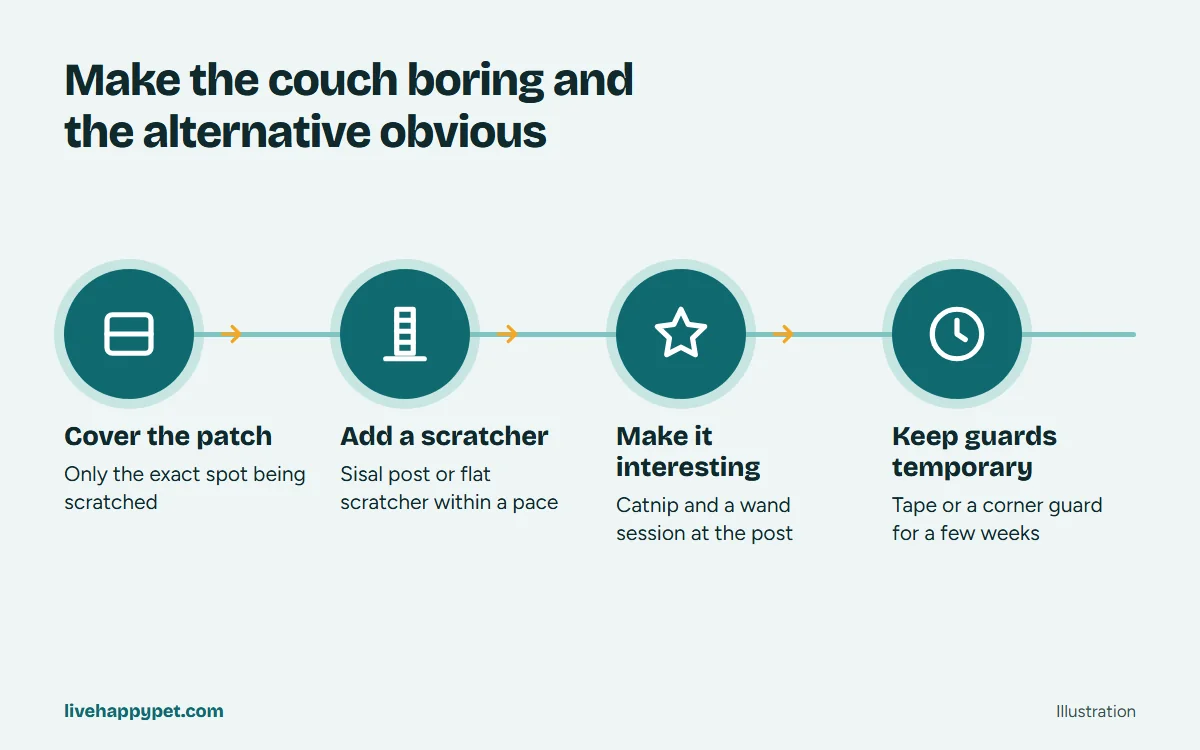
Illustration: Livehappypet
What Should Pet Owners Know About Common Mistakes Pet Owners Make with Cat Couch?
Answer: Punishment is the first mistake and the most tempting. Shouting, spraying water or carrying the cat away from the couch teaches it that scratching is unsafe while you are watching, not that scratching is unnecessary. The behaviour simply moves to the hours you are out, and the arm keeps getting worse.
Punishment is the first mistake and the most tempting. Shouting, spraying water or carrying the cat away from the couch teaches it that scratching is unsafe while you are watching, not that scratching is unnecessary. The behaviour simply moves to the hours you are out, and the arm keeps getting worse.
The second is putting the replacement where it suits the room. A post in the hallway does nothing for a sofa in the living room, because the location is half the point of the scratch. Stand it against the arm being used, leave it there until the habit is solid, then move it a hand's width at a time if you want it somewhere tidier.
The third is buying a bed and assuming the cat owes you something. Cats pick sleeping places by warmth, height, view and smell, so a new bed in a cold corner loses to a sunny patch of carpet every time. Put it where the cat already sleeps, let it pick up the smell of the household, and give it a fortnight before you call it a waste of money.
The fourth is reaching for a permanent answer to a temporary nuisance. Declawing removes the last bone of each toe rather than trimming a nail, and it is banned or restricted in many places for exactly that reason. Claw trimming, soft vinyl claw caps and a scratcher in the right place handle almost every household. If the scratching starts suddenly or looks frantic, ask your veterinarian rather than reaching for the tape.
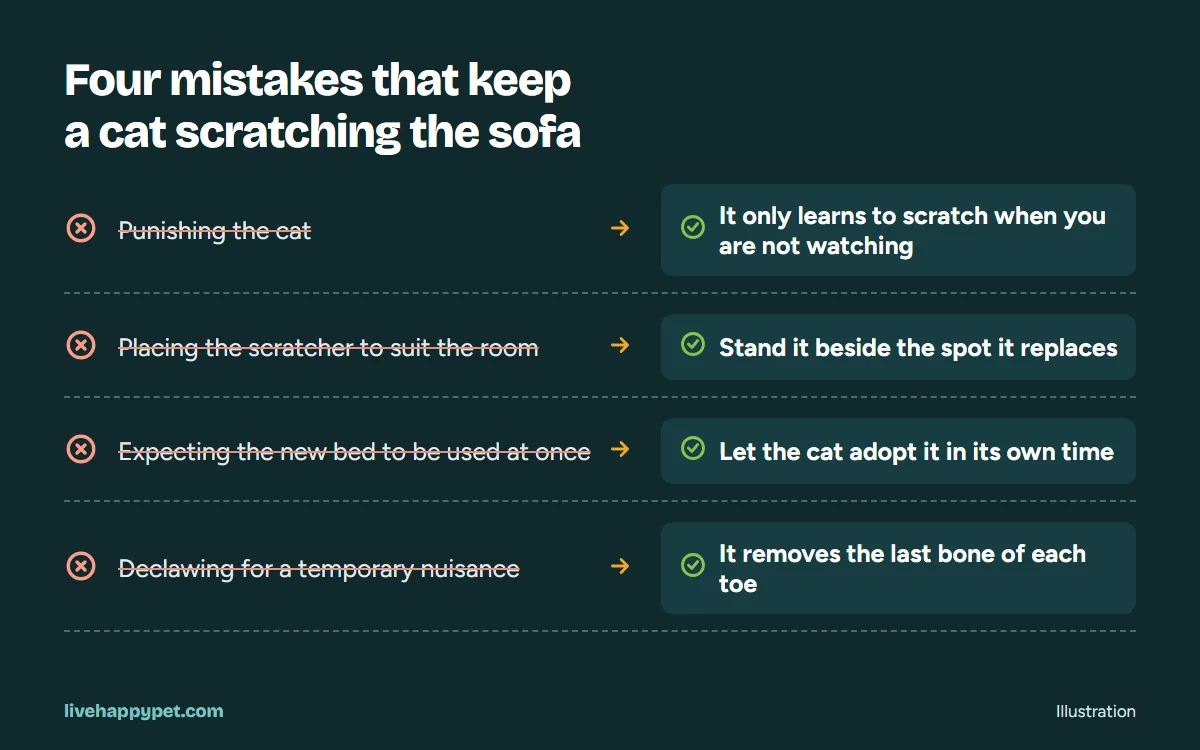
Illustration: Livehappypet
What Should Pet Owners Know About Getting the Best Value When Shopping for Cat Couch?
Answer: The cheapest useful thing you can buy for a sofa is a flat corrugated cardboard scratcher, and it outperforms most expensive furniture. The cheapest useful bed is a washable mat laid where your cat already sleeps. Spend what you save on a post heavy enough that it never tips.
The cheapest useful thing you can buy for a sofa is a flat corrugated cardboard scratcher, and it outperforms most expensive furniture. The cheapest useful bed is a washable mat laid where your cat already sleeps. Spend what you save on a post heavy enough that it never tips.
On beds, pay for the cover and the base and ignore the styling. A removable washable cover, shredded foam rather than loose fibre, and a non-slip underside are the three features that decide whether a bed is still in use next year. Faux-fur trim, contrast piping and a wooden frame shaped like real furniture are for the photograph.
Test before you commit. Cats are specific about where they sleep and what they scratch, so a cheap mat and a cardboard scratcher will tell you your cat's preferences for the price of a coffee. Once you know whether yours curls or stretches, and whether it scratches upright or flat, the expensive purchase becomes a safe one.
When you are ready to furnish the corner properly, our cat supplies range covers the posts, mats and wand toys that make a new spot worth choosing. Finishing a play session on the scratcher beside the couch does more for your upholstery than anything you can spray on it.
For more independent, vet-reviewed guidance on this topic, the Cornell Feline Health Center is an excellent place to start.
What Questions Do Pet Owners Ask About Cat Couch?
Answer: This phrase covers two things: a sofa-style cat bed with raised bolster sides, and the real couch you are trying to keep intact. Both are answered below. For the bed, judge bolster height, interior size and washability. For the furniture, give the cat a better scratching surface standing right beside the arm.
What exactly is a cat couch?
Usually a sofa-style cat bed: a mattress with raised bolster sides on three edges and an open front, so the cat has an edge to rest a chin on and a clear view out. Some sellers also use the phrase for miniature upholstered furniture built for cats. Plenty of people searching it mean the human sofa they are trying to save.
How do I stop my cat scratching the sofa?
Give it something better in the same place, and make the sofa dull at the same time. Stand a tall rigid sisal post hard against the arm being used, add catnip and finish play sessions on it, and cover the exact patch with double-sided tape or a corner guard for a few weeks. Move the post only once the habit is firmly established.
Will my cat use a bed if I buy one?
Only if the position is right. Cats pick sleeping places by warmth, height, view and familiar smell, so the same bed can be ignored in a cold corner and adored on a sunny windowsill. Put it where your cat already sleeps, add a blanket that smells of the household, and give it a couple of weeks before judging.
What size should a bolster bed be?
Slightly larger than your cat curled up, not larger than your cat stretched out. Makers measure the outside including the bolster, so ask for the internal sleeping area. The rim should reach about the shoulder height of a sitting cat, high enough to rest a chin on. For a stiff or elderly cat, choose a low front edge.
Does double-sided tape really work on upholstery?
On most fabrics, yes, because cats dislike sticky paws and will avoid a taped patch. Test a hidden spot on leather or delicate weaves before you commit. Treat it as a short-term measure that runs while a scratching post beside the sofa takes over. Tape alone, with nothing better offered nearby, usually just moves the scratching along the arm.
How do I get cat fur out of a sofa?
Work dry before you vacuum. A damp rubber glove, a window squeegee or a pumice stone dragged across the fabric rolls embedded hair into clumps you can lift off, which a vacuum on its own will not do. Finish with the upholstery tool, and use a lint roller on cushion edges where fur works into the seams.
Can I wash a cat bed in the machine?
If it has a removable cover, almost always. Use a warm gentle cycle and unscented detergent, skip fabric softener because the residue puts cats off, and lift the loose fur with a rubber glove first so it does not clog the filter. Air dry anything with foam in it, since heat breaks the filling down and warps the shape.
Is there any way to stop scratching without declawing?
Yes, and declawing is worth avoiding: it amputates the last bone of each toe and is banned or restricted in many places. Regular claw trimming, soft vinyl claw caps, a sisal post standing where the scratching happens, and a temporary cover on the damaged patch resolve the great majority of cases. Ask your veterinarian if the behaviour appears suddenly.
Browse Cat Supplies
Free US shipping on every order. No minimum purchase required.
Browse Cat Supplies →