A bed for dogs large should let a dog lie down fully, turn around without crowding and step on or off without slipping. The right size is only one part of comfort: support, washable fabric and stable placement matter too.
This guide covers measuring, materials, support, cleaning and when a bed needs to be replaced.
Measure the Sleeping Position
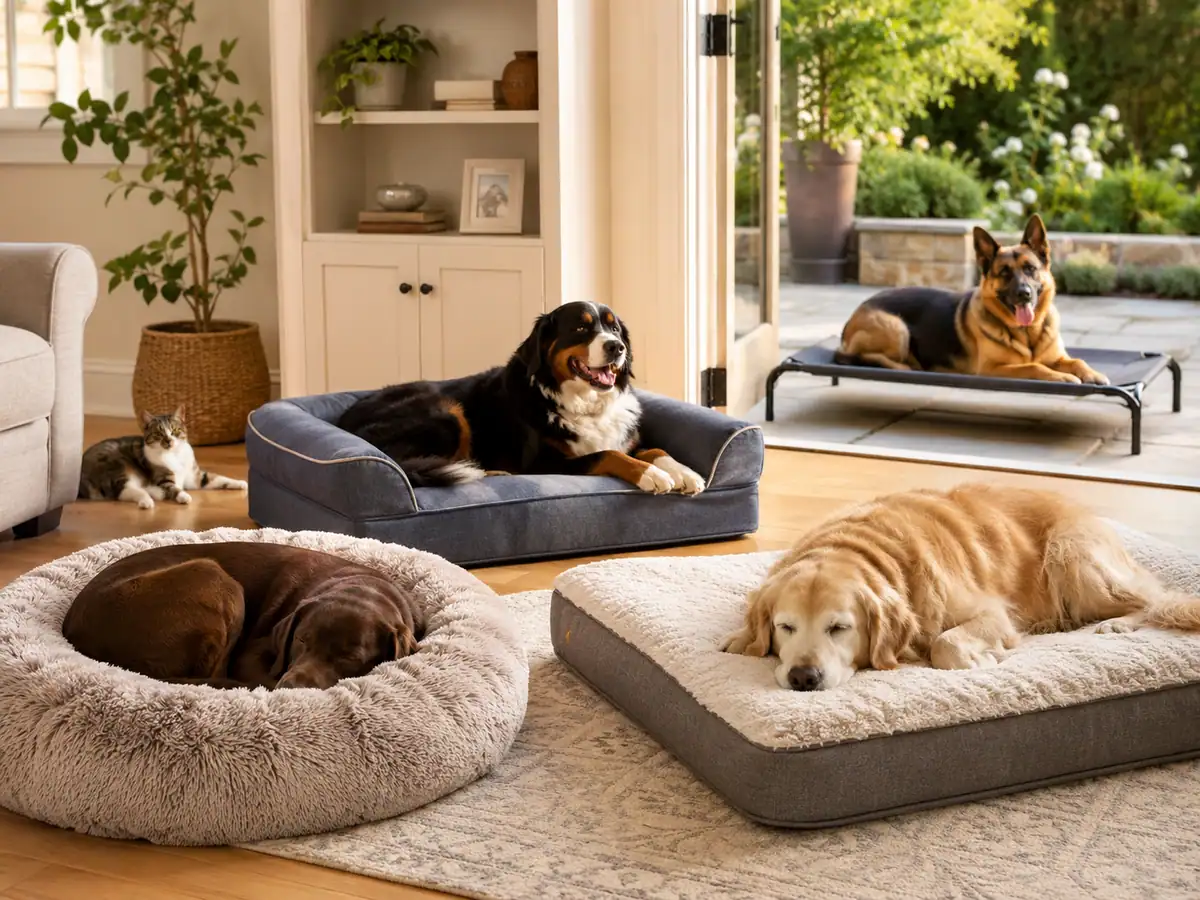
Measure from the dog's nose to the base of the tail while the dog is relaxed, then allow extra room for stretching. A bed for dogs large should not force a dog to curl up when it normally sleeps on its side.
Check the doorway and the space where the bed will sit before buying. A generous bed is useful only if it can be carried, cleaned and placed safely.
Choose Support for the Dog
Older, heavy or stiff dogs may benefit from a supportive base that does not flatten immediately. Watch how the dog stands up and change the setup if the bed sinks, slides or makes getting up difficult.
For more expert recommendations, check out our cozy pet bed guide.
Keep the surface level and avoid placing thick edges where a dog could trip. A bed cannot replace veterinary advice for persistent pain or mobility changes.
Prioritize Washable Materials
Choose a removable cover with clear washing instructions and a filling that can dry completely. Hair, moisture and food collect quickly on a bed for dogs large because the surface is used often.
Inspect seams, zippers and exposed foam after washing. Replace damaged parts that a dog could chew or swallow, and keep a spare clean sleeping surface available.
Place It Where the Dog Can Rest
Keep the bed away from drafts, heaters, cables and doorways. A quiet corner with a clear path helps a dog choose the bed without blocking household traffic.
You might also find our dog bed for large dogs article helpful when shopping.
Use a non-slip mat on smooth floors and check the base after moving furniture. Stability matters more than decorative height.
Know When to Replace It
Replace a bed when the support stays compressed, the cover cannot be cleaned or seams expose filling. A bed for dogs large should remain dry, stable and free from sharp hardware.
Wash on the manufacturer's schedule and allow the bed to dry fully before use. If a dog suddenly stops using a familiar bed, check comfort and health rather than forcing the dog back onto it.
If you want to dig deeper into the research, the ASPCA pet care library publishes practical, expert-reviewed resources for pet owners.
Frequently Asked Questions
How do I size a bed for dogs large?
Measure the dog while stretched out and allow extra room for turning. Confirm the finished bed also fits the intended room.
What is the best material for a large dog bed?
Choose a washable cover and a base that stays supportive. Follow care instructions and inspect seams and filling regularly.
Should a large dog bed be raised?
Not necessarily. A stable, low entry can be safer for dogs with stiff joints, while the correct choice depends on the individual dog and surface.
How often should I wash a large dog bed?
Follow the maker's instructions and wash whenever hair, moisture or odour builds up. Dry every part completely before use.
Why has my dog stopped using its bed?
Check temperature, noise, damage, slipping and comfort. A sudden change can also signal pain or illness and may need veterinary advice.
Browse Dog Beds
Free worldwide shipping on every order. No minimum purchase required.
Browse Dog Beds →