The right automatic pet feeder for your cat depends on one question: do you need to control how much your cat eats, or only keep food available? Gravity feeders simply refill a bowl, programmable feeders dispense measured meals on a schedule, Wi-Fi models add remote control and alerts, and microchip feeders decide which pet may eat at all. This guide compares the four types head to head so you can match one to your cat, your household, and your budget.
Our companion article, the cat automatic pet feeder buying and setup guide, walks through installation, portion testing, and troubleshooting in detail. Here the focus is different: understanding the trade-offs between feeder types before you spend money on the wrong one.
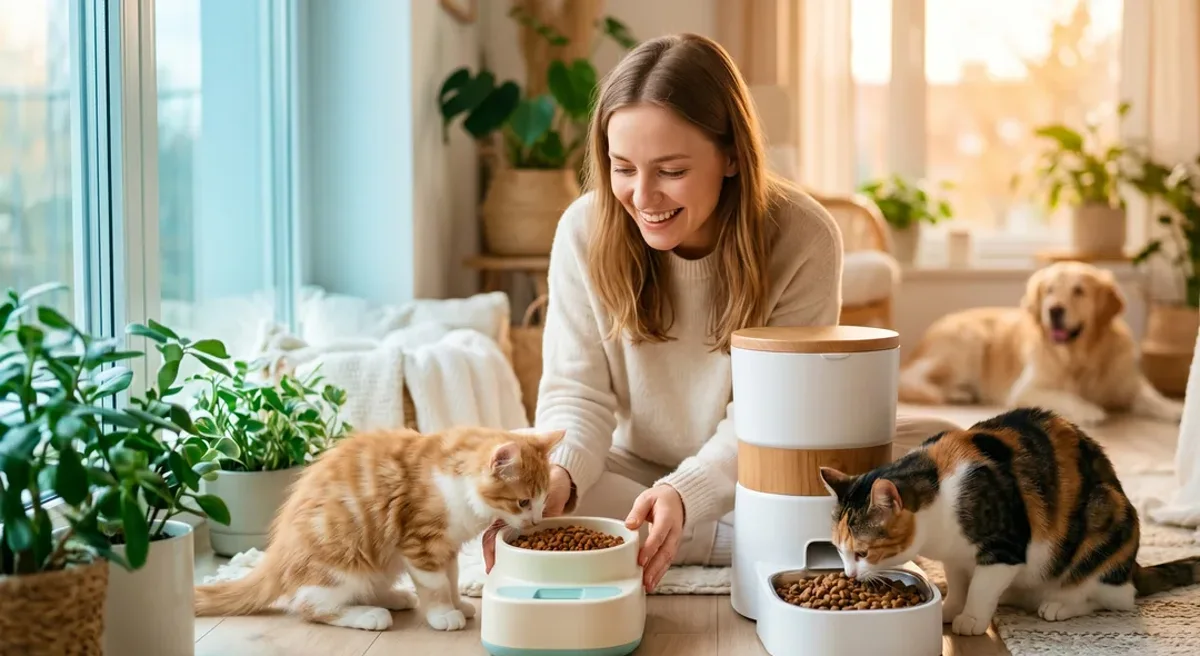
The Four Types of Automatic Pet Feeders for Cats
Gravity feeders are the simplest: a hopper keeps the bowl full as your cat eats. No power, no schedule, no portion control. They suit cats that naturally graze without overeating, and they fail badly for food-motivated cats that will empty the hopper early.
Programmable feeders dispense a measured portion at times you set. This is the workhorse type: it enforces meal sizes, keeps a routine while you are at work, and most models run on mains power with battery backup.
Wi-Fi and app feeders are programmable feeders with a connection. You can trigger a meal remotely, adjust the schedule from anywhere, and get alerts when food runs low or a motor jams. Some add cameras or voice recordings.
Microchip feeders open only for a registered cat, identified by its microchip or a collar tag. They exist for one job: making sure the right animal eats the right food in homes with several pets.
Feature Comparison Table
| Feature | Gravity | Programmable | Wi-Fi / App | Microchip |
|---|---|---|---|---|
| Portion control | None | Yes | Yes | Yes (per pet) |
| Scheduling | None | On device | On device + app | Varies |
| Power needed | No | Yes (battery backup common) | Yes + Wi-Fi | Yes |
| Multi-pet homes | Poor | Fair | Fair | Best |
| Wet food support | No | Rare (cooled trays) | Rare | Some models |
| Typical price tier | Budget | Mid-range | Mid to premium | Premium |
| Best for | Grazers, short absences | Routine and diets | Irregular schedules, travel | Food stealing, prescription diets |
How to Choose: Five Criteria That Matter
1. Your cat's eating style. A self-regulating grazer can live with a gravity feeder. An eager eater needs enforced portions, which means programmable or better.
2. Household mix. One cat alone is easy. Two cats sharing a feeder makes portion tracking unreliable, and a dog in the house is the classic argument for a microchip feeder placed at cat height.
3. Your schedule. Fixed work hours suit a simple programmable unit. Unpredictable shifts, frequent travel, or a cat on strict meal timing tip the balance toward Wi-Fi control and low-food alerts.
4. Food type. Nearly all hoppers are designed for dry kibble of small to medium size. Wet food needs sealed or cooled tray feeders, a smaller and pricier category.
5. Failure behavior. Ask what happens when power or internet drops, whether the schedule survives on the device, and how the feeder behaves when kibble jams. Reliability under failure is worth more than any smart feature.
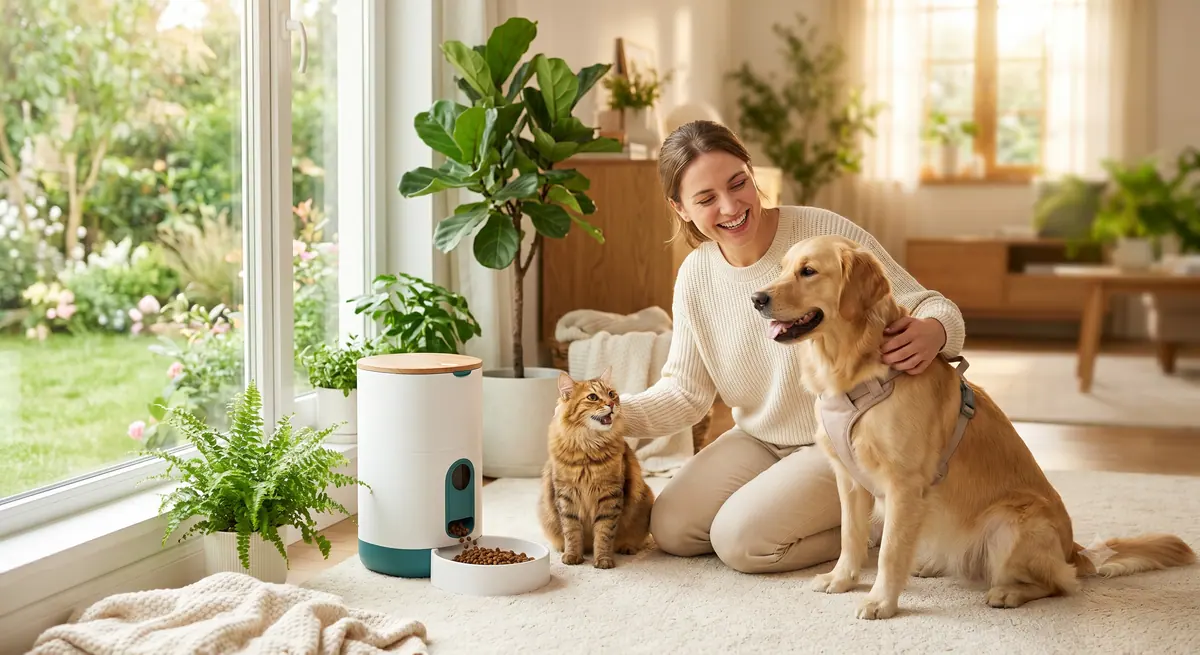
Multi-Pet Homes: Preventing Food Stealing
Feeders fail most often in homes where the wrong mouth reaches the bowl first. If a dog shares the space, place the cat's feeder on a stable elevated surface a dog cannot reach, or choose a microchip feeder that stays closed to everyone else. Between two cats, separate feeders in separate rooms preserve portion control and reduce mealtime tension. Feed the fastest eater in a closed room if stealing continues.
For cats on prescription or weight-management diets, access control is not optional: a single week of eating the other pet's food can undo a diet plan or upset a sensitive stomach. Your vet's feeding plan should decide portions; see our guides on safe product use for the same principle applied to other pet products: the label and the vet outrank the gadget.
Setup Pitfalls That Surprise First-Time Buyers
Run the feeder for a few days while you are home before trusting it alone. Measure what it actually dispenses: portion sizes vary between kibble shapes, and "one cup" on a dial rarely equals a measuring cup. Introduce the feeder gradually next to the old bowl so the noise of the motor does not spook your cat, and keep a second water source available. Battery-only operation drains faster in cold rooms, so prefer mains power with batteries as backup.
Finally, plan cleaning from day one. Hoppers and chutes collect kibble dust and oils; a feeder that smells stale is the most common reason a cat suddenly refuses meals it accepted for weeks.
Frequently Asked Questions
Which type of automatic feeder is best for a cat on a diet?
A programmable portion feeder. It dispenses fixed amounts at set times, which is the core of most weight-management plans. Gravity feeders cannot restrict intake, and Wi-Fi models only add remote control on top of the same portion scheduling.
Are gravity feeders safe to leave for a weekend?
Only for cats that self-regulate and only with dry food. Gravity feeders keep the bowl topped up, so a food-motivated cat can overeat, and there is no backup if the food bridges and stops flowing. For anything longer than a day, a programmable feeder plus a water fountain is safer.
Do Wi-Fi feeders still work when the internet goes down?
Most quality Wi-Fi feeders store the feeding schedule on the device, so scheduled meals continue during an outage. You lose remote feeding and notifications until the connection returns. Check this behavior before buying, because a few models rely on the cloud for every dispense.
What is a microchip feeder and who needs one?
A microchip feeder opens only for the pet whose chip or collar tag it recognizes. It solves food stealing in multi-pet homes, which matters for cats on prescription diets or when a dog raids the cat bowl. It is usually the most expensive type, so it earns its price only in those situations.
How often should an automatic feeder be cleaned?
Wash the bowl every day or two, and clean the hopper and dispensing path every one to two weeks. Oils from dry food build up and turn rancid, which is a common reason cats start refusing food from a feeder that worked fine at first.
The Bottom Line
Match the feeder to the problem you are solving. Grazing cat, short absences: gravity is enough. Routine and portion control: programmable. Unpredictable days or travel: Wi-Fi. Food stealing or medical diets: microchip. Once you have picked a type, our setup and buying guide covers choosing a specific model and getting your cat comfortable with it.