If you are looking for the best harness for cats, this comprehensive guide covers everything you need to know. Whether you are a first-time pet owner or an experienced one looking to upgrade, you will find practical advice, safety tips, and honest comparisons below.
Why Choosing the Right Harness For Cats Matters for Your Cat
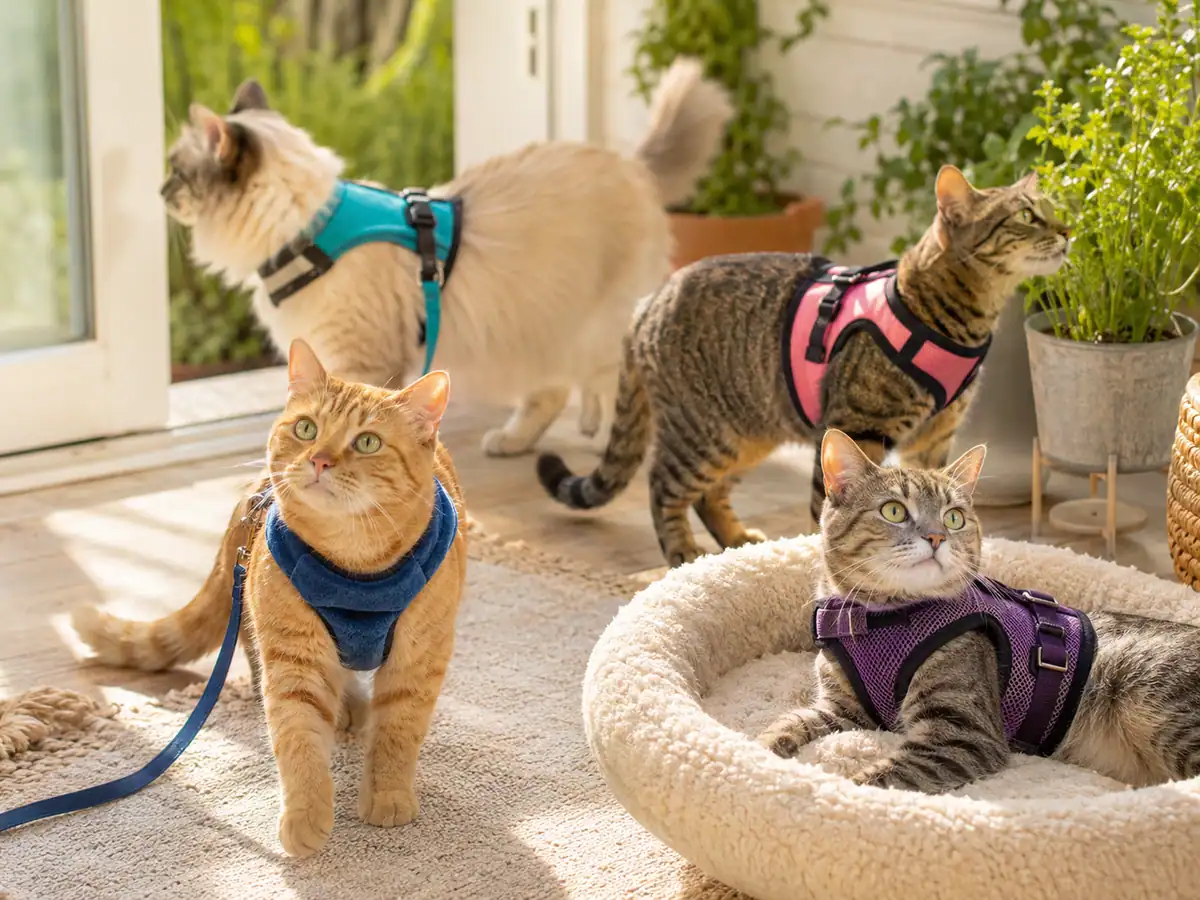
A cat should never be walked on a leash clipped to a collar. Collars are designed to break away under pressure, which is exactly what you want if your cat snags one on a fence, and exactly what you do not want when the collar is the only thing between your cat and a busy road. A leash attached to a neck-only collar also concentrates force on the throat and trachea. The right harness for cats spreads that force across the chest and shoulders instead.
The second reason is escape. Cats are far better than dogs at reversing out of gear. A frightened cat flattens its shoulders, backs up, and slips out of anything that relies on a single neck strap. Well-designed harness for cats close that gap by wrapping the ribcage, so a panicking cat has nothing to reverse out of.
Getting this right is what makes outdoor access possible at all for indoor cats. Leash walking gives a housebound cat real sensory variety, grass, wind, and smells, without the risks of free roaming: traffic, fights, parasites, and predation of local wildlife. The gear is the safety layer that makes the whole thing reasonable.
Different Types of Harness For Cats and When to Use Each
Vest and jacket styles wrap a broad panel of fabric around the chest and close along the back. They spread pressure over the largest area and are the hardest to escape, which makes them the default recommendation for first-time walkers and for any cat that has already wriggled out of something. The trade-off is coverage: they hold more heat, so they suit cool mornings better than midday sun.
For more expert recommendations, check out our dog for dog harness guide.
H-style harnesses, sometimes sold as cat halters, use two loops (one behind the front legs, one around the neck) joined by a strap along the spine. They are light, breathable, and adjustable at several points, which helps with long or narrow-chested cats that vest sizing does not fit. They demand a more careful fit check, because the loops leave gaps a determined cat can work with.
Step-in harnesses have the cat place its front paws through two openings before the harness closes over the back. They avoid pulling anything over the head, which suits cats that dislike being handled around the face. Figure-8 designs tighten when the cat pulls, so they should be treated with caution and are generally not the first choice for a nervous cat.
For the leash itself, use a fixed-length line of roughly 1.2 to 2 metres. Retractable leads are a poor match for cats: the line alternates between slack and a sudden jolt when the lock engages, which is precisely the sensation that teaches a cat to distrust the whole exercise. A light, static leash keeps constant, predictable slack.
Safety Checklist for Harness For Cats
Fit is the whole safety story. The standard check is two fingers: you should be able to slide two fingers flat between the strap and your cat's body, no more and no less. Looser than that and the cat can rotate the harness and reverse out. Tighter and you get rubbing at the armpits and the front of the shoulders. Check those contact points for redness after the first few sessions.
Run a supervised escape test indoors before you ever open a door. Let your cat walk a few steps while you hold the leash, then gently apply light backward tension. If the harness rotates, if the cat can pull one shoulder through, or if it slides toward the neck, adjust the straps or change style before going outside. Most slip-outs trace back to a harness bought a size too large.
Do not tether a cat and walk away. A leashed cat left unattended can tangle, climb into a position it cannot reverse out of, or be cornered by a loose dog with no way to flee or climb. Before any outdoor access, make sure vaccinations and flea, tick, and worm prevention are current, and confirm with your veterinarian that your cat is a reasonable candidate for outdoor time.
Choosing Harness For Cats Based on Your Cat's Life Stage
Kittens accept new gear far more readily than adults, so the window between roughly eight weeks and six months is the easiest time to start. The complication is growth. A kitten can outgrow a harness in a matter of weeks, so check the fit every few days rather than every few months, and expect to buy a second size.
You might also find our dog harness on dog article helpful when shopping.
Adult cats are physically straightforward but behaviourally slower to convince. An adult that has never worn a harness needs the full stepwise introduction, and there is no benefit to rushing it. Confident, food-motivated adults often reach short outdoor sessions in one to three weeks. Shy or anxious cats can take six weeks or more, and some never enjoy it, which is a legitimate outcome rather than a failure.
Senior cats need a lighter touch. Arthritis makes stepping into a harness or having straps pulled over the head genuinely uncomfortable, so step-in and wide vest styles that require the least manipulation are kinder. Keep sessions short and flat, skip stairs and jumps, and let the cat set the pace and the turning point.
How to Use Harness For Cats for Maximum Enrichment
Build the association before you build the walk. Leave the harness out where your cat sleeps and eats so it stops being a novel object, then pair putting it on with a high-value treat or a short wand-toy session. For the first few days the harness goes on for a minute or two and comes straight off while your cat is still relaxed. Ending early is what keeps it working.
Add the leash indoors before you add the outdoors. Let it trail slack while your cat moves around familiar rooms, so the cat learns that the line does not automatically mean tension. Only once your cat is walking normally in the harness with a slack leash should you move to the threshold: a doorway, a balcony, a quiet stairwell, for a few minutes at a time.
Then let the cat lead. Cats do not heel and there is nothing to be gained from teaching them to. A good cat walk is slow, mostly stationary, and driven by sniffing, watching, and sitting under a shrub. Read the body language: flattened ears, a low belly-crawl, freezing, or open-mouth panting all mean stop and go back a step, not push on.
Common Mistakes Pet Owners Make with Harness For Cats
The most common and most dangerous mistake is clipping the leash to a collar, or to a harness that is really a decorated collar. If the only thing carrying load is a strap around the neck, the setup is not safe for walking regardless of what the packaging says. Load must sit on the chest and ribcage.
Looking for more options? Our harness on a dog roundup covers additional top picks.
The second is moving too fast. Carrying a newly harnessed cat straight outside almost always backfires: the cat associates the harness with a frightening experience and resists it from then on. Days of short indoor sessions cost very little and are the difference between a cat that tolerates gear and one that hides when it appears.
The third is sizing by weight alone. Cats of identical weight vary enormously in chest depth and neck thickness, and a harness chosen off a weight chart often ends up loose in the shoulders. Measure the chest girth just behind the front legs, compare against the specific model's chart, and if your cat falls between sizes take the smaller one and adjust outward.
Getting the Best Value When Shopping for Harness For Cats
Spend where the load goes. Stitching at the strap junctions, the D-ring, and the buckles is what fails, and reinforced bar-tack stitching with a welded metal ring is worth more than any amount of padding or pattern. A plastic ring sewn on with a single line of thread is the part that gives way at the worst moment.
Adjustability is what makes a harness last. Models with four or more adjustment points fit a wider range of body shapes and survive your cat gaining or losing weight, which means one purchase instead of three. This matters most for kittens and for long-bodied breeds that rarely match standard proportions.
Do not overspend on the leash. A plain, lightweight fixed-length lead does the job better than an expensive retractable, and the money is better spent on a second harness so you always have a dry one. Reflective stitching is a genuinely useful upgrade if you walk at dawn or dusk.
Our Expert Picks: Best Harness For Cats in 2026
For a first harness, choose a padded vest style with a wide chest panel, at least two adjustment points, and a back-mounted metal D-ring. This combination is the most forgiving of small fit errors and the most escape-resistant, which is what matters when you do not yet know how your cat will react outdoors.
For a cat that is already comfortable on a leash, or one that overheats easily, a well-fitted H-style harness in a breathable mesh is lighter and less restrictive. Pick a model with adjusters on both the neck and chest loops so you can close the gaps that make H-styles escapable.
For cats that dislike being handled around the head, a step-in design avoids the part of the process most likely to cause a struggle. Pair whichever style you choose with a fixed 1.5 metre leash, and keep a breakaway collar with an ID tag on your cat as well, since the harness only helps while it is on.
Harness For Cats: Feature Comparison Table
The table below compares the three harness styles most commonly sold for cats, so you can match the design to your cat's temperament and body shape.
If you want to dig deeper into the research, the ASPCA pet care library publishes practical, expert-reviewed resources for pet owners.
Frequently Asked Questions
Can I attach a leash to my cat's collar instead of a harness?
No. Cat collars are built to break away under pressure so a snagged cat can free itself, which means a collar cannot be trusted to hold a cat on a leash. A neck-only attachment also concentrates force on the throat and trachea. Always walk a cat on a harness that carries the load across the chest and ribcage, and keep the breakaway collar on separately for its ID tag.
How tight should a cat harness be?
Use the two-finger test: you should be able to slide two fingers flat between the strap and your cat's body at every adjustment point. Any looser and your cat can rotate the harness and reverse straight out of it. Any tighter and you will see rubbing at the armpits and shoulders. Re-check the fit every few sessions, and every few days for a growing kitten.
Which cat harness style is hardest to escape from?
Vest and jacket styles are the most escape-resistant because a wide fabric panel wraps the ribcage, leaving nothing for a backing-up cat to reverse out of. H-style harnesses (often sold as cat halters) are lighter and more breathable but rely on two straps, so they need a more careful fit. If your cat has already slipped out of something, move to a well-fitted vest.
How long does it take to get a cat used to a harness?
Plan in weeks, not days. Confident, food-motivated cats often manage short outdoor sessions within one to three weeks. Shy or anxious cats commonly need six weeks or longer. Start with the harness on for a minute or two indoors paired with treats, build up wear time, add a slack leash indoors, and only then try a quiet doorway or balcony.
Are retractable leashes safe for cats?
They are a poor match for cats. The line alternates between slack and a sudden jolt when the lock engages, which is exactly the sensation that teaches a cat to distrust the leash, and the long line tangles easily around legs and furniture. Use a fixed-length lead of roughly 1.2 to 2 metres so the slack stays constant and predictable.
Is it safe to leave my cat tied up outside in a harness?
No. A tethered cat that is left unattended can tangle, climb into a position it cannot reverse out of, or be cornered by a loose dog with no way to escape or climb. Leash time with a cat is always supervised, hands-on time. Stay on the other end of the leash for the whole session.
How do I know my cat is not enjoying the walk?
Watch the body language rather than the distance covered. Flattened ears, a low belly-crawl, freezing in place, a puffed tail, repeated attempts to twist out of the harness, or open-mouth panting all mean stop. Head home, shorten the next session, and go back a step in the introduction. A relaxed cat walks slowly, sniffs, sits, and looks around.
Browse Accessories
Free worldwide shipping on every order. No minimum purchase required.
Browse Accessories →