An automatic cat feeder helps you serve measured meals on a predictable schedule, even when work, sleep, or travel gets in the way. The best automatic cat feeder setup is not just about convenience. It should protect portion control, keep food fresh, reduce early-morning begging, and fit the way your cat actually eats.
My practical rule is simple: buy the most reliable feeder your cat can use calmly, not the feeder with the most app features. A camera, voice recorder, or glossy app looks impressive, but it will not help if the lid pops open, portions jam, or the bowl design makes your cat uncomfortable.
Why an Automatic Cat Feeder Can Help
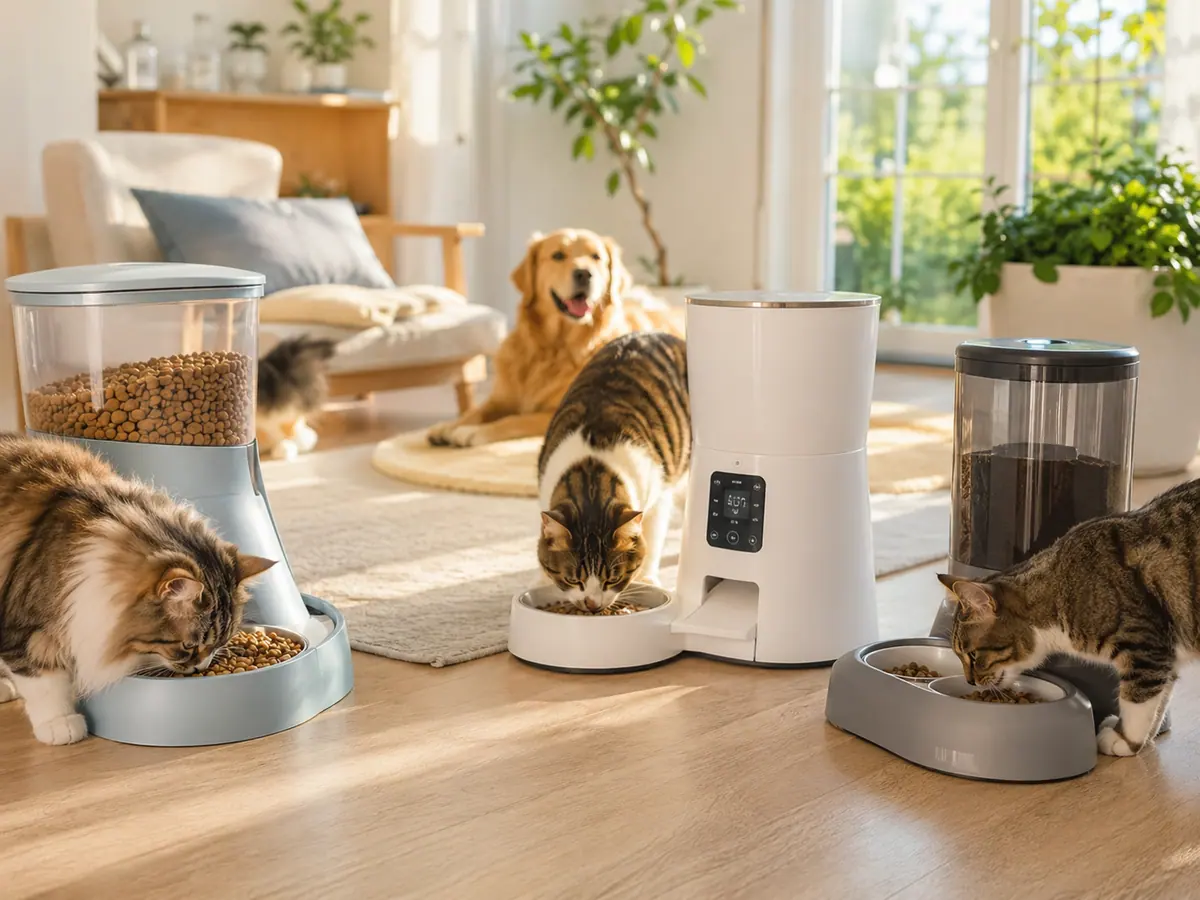
Cats are routine-driven animals. A sudden late dinner may seem small to us, but many cats respond with pacing, loud meowing, counter surfing, or food guarding. An automatic feeder reduces that uncertainty by serving meals at the same time every day. For households with busy mornings, shift work, or frequent short trips, that consistency can make the home feel calmer.
The feeder also helps with portion discipline. Free feeding is easy, but it makes calorie control difficult because the bowl never gives honest feedback. If your cat grazes all day, you may not notice how much food disappears until the weight gain is obvious. A measured feeder turns feeding into a visible system: portion size, meal frequency, and leftovers can be reviewed instead of guessed.
That said, I would not use a feeder as a way to disconnect from your cat. It should support your routine, not replace play, grooming, litter-box checks, and affection. If your cat is vomiting, losing weight, guarding food, or suddenly demanding more meals, check with a veterinarian before assuming the feeder will solve it.
When a Feeder Automatic Cat Setup Makes Sense
The strongest use case is early-morning begging. Many cats learn that waking a person gets breakfast. Once that loop forms, even occasional rewards can make the behavior stronger. A feeder shifts the source of food away from your bedroom door and toward a predictable device, which can reduce the negotiation between cat and human.
Automatic feeding also fits cats that do better with several small meals. Some cats vomit when they eat too fast after a long gap. Others become anxious when they know food is scarce. Dividing the daily ration into three or four smaller servings may support steadier behavior. Ask your veterinarian for the calorie target, then use the feeder to deliver that target consistently.
A feeder is useful for short absences, but I do not recommend treating it as a pet sitter replacement. Water bowls can spill, feeders can jam, power can fail, and cats can become sick while nobody is checking. For travel, combine the feeder with a trusted person who can inspect the cat, litter box, water, and device.
If your cat also needs mental stimulation around meals, see our cat puzzle toys guide for enrichment ideas that pair well with scheduled feeding.
Features to Check Before Buying
Start with portion accuracy. Some feeders use cup-based settings that vary depending on kibble shape. Round kibble flows differently from flat or fish-shaped kibble. If your cat needs precise calories, choose a model known for consistent dispensing and verify portions with a kitchen scale during the first week.
Next, check the lid and food chute. A clever cat can pry open a weak hopper, knock the unit over, or reach a paw into the dispensing chute. This is not a rare edge case. Food-motivated cats test devices like tiny engineers. A secure lock, sturdy base, and anti-jam design matter more than a cute display screen.
Battery backup is another practical feature. If the power goes out while you are away, the feeder should continue serving scheduled meals or at least preserve the programming. For Wi-Fi models, confirm that the feeder still dispenses locally if the internet drops. A device that stops feeding because the app cannot connect is not reliable enough for daily dependence.
Finally, evaluate cleaning. Removable stainless-steel bowls are easier to wash and usually smell fresher than fixed plastic trays. Smooth hoppers with fewer corners collect less kibble dust. If the feeder is annoying to clean, most people clean it less often, and stale food residue becomes the real problem.
Portion Control and Feeding Schedule
Portion control starts with calories, not cup marks. Kibble density varies widely. A quarter cup from one brand may not equal a quarter cup from another brand. The safest workflow is to find your cat's daily calorie target, weigh the total food amount for that target, then divide it into feeder meals. Your veterinarian can help set that target based on body condition, age, and activity.
For most healthy adult cats, two to four meals per day is a reasonable starting point. Cats that eat too quickly may do better with smaller, more frequent servings. Senior cats, kittens, diabetic cats, and cats on prescription diets need more careful planning. Do not use an automatic feeder to change a medical diet without professional guidance.
One mistake I see often is filling the hopper and never auditing the result. For the first week, watch each meal dispense. Measure a few portions after they drop into the bowl. Make sure your cat can access the food comfortably, and check whether food remains before the next meal. Leftovers can mean the portion is too large, the bowl is uncomfortable, or the schedule does not match your cat's appetite.
Automatic Feeders for Multi-Cat Homes
Multi-cat homes need extra caution because one feeder can accidentally reward the boldest cat. If one cat guards the bowl, steals portions, or eats a prescription diet, a shared feeder can make the problem worse. In that situation, separate feeders in different locations are usually better than one central station.
Microchip feeders are useful when cats need different diets. They open only for the cat whose chip or tag is registered. These are not always the same as timed automatic feeders, so some households combine both: timed meals for the general schedule and microchip access for diet separation. It costs more, but it prevents the quiet cat from losing food to the pushy cat.
Placement matters. Put feeders where each cat feels safe, not in a narrow hallway or crowded laundry room. Cats prefer to eat without feeling trapped. If two feeders are side by side, the cats are still competing. Spread them apart and observe body language: flattened ears, blocking, fast eating, or leaving mid-meal are signs the setup needs adjustment.
For bowl-shape considerations, our cat bowls guide explains why whisker comfort and cleaning material matter.
Safety, Cleaning, and Food Freshness
Dry-food feeders are common because kibble stores well in a hopper, but that does not mean the food stays fresh forever. Oils from kibble can become stale, especially in warm rooms. Fill the hopper with a practical amount rather than dumping in the largest possible quantity. A weekly clean is a good baseline, and the bowl should be washed more often.
Wet-food feeders need stricter food-safety habits. Choose a model designed for wet food, usually with covered trays and cooling packs. Do not leave wet food at room temperature all day unless the product instructions specifically support that schedule. When in doubt, use wet-food feeders for shorter windows and rely on dry measured portions for longer absences.
Check cords and stability. Cats may chew cables, push lightweight devices, or paw at the chute. A feeder should sit on a level surface, away from water bowls, litter dust, and direct sun. If your cat is highly food motivated, test the feeder under supervision before trusting it alone. Better to discover a weakness while you are home than after the hopper has been raided.
Automatic Cat Feeder Comparison Table
Use this comparison to match the feeder type to your cat's real feeding problem. The best choice depends on whether you need timing, portion control, diet separation, or wet-food support.
For independent feline health guidance, the Cornell Feline Health Center is a strong reference for cat owners.
Frequently Asked Questions
Is an automatic cat feeder good for every cat?
An automatic cat feeder is helpful for many cats, especially cats that eat on a schedule, cats that beg early in the morning, and cats that need smaller meals through the day. It is not a substitute for veterinary care, fresh water, or human check-ins, and it may not be ideal for cats on wet food unless the feeder is designed for chilled wet portions.
How many meals should an automatic feeder give a cat each day?
Most adult cats do well with two to four measured meals per day, but the right number depends on age, weight, medication, and your veterinarian's feeding plan. The main benefit is consistency. Small, predictable meals reduce food anxiety and make portion control easier than free feeding.
Can automatic feeders help with cat weight control?
Yes, automatic feeders can support weight control because they measure portions and reduce impulse refills. The feeder only helps if the portion size is set correctly. Measure the food with a kitchen scale, compare it with the calorie target from your veterinarian, and adjust gradually rather than guessing by cup marks.
What features matter most in an automatic cat feeder?
Look for reliable portion control, a secure lid, easy cleaning, battery backup, and a bowl shape that does not crowd your cat's whiskers. App controls and cameras are nice extras, but reliability and food safety matter more than smart features.
Can two cats share one automatic feeder?
Two cats can share a feeder only if they eat calmly and receive the same diet. If one cat steals food, needs prescription food, or eats much faster, use separate feeders or a microchip feeder. Shared feeding can create stress when cats compete for the same bowl.
Are Wi-Fi automatic cat feeders worth it?
Wi-Fi feeders are worth it if you travel, work irregular hours, or need alerts when a meal dispenses. A simple programmable feeder is usually enough for a predictable home schedule. Do not pay extra for an app if the basic mechanical reliability is weak.
How often should I clean an automatic cat feeder?
Wash the bowl every day if possible, and clean the hopper and chute weekly for dry food. Oil from kibble builds up and can become stale. For wet-food feeders, clean every used tray after each feeding cycle and follow the manufacturer's food-safety guidance.
Browse Cat Essentials
Free worldwide shipping on every order. No minimum purchase required.
Browse Cat Essentials →