Dog grooming instruments should make coat care safer, calmer, and more predictable. The essentials are not complicated: the right brush for the coat, a safe nail tool, dog shampoo, towels, and a surface where your dog will not slip. The hard part is matching each tool to your dog's coat and comfort level.
I would rather see a pet owner use five basic tools well than own a drawer full of sharp, noisy, intimidating equipment. Grooming is part hygiene and part trust-building. If the tool scares your dog or scratches the skin, it is the wrong tool for that moment.
Quick Answer: The Dog Grooming Instruments Worth Owning
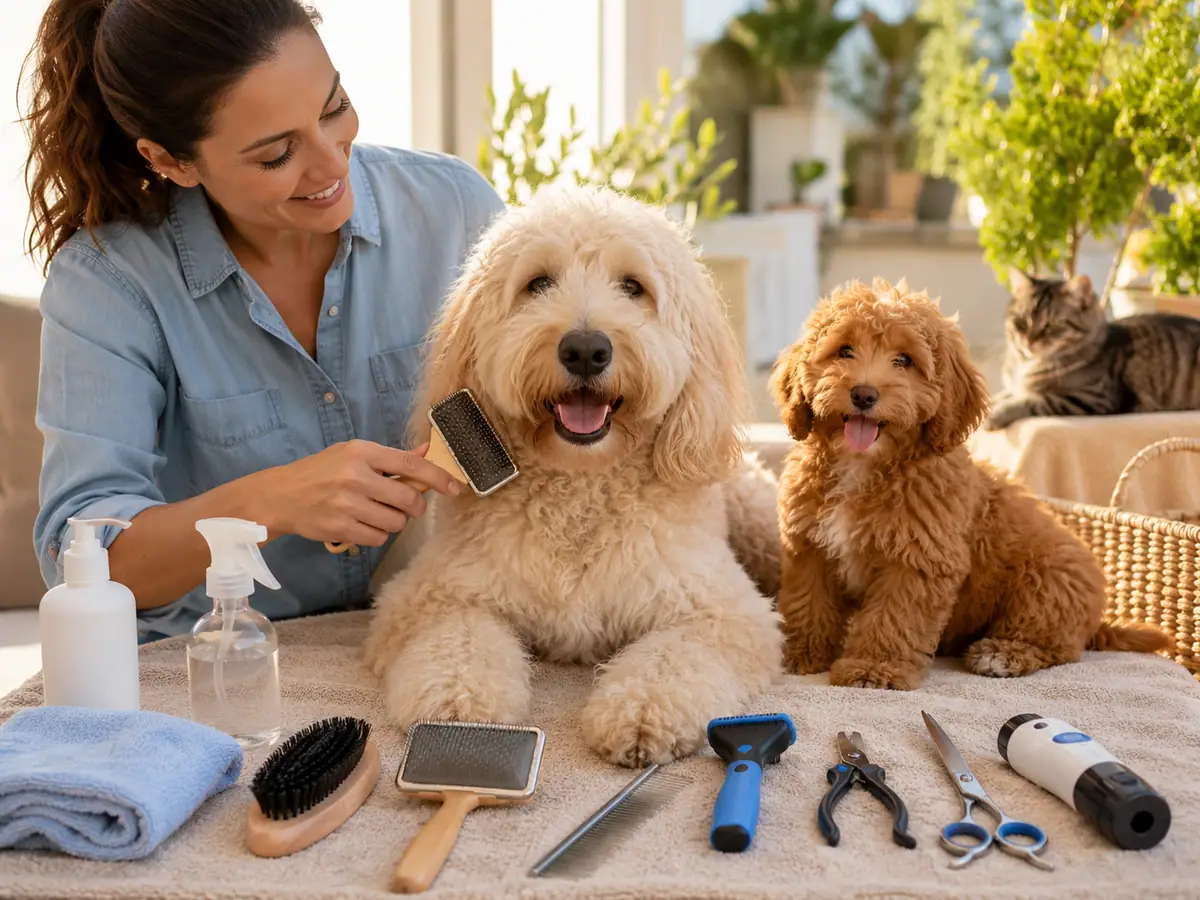
The practical home kit starts with a brush, a comb, nail clippers or a grinder, dog-safe shampoo, absorbent towels, and treats for cooperative handling. Long-haired or curly-coated dogs may also need a slicker brush and metal comb. Double-coated dogs may need an undercoat rake during shedding season. Short-coated dogs often need only a rubber curry brush or soft bristle brush.
The tool list changes when the dog is anxious, elderly, or has sensitive skin. A noisy grinder might be technically safe but emotionally wrong for a dog that panics. A slicker brush might remove loose hair beautifully but cause irritation if pressed too hard. That is why the best grooming instrument is not a universal product. It is the tool your dog can tolerate safely and repeatedly.
Trainer-style tip
Touch the tool to your dog's shoulder, reward, then stop. Short successful sessions beat one long wrestling match.
Match Grooming Tools to Coat Type
Short smooth coats usually need light tools. A rubber curry brush loosens hair without scraping the skin, and a soft bristle brush adds shine by distributing natural oils. These dogs often shed more than owners expect, but heavy deshedding blades are not always needed. Over-brushing a short coat can irritate skin faster than it improves shedding.
Double coats need a different plan. Breeds with dense undercoat can trap loose hair close to the skin. An undercoat rake or shedding comb can help, but it must glide through the coat rather than tear. Never shave a double coat for convenience unless a veterinarian or experienced groomer recommends it for a medical or severe-matting reason.
Curly and long coats are where owners most often get into trouble. These coats can mat near friction zones such as armpits, behind ears, under collars, and around the tail. A slicker brush opens the coat, while a metal comb checks whether tangles are truly gone. If the comb cannot pass through, the coat is not finished.
The American Kennel Club explains why professional grooming can help with coat, nails, ears, and skin checks, especially when the job goes beyond routine maintenance.
Nail, Ear, and Bath Tools: Safety First
Nail tools deserve respect. Clippers are quick, affordable, and quiet, but they can cut the quick if you remove too much. Grinders remove nail slowly and smooth sharp edges, but vibration can bother sensitive dogs. The safer choice is the one you can use calmly with good lighting, a steady hand, and frequent rewards.
Ear care should stay simple unless your veterinarian gives specific instructions. Use dog-safe ear cleaner only when appropriate, never cotton swabs deep in the canal. Redness, odor, discharge, head shaking, or pain are not grooming problems to solve at home. They are reasons to call a veterinarian.
Bath tools include shampoo, a non-slip mat, towels, and controlled water flow. Human shampoo is usually the wrong pH for dogs, so choose dog-safe products and rinse thoroughly. The AKC dog grooming guide is a useful starting point for safe brushing, bathing, and nail routines.
| Feature | Best choice | Why it matters |
|---|---|---|
| Brush | Coat-specific daily or weekly care | Prevents loose hair buildup and early tangles |
| Metal comb | Long or curly coat checking | Confirms that mats are actually gone |
| Nail clipper | Fast nail trims | Works well for calm dogs and confident handlers |
| Nail grinder | Gradual nail smoothing | Useful when owners fear cutting too short |
| Dog shampoo | Bathing as needed | Cleans without using harsh human products |
How to Build a Calm At-Home Grooming Routine
Start with handling before tools. Touch paws, ears, tail, and collar area for one second, reward, and stop. Once your dog accepts handling, introduce the tool as an object, not an action. Let your dog sniff the brush. Touch the back of the brush to the shoulder. Reward. Put it away. This might feel slow, but it prevents long-term resistance.
Next, choose a predictable place. A non-slip mat on the floor is safer than a high table for many owners. Keep sessions short, especially with puppies and nervous dogs. Brush one section, praise, reward, and pause. You can always do another two minutes later. You cannot easily undo the stress from forcing a full groom in one sitting.
If grooming connects to bath day, plan the order. Brush before bathing so water does not tighten loose tangles. Trim nails when your dog is calm, not after a chaotic bath. Keep towels ready before water starts. These small workflow choices make the experience feel controlled instead of frantic.
Common Dog Grooming Tool Mistakes
The first mistake is using one brush for every coat. A slicker brush that works on a doodle may be too harsh for a thin-coated dog. A soft bristle brush that polishes a short coat may do almost nothing for a thick undercoat. Buy for the dog in front of you, not for the most popular grooming video.
The second mistake is chasing mats with scissors. Mats pull skin into folds, and it is easy to cut the dog instead of the mat. If you cannot clearly lift the mat away from the skin, do not cut it. Use a professional groomer for tight mats, painful mats, and mats near sensitive areas.
The third mistake is waiting until the coat looks bad. Grooming is easier before there is a visible problem. A five-minute comb check twice a week can prevent a one-hour dematting session. In our view, routine grooming is like dental care: boring consistency wins.
Another common mistake is forgetting the surface under the dog. Slipping in the tub or on tile can make even a gentle brush session feel unsafe. Use a non-slip mat, keep one hand supporting your dog when needed, and stop before the dog is exhausted. Calm endings make the next grooming session easier.
One more detail matters: keep the reward bowl nearby. Treats are not bribery when used well. They tell your dog which small behavior worked, such as standing still for two brush strokes or letting you touch one paw. This is especially useful for rescue dogs, puppies, and dogs that have had rough grooming experiences before.
For home comfort after grooming, you may also like our cat and bed comfort guide if your household includes both cats and dogs.
Dog Grooming Instruments Comparison Table
This comparison table helps you choose by job, not by product hype. If a tool solves a problem your dog does not have, skip it for now.
| Feature | Best choice | Why it matters |
|---|---|---|
| Rubber curry brush | Short coats | Gentle hair removal and massage |
| Slicker brush | Curly or long coats | Opens the coat and removes surface tangles |
| Undercoat rake | Double coats | Removes loose undercoat during shedding |
| Dematting tool | Loose mats only | Use carefully and avoid tight skin-level mats |
| Professional groomer | Mats, fear, clipping, complex trims | Safer when home tools are not enough |
Frequently Asked Questions
What dog grooming instruments do I really need at home?
Most homes need a brush or comb suited to coat type, a nail clipper or grinder, dog-safe shampoo, towels, ear-cleaning supplies recommended by a veterinarian, and a non-slip mat. Clippers, dematting tools, and high-velocity dryers are helpful only when you know how to use them safely.
How often should I brush my dog?
Short-coated dogs may need brushing once a week, while double-coated, curly, or long-coated dogs often need brushing several times per week. During shedding seasons, daily brushing may be easier than handling large mats later. The coat, not the calendar, should guide your routine.
Are nail grinders safer than clippers?
Nail grinders can be safer for nervous owners because they remove nail gradually, but some dogs dislike the sound and vibration. Clippers are faster but require confidence around the quick, the sensitive blood vessel inside the nail. Either tool is safe when introduced slowly and used with good lighting.
Can I cut out a mat with scissors?
Scissors are risky because mats sit close to the skin and can hide folds. It is safer to use a dematting tool only on loose mats you can separate from the skin. Tight mats, painful mats, or mats near ears, armpits, and sanitary areas should be handled by a professional groomer or veterinarian.
What grooming tools should I avoid for puppies?
Avoid harsh deshedding blades, tight slicker pressure, loud clippers, and strong dryers during early puppy grooming. Puppies need short positive sessions with soft brushes, gentle handling, and rewards. The goal is to build trust first, then gradually introduce more advanced instruments.
How do I know if a grooming tool is hurting my dog?
Watch for flinching, sudden turning, lip licking, tucked tail, growling, or trying to escape. Also check for redness, scrape marks, or dandruff after brushing. If a tool leaves marks on your own forearm with light pressure, it is probably too harsh for routine use.
When should I use a professional groomer instead of home tools?
Use a professional when the coat is matted, the dog is fearful or reactive, nails are overgrown, skin looks irritated, or the trim requires clippers near sensitive areas. Home grooming is best for maintenance between professional appointments, not for risky corrective work.
Keep Grooming Gentle
Choose pet care tools that make everyday routines easier, safer, and more comfortable for your companion.
Browse Dog Essentials →