Cat and automatic feeder is useful when it solves a real feeding problem: inconsistent meal times, rushed mornings, portion drift, or a cat that eats too quickly when food is left out all day. The best automatic feeder is not the fanciest app-connected bowl. It is the feeder that measures food reliably, stays clean, and still lets you notice changes in appetite.
I like automatic feeders most as a routine helper, not as a pet-sitter replacement. Cats still need fresh water, daily interaction, and a human checking whether meals were actually eaten. Used that way, a feeder can make life calmer for both the cat and the owner.
Quick Answer: What a Cat And Automatic Feeder Should Do
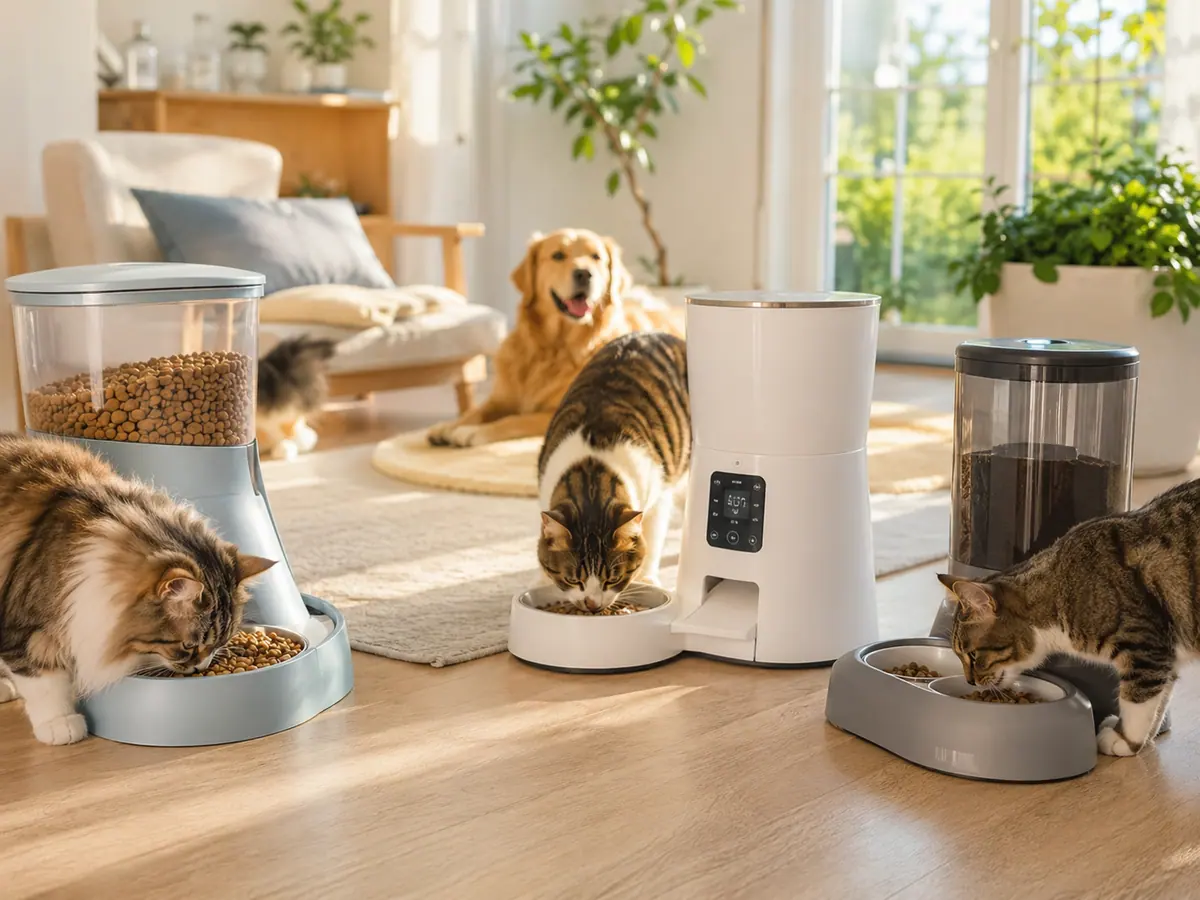
The main job of an automatic cat feeder is simple: deliver the right amount of food at the right time. That sounds basic, but it is exactly where cheaper feeders often fail. A few extra grams per meal can become noticeable over weeks, while one jammed meal can create stress for a cat that expects breakfast at a specific time.
For most households, the sweet spot is a dry-food feeder with programmable meal times, a secure lid, washable bowl parts, and battery backup. Wi-Fi features are helpful if you travel often, but they are not the first thing I would pay for. I would rather choose a non-smart feeder that dispenses accurately than a feature-heavy model that clogs with your cat's kibble.
Practical rule
Test the feeder for three normal days while you are home before depending on it when you are away.
Key Features That Matter in an Automatic Cat Feeder
The first feature to check is portion control. Look for a feeder that lets you adjust meal size in small increments and repeat the same schedule every day. Cats are creatures of routine, and predictable meals can reduce begging because your cat learns that food arrives from the feeder, not from constant human negotiation.
The second feature is jam resistance. Round, uniform kibble usually flows better than flat, oily, or irregular pieces. If your cat eats a prescription diet, do not assume it will work in every hopper. Put the exact food through repeated tests and compare the dispensed amount with a kitchen scale. This is a small step that prevents a lot of frustration.
Security also matters. Some cats are surprisingly good at pawing open lids or tipping lightweight feeders. Choose a stable base, a locking lid, and a chute design your cat cannot easily raid. If you have multiple cats, placement becomes part of the feature set. The best feeder in the wrong corner can create guarding, blocking, or one cat stealing most of the meal.
For food selection basics, the Association of American Feed Control Officials explains how pet food labels and feeding directions should be understood before you program portions.
Portion Control, Freshness, and Food Safety
Automatic feeders are often bought for convenience, but their best SEO-hidden benefit is portion discipline. Free-feeding makes it easy to miss how much a cat actually eats. A scheduled feeder turns meals into measured events. That makes appetite changes easier to notice, especially if your cat suddenly leaves food behind or starts acting hungry right after a normal portion.
Dry food should stay sealed, cool, and fresh. Do not pour a giant bag into the hopper and forget it for weeks. Oils on kibble can become stale, crumbs build up near the dispensing wheel, and plastic bowls can hold odors. The U.S. Food and Drug Administration recommends safe handling and storage habits for pet food and treats, which applies directly to feeder maintenance.
Wet food is a different category. Only use wet food in a feeder built for wet meals, usually a covered tray with chilling support. If the product manual does not mention wet food, treat it as dry-food only. In my opinion, this is one of the easiest mistakes to avoid: never make a dry hopper do a wet feeder's job.
| Feature | Best choice | Why it matters |
|---|---|---|
| Meal timing | Programmable schedule | Keeps breakfast and dinner predictable |
| Portion size | Small adjustable servings | Helps avoid accidental overfeeding |
| Power | Plug plus battery backup | Protects meals during outages |
| Cleaning | Removable bowl and hopper | Reduces stale food smell and residue |
| Food type | Dry kibble unless wet-rated | Prevents spoilage and dispenser jams |
How to Set Up a Cat With Automatic Feeder Routine
Start by matching the feeder schedule to your cat's current meals. Do not change both the bowl and the feeding time in one day. Put the new feeder next to the old bowl, let your cat inspect it while it is off, then trigger one small meal while you are present. The sound of the motor can surprise some cats, so early low-pressure exposure helps.
For the first week, write down the schedule, the programmed portion, and whether the bowl was empty at each check. This is not overkill. It tells you whether your cat understands the routine, whether the food is dispensing cleanly, and whether another pet is interfering. If you have a camera, use it for observation rather than constant micromanagement.
Pair feeding with enrichment. A feeder can handle measured calories, while play handles hunting needs. Before dinner, use a wand toy or puzzle session so your cat completes a hunt-play-eat pattern. If you want more feline enrichment ideas, see our guide to cats fountain drinker.
Common Mistakes Cat Parents Make With Automatic Feeders
The biggest mistake is treating a feeder like a full pet-care plan. A feeder can serve meals, but it cannot notice vomiting, dental pain, litter box changes, or a cat that stops drinking. If you travel, someone still needs to check your cat daily. This is especially true for seniors, cats on medication, and cats with a history of urinary or digestive problems.
The second mistake is ignoring multi-cat dynamics. One confident cat may wait at the bowl and eat both portions. A timid cat may avoid the feeder because another cat is nearby. Separate feeding locations or microchip feeders may be better when food competition is already present. Do not let automation hide a social problem in the home.
The third mistake is skipping cleaning. A feeder that looks fine from the outside can have crumbs and oils inside the chute. I would rather refill a smaller amount more often than keep a large hopper full for too long. Clean parts thoroughly, dry them fully, and check the dispensing path before refilling.
Another overlooked mistake is hiding the feeder in a cramped corner. Cats prefer to eat where they feel safe and can see what is happening around them. If the feeder sits beside a noisy appliance, near a litter box, or in a hallway where a dog rushes past, your cat may avoid it or eat too quickly. Place it in a quiet area with an easy escape path.
Automatic Cat Feeder Comparison Table
Use this table as a quick buying filter. It is not about choosing the most expensive model. It is about matching the feeder to your cat's food, household routine, and risk level.
| Feature | Best choice | Why it matters |
|---|---|---|
| Basic timed feeder | Simple dry-food schedule | Best for one cat with predictable meals |
| Wi-Fi feeder | Remote schedule control | Helpful for owners who travel often |
| Camera feeder | Meal visibility | Useful but not a substitute for in-person checks |
| Wet-food timed tray | Chilled short-term meals | Only for wet food when the tray is designed for it |
| Microchip feeder | Multi-cat control | Best when one cat steals another cat's food |
Frequently Asked Questions
Is an automatic cat feeder a good idea for every cat?
An automatic cat feeder is useful for many indoor cats, especially when meal timing is inconsistent. It is not a replacement for observation, fresh water, or veterinary advice. Cats with medical diets, rapid weight change, diabetes, or food aggression need a veterinarian-approved feeding plan before relying on automation.
How many meals should an automatic feeder give a cat each day?
Most adult cats do well with two to four measured meals per day, but the right schedule depends on age, weight, activity level, and your veterinarian's guidance. The feeder should support small portions and reliable timing so you can prevent free-feeding habits that lead to overeating.
Can wet food go in an automatic feeder?
Wet food can be used only in feeders designed for it, usually with an ice pack or sealed chilled tray. Standard dry-food hoppers are not safe for wet food because moisture encourages spoilage. If you feed wet food, choose a timed tray model and clean it after every use.
Will an automatic feeder fix separation anxiety?
It can help with routine and reduce mealtime stress, but it will not solve separation anxiety by itself. Pair scheduled feeding with play, safe resting spaces, predictable departures, and a veterinarian or behavior professional if your cat vocalizes, hides, or stops eating when alone.
What size kibble works best in an automatic feeder?
Small to medium dry kibble works best because it moves through the dispensing wheel more consistently. Very large, sticky, or irregular pieces can jam. Before relying on the feeder while away, test your cat's exact food for several days and weigh portions to confirm accuracy.
How often should I clean an automatic cat feeder?
Food bowls should be cleaned daily, and the hopper should be washed at least weekly or whenever oils, crumbs, or stale food smell appear. Follow the maker's instructions, keep electronics dry, and fully dry plastic parts before refilling to reduce odor and mold risk.
Do automatic feeders need battery backup?
Battery backup is strongly recommended. A feeder that only works from a wall plug can miss meals during a power outage or if the cord is unplugged. Choose a model that shows low-battery warnings and test the backup mode before leaving your cat unattended.
Support Your Cat's Daily Routine
Pair predictable meals with toys, scratchers, and safe enrichment so your cat gets more than calories from the day.
Browse Cat Essentials →